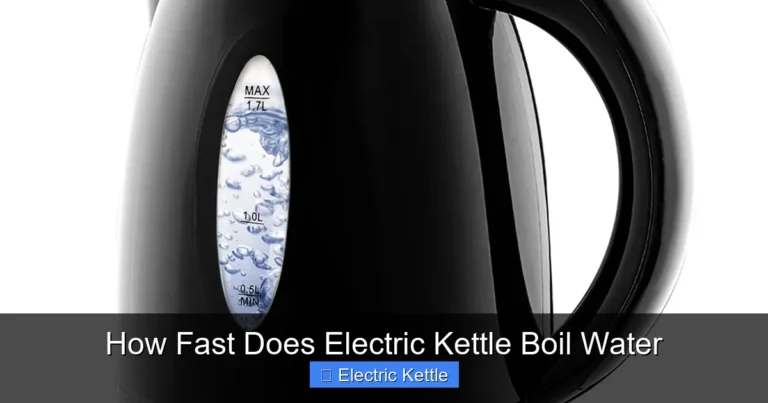
In homes across the United States, an electric kettle usually shuts off without measuring the bubbles in the water. Instead, it senses the heat or steam created when water reaches its boiling point. Most models use a thermostat, a bimetal switch, or an electronic temperature sensor to cut power.
At sea level in the U.S., water boils at about 212°F (100°C). The boiling point drops at higher elevations, so a kettle may shut off at a lower temperature in places such as Denver. The kettle does not need to “see” the boil. It detects the physical changes that happen as boiling water produces hot steam.

The short answer: kettles detect steam or temperature
An electric kettle knows the water is ready because steam or heat activates a switch. In many common designs, steam travels through a small channel to a thermostat near the handle or power control. The heat makes a bimetal strip bend, which releases the switch and turns the kettle off.


Some newer kettles use an electronic temperature sensor. That sensor measures the water temperature and tells a control circuit when to stop heating. These models often let you select a target temperature, such as 160°F for green tea or 200°F for coffee.
The key point is simple: an electric kettle detects the heat linked to boiling, not the bubbles themselves.
How an automatic electric kettle works
A typical automatic kettle follows a short chain of events:
- Electricity flows through the heating element.
- The element transfers heat to the water.
- The water temperature rises.
- Near boiling, the water creates a strong flow of steam.
- Steam reaches a thermostat or sensor.
- The safety switch opens and stops the current.
The kettle may continue to make noise for a few seconds after the switch clicks. That is normal. Residual heat in the element and hot water can keep steam moving after power stops.
The heating element
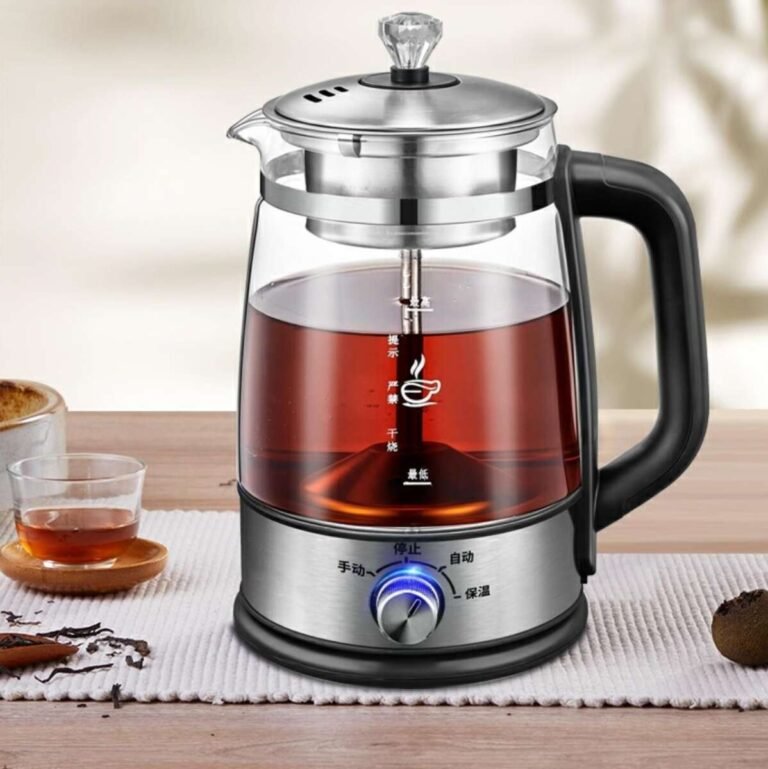
The heating element changes electrical energy into heat. In many electric kettles, the element sits under a metal plate at the base. Some designs hide the element beneath a sealed floor, which makes cleaning easier and limits direct contact between the water and the electrical parts.
The element heats the water from the bottom. Warm water rises while cooler water sinks. This creates natural circulation, which helps the kettle heat the full volume rather than only the water near the base.
The steam path
As water nears its boiling point, it produces much more steam. The steam enters a small vent or tube inside the kettle. That path directs the steam toward the thermostat.
This design is why the lid matters. If the lid is open, loose, or poorly fitted, steam may escape before enough of it reaches the control. The kettle may then shut off late or fail to shut off as designed.
The thermostat and bimetal switch
A thermostat is a device that responds to temperature. Many basic kettles use two metals joined together in a strip. Because the metals expand at different rates, the strip bends as it heats.
That movement can release a spring-loaded electrical contact. Once the contact opens, the heating circuit breaks and the kettle turns off.
This type of switch is useful because it does not need complex software. It can work with a simple mechanical system and respond quickly to steam heat.


Why the kettle may switch off before the water looks fully boiled
A kettle may turn off just before you see a vigorous rolling boil. That does not always mean it failed.
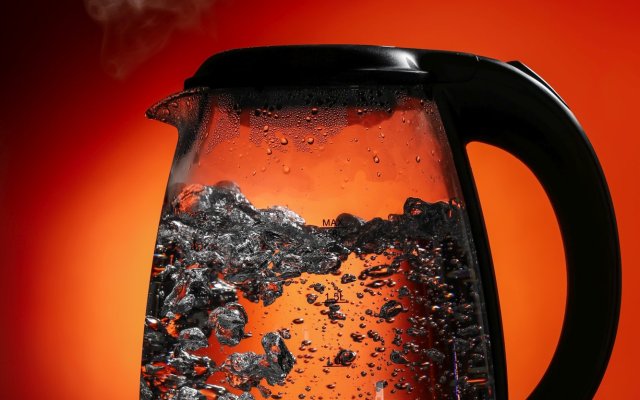
The thermostat often reacts to hot steam near the boiling point. Steam can reach the sensor while the water surface still looks calm from some angles. The water may also continue boiling briefly because the heating element remains hot after the power stops.
Other factors can affect what you see:
- Water volume: A small amount heats and boils quickly.
- Room temperature: Cold water and a cold kettle need more heat.
- Altitude: Water boils at a lower temperature at higher elevations.
- Lid position: A sealed lid helps route steam to the sensor.
- Scale buildup: Mineral deposits can change heat transfer and sensor response.
- Kettle design: Sensor placement and shutoff timing vary by model.
A kettle does not need to boil every drop of water before it switches off. Its control system is designed to stop heating when the sensor receives the expected heat signal.
What changes at high altitude?
Water boils at a lower temperature when air pressure is lower. Since elevation reduces air pressure, the boiling point also falls.
At sea level, water boils at about 212°F (100°C). In Denver, which is roughly 5,280 feet above sea level, water boils near 203°F (95°C) under typical conditions. The exact value can change with weather pressure and elevation.
This affects both kettle behavior and cooking. A kettle may shut off at a lower water temperature than someone expects from a sea-level reference. The water can still be boiling under those local conditions.
| Location or condition | Approximate boiling point |
|---|---|
| Sea level | 212°F (100°C) |
| Around 5,000 feet | About 203°F (95°C) |
| Higher elevations | Lower than 203°F |
| Pressure cooker | Higher than 212°F |
These values are approximate. A kettle’s sensor may also be calibrated to respond to steam temperature and airflow rather than to measure the water itself with laboratory precision.
How temperature-control kettles work
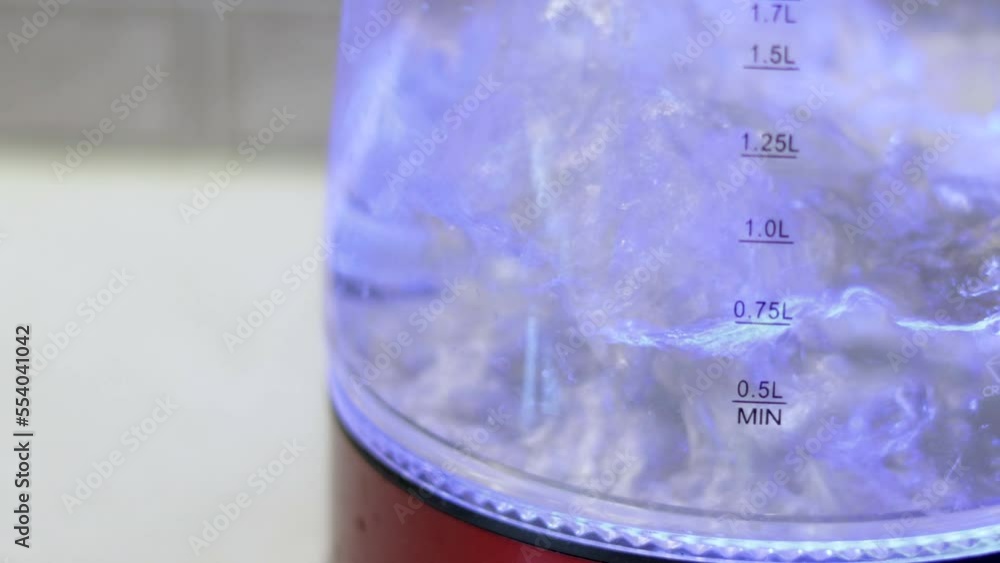
A temperature-control kettle works differently from a basic boil-and-shutoff model. It usually uses a thermistor or another electronic temperature sensor. A control board reads the sensor and turns the heating element off at a chosen temperature.
This allows settings such as:
- 140°F for warming water
- 160°F to 175°F for some green teas
- 185°F to 195°F for many coffees
- 200°F to 212°F for near-boiling water
These are general brewing ranges, not strict rules. The right temperature depends on the drink, the recipe, and personal taste.
A temperature-control kettle may also hold the water at a set temperature. It does this by switching the element on and off as the water cools. That feature uses more electricity than heating the water once and shutting the kettle off.
Is the temperature display exact?
Usually, no. A display can be useful without being a laboratory instrument. The sensor may measure temperature at one point, while the rest of the water has small temperature differences.


Accuracy also depends on:
- The sensor location
- Water volume
- Stirring and circulation
- Calibration
- Mineral deposits
- The selected temperature
- The kettle’s control software
For most tea and coffee use, a small difference may not matter. If a recipe requires a precise temperature, use a verified kitchen thermometer rather than relying only on the kettle display.
How the dry-boil safety feature works
Most modern electric kettles include boil-dry protection. This feature helps prevent the kettle from heating when there is too little water or no water at all.
The protection system may use a separate thermostat near the heating element. If the base becomes much hotter than it should, the safety device cuts power. Some kettles reset after cooling. Others require the user to lift the kettle from its base or press a control.
Boil-dry protection reduces risk, but it is not permission to run an empty kettle. Repeated dry operation can stress the heating element, damage plastic parts, or shorten the appliance’s life.
Unplug the kettle and let it cool if it has boiled dry. Check the manual before resetting it. Do not use the kettle if the base, cord, plug, or body shows melting, cracks, burn marks, or water damage.

Why an electric kettle may not shut off
If a kettle keeps heating after the water boils, stop using it until you identify the cause. The problem may involve the lid, steam path, scale, thermostat, or electrical switch.
Check the lid first
Make sure the lid closes fully. A loose lid can let steam escape before it reaches the thermostat. Look for food debris, mineral deposits, or a damaged seal that prevents proper closure.
Clean mineral scale
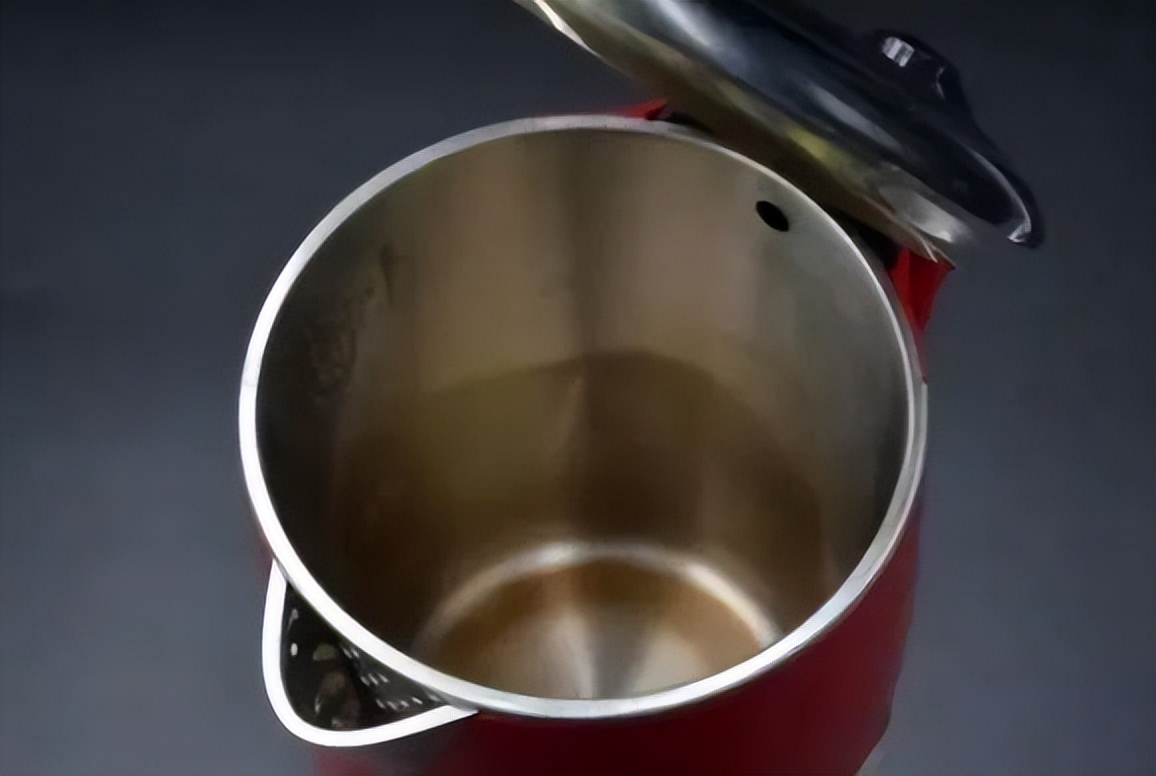
Hard water leaves calcium carbonate deposits inside the kettle. A thick layer can interfere with heat transfer and may affect the steam channel or sensor.
Follow the manufacturer’s cleaning instructions. Many manuals allow a diluted white vinegar solution or a commercial descaling product. Rinse the kettle well afterward. Do not mix vinegar with bleach or other cleaners.
Inspect the steam vent
Some kettles have a small opening or passage near the lid or handle. Scale can block it. Clean only the parts the manufacturer says are safe to clean. Never push sharp objects into an electrical control or sealed opening.
Stop if the switch or cord is damaged
A kettle that continues heating, smells burnt, sparks, trips a circuit breaker, or shows damaged wiring should be unplugged. Do not bypass the thermostat or attempt an electrical repair unless you are qualified to do so.
A failed shutoff is not a minor convenience problem. The automatic switch is a safety control.


Why a kettle may shut off too soon
A kettle that stops before the water is hot enough can have a different set of causes:
- Too little water may expose the sensor to unusually hot steam.
- Scale may make the base heat rapidly.
- The lid may not be seated correctly.
- The kettle may not sit flat on its power base.
- The thermostat may be worn or out of calibration.
- A temperature setting may be lower than “boil.”
- The kettle may be designed to stop at a local boiling point.
Try these safe checks:
- Confirm that the kettle has enough water.
- Close the lid firmly.
- Place the kettle correctly on its base.
- Descale it according to the manual.
- Test it with a normal water amount.
- Compare the result with the stated temperature setting.
If it still shuts off early, do not keep restarting it. Contact the manufacturer or replace the appliance, especially if it is under warranty.

Electric kettles versus stovetop kettles
An electric kettle has an automatic electrical control. A stovetop kettle usually does not measure boiling with an automatic shutoff system.
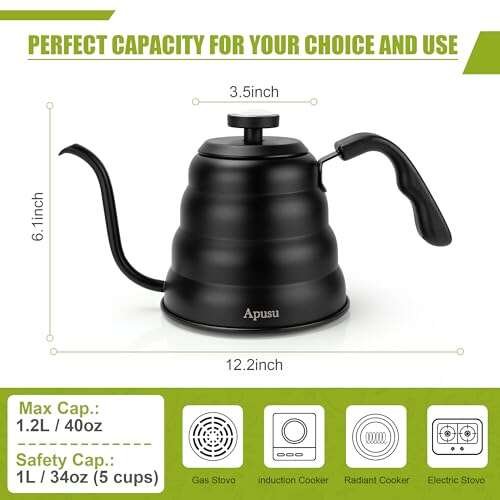
A stovetop kettle may use a whistle. Steam passes through a small opening and creates a sound when pressure and airflow reach the right level. The whistle tells you that the water is boiling, but it usually does not turn the burner off.
Some stovetop kettles have a lid or spout mechanism that changes when heated, but the user still needs to remove the kettle from the burner unless the model has a documented automatic feature.
This difference matters for safety. Never leave a stovetop kettle unattended just because it whistles. A burner can keep heating the empty kettle after the water has boiled away.
| Feature | Electric kettle | Stovetop kettle |
|---|---|---|
| Main heat source | Electrical heating element | Stove burner |
| Boil detection | Thermostat, steam sensor, or electronic sensor | Usually a whistle |
| Automatic shutoff | Common | Not usually included |
| Main risk | Electrical damage or dry boiling | Burner heat and an empty kettle |
| Temperature control | Common on some models | Less common |
Does boiling water always mean the kettle reaches 212°F?
No. Water boils at 212°F only at standard atmospheric pressure near sea level. The boiling point changes with elevation and air pressure.
A kettle also does not necessarily measure the water’s center temperature. A basic kettle often responds to steam in a channel. That makes it a practical appliance control, not a precision scientific instrument.
For normal household use, the difference is rarely important. If you need a specific temperature for infant formula, laboratory work, canning, or a recipe with strict temperature requirements, follow the relevant official instructions and use a suitable thermometer or approved method.
For infant feeding, boiling and cooling instructions can vary by local health guidance and formula type. Use the product label and current guidance from a qualified health source rather than guessing from a kettle’s shutoff click.
Common mistakes that affect kettle performance
The most common problems come from using the kettle outside its intended conditions.


Avoid these mistakes:
- Filling above the maximum line
- Running the kettle with no water
- Opening the lid while it heats
- Blocking the steam vent
- Leaving water sitting inside for long periods
- Ignoring heavy mineral scale
- Immersing the base, plug, or cord in water
- Using a damaged kettle
- Assuming automatic shutoff replaces supervision
- Heating liquids other than water unless the manual allows it
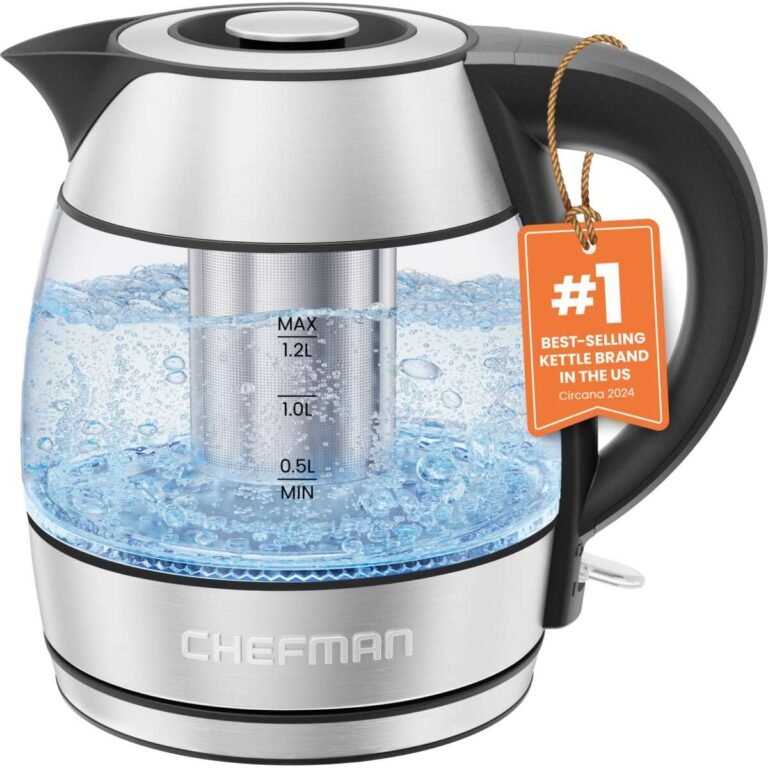
Overfilling can force boiling water through the spout or lid. Underfilling can expose the heating area and trigger dry-boil protection. Keeping the water level between the minimum and maximum marks gives the kettle the best chance to work as designed.

Frequently asked questions
Does a kettle stop when the water reaches exactly 212°F?
No. A basic kettle usually responds to steam or heat near the boiling point. The shutoff temperature can vary with elevation, air pressure, sensor design, water volume, and calibration.
Can a kettle detect when water is hot but not boiling?
A standard boil-only kettle usually cannot select several temperatures. It is designed to shut off near boiling. A temperature-control kettle can detect lower temperatures with an electronic sensor and stop at a selected setting.
Why does my kettle keep clicking on and off?
A temperature-control kettle may cycle on and off to maintain a selected temperature. A basic kettle that repeatedly cycles during heating may have a control problem, low water, scale buildup, or a poor lid seal. Check the manual and stop using it if the behavior seems unsafe.
Does cold water boil faster than hot water in a kettle?
No. Starting with hotter water generally reduces the time needed to reach boiling. Use the amount you need, but do not fill the kettle beyond its maximum line.
Is it safe to reboil water in an electric kettle?
Reboiling water once or occasionally is generally a normal use of a household kettle. The bigger concerns are stale taste, mineral buildup, and repeatedly heating an empty or nearly empty kettle. Empty and refill it as needed, and follow the manufacturer’s care instructions.
Final answer
An electric kettle knows the water is boiled by sensing steam or temperature, not by counting bubbles. In a basic model, steam heats a thermostat, which bends a bimetal strip and opens the electrical circuit. In a more advanced model, an electronic sensor measures temperature and tells the control board when to stop.
The kettle may shut off before the water looks like a violent rolling boil, and it may behave differently at high altitude. Keep the lid closed, maintain the right water level, descale the kettle, and stop using it if the automatic shutoff fails.
Sources and further reading
- National Institute of Standards and Technology: Water and steam properties
- U.S. Consumer Product Safety Commission: Electrical safety information
- U.S. Department of Energy: Appliance and equipment safety resources
- The owner’s manual for the specific kettle model, especially sections covering temperature control, boil-dry protection, cleaning, and electrical safety

Liora Pennings is a seasoned chef and kitchen enthusiast with a passion for turning everyday cooking into an effortless experience. With years of hands-on culinary expertise, she specializes in practical techniques, ingredient know-how, and smart kitchen solutions that help home cooks elevate their meals. At KitchFlair.com, Liora shares her best tips, time-saving tricks, and honest product reviews to guide readers toward a more efficient, enjoyable, and inspired cooking routine. Whether you’re a beginner or a seasoned home chef, Liora’s friendly, knowledge-packed insights make every visit to the kitchen a little easier—and a lot more delicious.