How Many Amps Does A Coffee Maker Use: Quick Guide
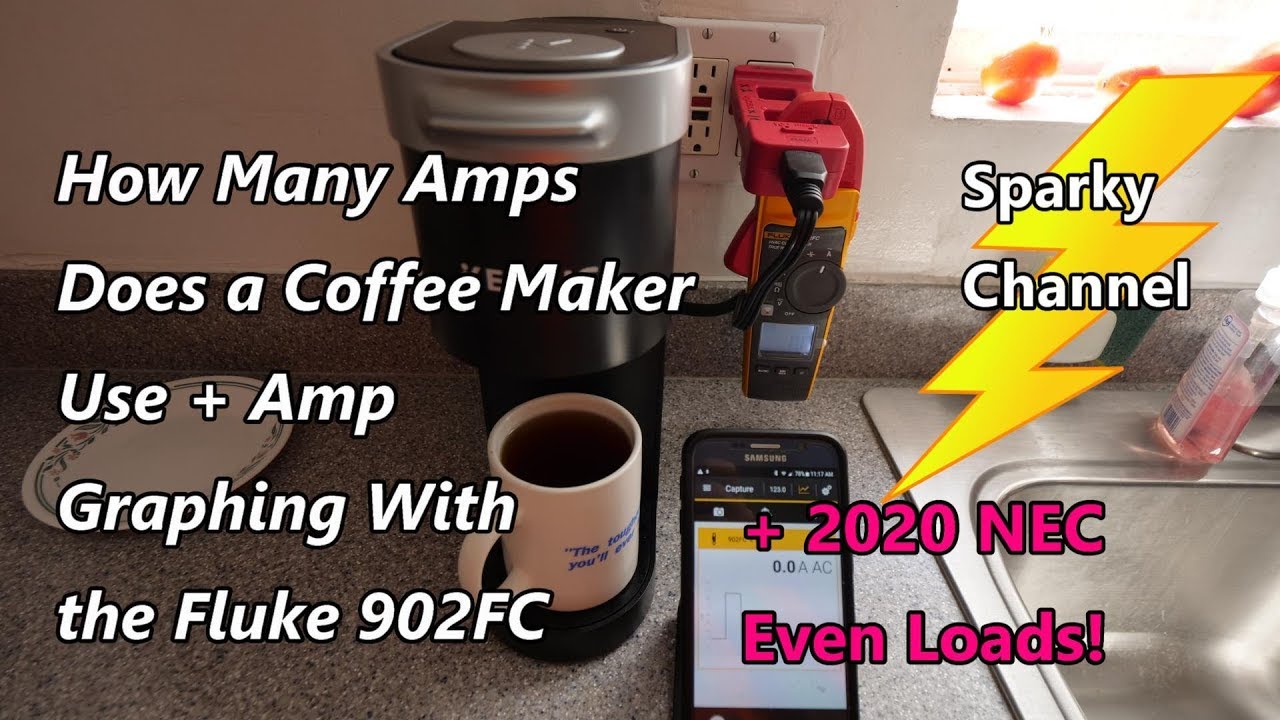
A typical coffee maker uses 5 to 12.5 amps, while high-power espresso machines may draw up to 15 amps.
Knowing how many amps a coffee maker uses helps you choose a safe outlet, avoid overloaded circuits, and understand your home’s energy use. The exact number depends on the machine’s wattage, voltage, heating system, and brewing design, so the rating label is always the best place to check.

How many amps does a coffee maker use?
Most coffee makers in the United States use between 5 and 12.5 amps on a standard 120-volt outlet. Small drip coffee makers may use about 600 to 900 watts, while larger machines often use 1,000 to 1,500 watts.
Here is the basic range:
• Small coffee maker: 5 to 8 amps
• Standard 10- to 12-cup coffee maker: 8 to 12.5 amps
• Single-serve pod machine: 10 to 15 amps
• Espresso machine: 8 to 15 amps
• Commercial coffee brewer: 12.5 amps or more
The answer to how many amps a coffee maker uses depends mainly on its wattage. A 1,200-watt coffee maker connected to a 120-volt outlet uses about 10 amps.
The calculation is simple:
Amps = Watts ÷ Volts
For example:
1,200 watts ÷ 120 volts = 10 amps
This is the expected running current while the heating element is on. A coffee maker may draw less power at certain times, such as when it is only keeping coffee warm.
Coffee maker amp draw by type
Different coffee makers use different amounts of electricity. A machine that only heats water for a few cups may use less power than a large brewer with a powerful heating element and built-in pump.
Drip coffee makers
A standard drip coffee maker usually uses 700 to 1,500 watts. At 120 volts, that equals about 6 to 12.5 amps.
A basic eight-cup model may use 750 watts:
750 ÷ 120 = 6.25 amps
A larger 12-cup model with a fast heating system may use 1,200 watts:
1,200 ÷ 120 = 10 amps
Many drip machines cycle their heating element on and off. This means the coffee maker may not draw its maximum current during the entire brewing cycle.
Single-serve coffee makers
Single-serve pod machines often use 1,000 to 1,500 watts. They need strong heating power to warm water quickly, so their amp draw can be higher than that of a small drip brewer.
A 1,400-watt pod machine uses approximately:
1,400 ÷ 120 = 11.7 amps
Some single-serve machines briefly draw close to 12 amps or more. This matters when other devices share the same kitchen circuit.
Espresso machines
Home espresso machines commonly use 1,000 to 1,800 watts. That equals roughly 8.3 to 15 amps on a 120-volt circuit.
Machines with steam wands, pumps, and large boilers tend to use more power. A compact espresso machine may draw around 9 amps, while a larger model may approach the limit of a 15-amp household circuit.
Commercial coffee makers
Commercial brewers can use 1,500 to 3,000 watts or more. Some models operate on 120 volts, while others require 208 or 240 volts.
A commercial brewer should be installed according to the manufacturer’s instructions. It may need a dedicated circuit, special plug, or professional electrical connection.
How to calculate coffee maker amps
You can calculate how many amps a coffee maker uses with the wattage and voltage printed on its label.
Follow these steps:
- Find the wattage on the coffee maker’s rating label or manual.
- Confirm the supply voltage. Most household outlets in the United States provide about 120 volts.
- Divide watts by volts.
- Compare the result with the circuit’s safe capacity.
For example, suppose the label says 1,000 watts and 120 volts:
1,000 ÷ 120 = 8.33 amps
That coffee maker uses about 8.3 amps while its heating element is operating.
If the label lists amps instead of watts, you can use the same idea in reverse:
Watts = Volts × Amps
For instance:
120 volts × 8 amps = 960 watts
Keep in mind that the result is an estimate. Voltage can vary slightly, and some machines cycle their heating parts. The label remains more reliable than a general online estimate.

What affects how many amps a coffee maker uses?
Several design features affect a coffee maker’s current draw. Wattage is the biggest factor, but it is not the only one.
Heating element size
The heating element warms the water and often keeps the carafe or brew plate hot. A larger element can heat water faster, but it also uses more watts and amps.
This is why a fast-brew machine may use more electricity than a simple, low-cost brewer.
Water temperature and brew speed
A machine that heats water in a short time needs a strong electrical load. A slower coffee maker may use less power at one moment, even if it runs for a longer period.
Built-in pumps
Espresso and specialty coffee machines often have pumps. The pump itself may not use much power compared with the heater, but it adds to the total electrical load.
Warming plate
A warming plate usually uses less power than the main heating element. However, leaving the coffee maker on for hours can increase total energy use and keep the appliance drawing power.
Voltage
The same wattage produces different amperage at different voltages. For example, a 1,200-watt appliance uses:
• 10 amps at 120 volts
• 5 amps at 240 volts
Most American countertop coffee makers are designed for 120-volt outlets. Never connect a machine to a different voltage unless the manufacturer clearly approves it.
Can a coffee maker overload a circuit?
Yes, a coffee maker can overload a circuit when other high-power appliances are running on the same circuit. The coffee maker may be safe by itself but create a problem when combined with a toaster, microwave, air fryer, kettle, or hot plate.
For example:
• Coffee maker: 10 amps
• Toaster: 8 amps
• Total: 18 amps
If both appliances share a 15-amp circuit, the breaker may trip. Even on a 20-amp circuit, the total load may be close to the circuit’s practical limit.
A circuit breaker protects the wiring from excessive current. It does not mean the coffee maker is defective every time it trips. Repeated trips may point to too many appliances, a weak breaker, damaged wiring, or another electrical issue.
Kitchen receptacles often serve several countertop appliances. As a practical habit, run only one large heating appliance at a time when you are unsure which outlets share a circuit.
The 80 percent guideline
Electrical planning often uses an 80 percent load guideline for continuous loads. On a 15-amp circuit, 80 percent is 12 amps. On a 20-amp circuit, it is 16 amps.
A coffee maker usually runs for less than three hours at a time, so it may not meet the technical definition of a continuous load. Still, leaving space on the circuit is a smart safety practice.
If a coffee maker frequently trips a breaker, stop using it until you identify the cause. An electrician can check the circuit safely.
Is a 15-amp outlet enough for a coffee maker?
A 15-amp outlet is often enough for a standard coffee maker, but the machine’s rating and the total circuit load matter.
A 900-watt coffee maker draws about 7.5 amps:
900 ÷ 120 = 7.5 amps
A 1,500-watt coffee maker draws about 12.5 amps:
1,500 ÷ 120 = 12.5 amps
That 1,500-watt appliance leaves little room for another high-power device on a 15-amp circuit. It may work normally when used alone, but the breaker can trip if a toaster or microwave runs at the same time.
Check the circuit breaker and appliance label before use. Do not replace a 15-amp breaker with a 20-amp breaker unless a qualified electrician confirms that the wiring and circuit are designed for it.
A 20-amp circuit offers more capacity, but it does not make every appliance safe. The coffee maker still needs the correct voltage, plug, and outlet.
Can you use a coffee maker with an extension cord?
It is best to plug a coffee maker directly into a properly grounded wall outlet. Extension cords can create extra heat, especially when they are thin, long, damaged, or placed under rugs.
If an extension cord is unavoidable for a short period, use one that:
• Is rated for the coffee maker’s wattage and current
• Has a grounding plug
• Is fully uncoiled
• Is in good condition
• Is not connected to other high-power appliances
Do not use a lightweight phone-charger cord or a cheap indoor cord with a heating appliance. Never use a damaged cord, loose adapter, or power strip that is not rated for the load.
Coffee makers contain heating elements. Treat them like toasters and kettles, not like low-power lamps.