Can You Use Microwave Safe Bowl In Air Fryer: Safe Guide
Yes, you can use some microwave-safe bowls in an air fryer, but only if they are also oven-safe.
Knowing whether you can use a microwave safe bowl in an air fryer is important for safe cooking. An air fryer uses strong, dry heat and fast air movement, so a bowl must handle high temperatures without cracking, melting, or blocking airflow. This guide explains which bowls work, which ones do not, and how to use them safely.
Can You Use a Microwave Safe Bowl in an Air Fryer?
You can use a microwave safe bowl in an air fryer only when the bowl is labeled oven-safe or rated for the air fryer’s cooking temperature. “Microwave-safe” means the bowl can handle microwave energy. It does not always mean the bowl can tolerate the direct, dry heat of an oven or air fryer.
Most air fryers cook between 300°F and 400°F. Some reach 450°F. That heat can stress thin glass, low-quality ceramic, plastic, and bowls with hidden coatings.
Before using a microwave safe bowl in an air fryer, check these points:
• Look for an oven-safe label or temperature rating.
• Confirm that the bowl fits without touching the heating element.
• Make sure air can still move around the food.
• Avoid sudden changes from cold to hot.
• Follow the air fryer and bowl manufacturer’s instructions.
A bowl that is safe in a microwave may still crack in an air fryer. The two appliances heat food in very different ways.
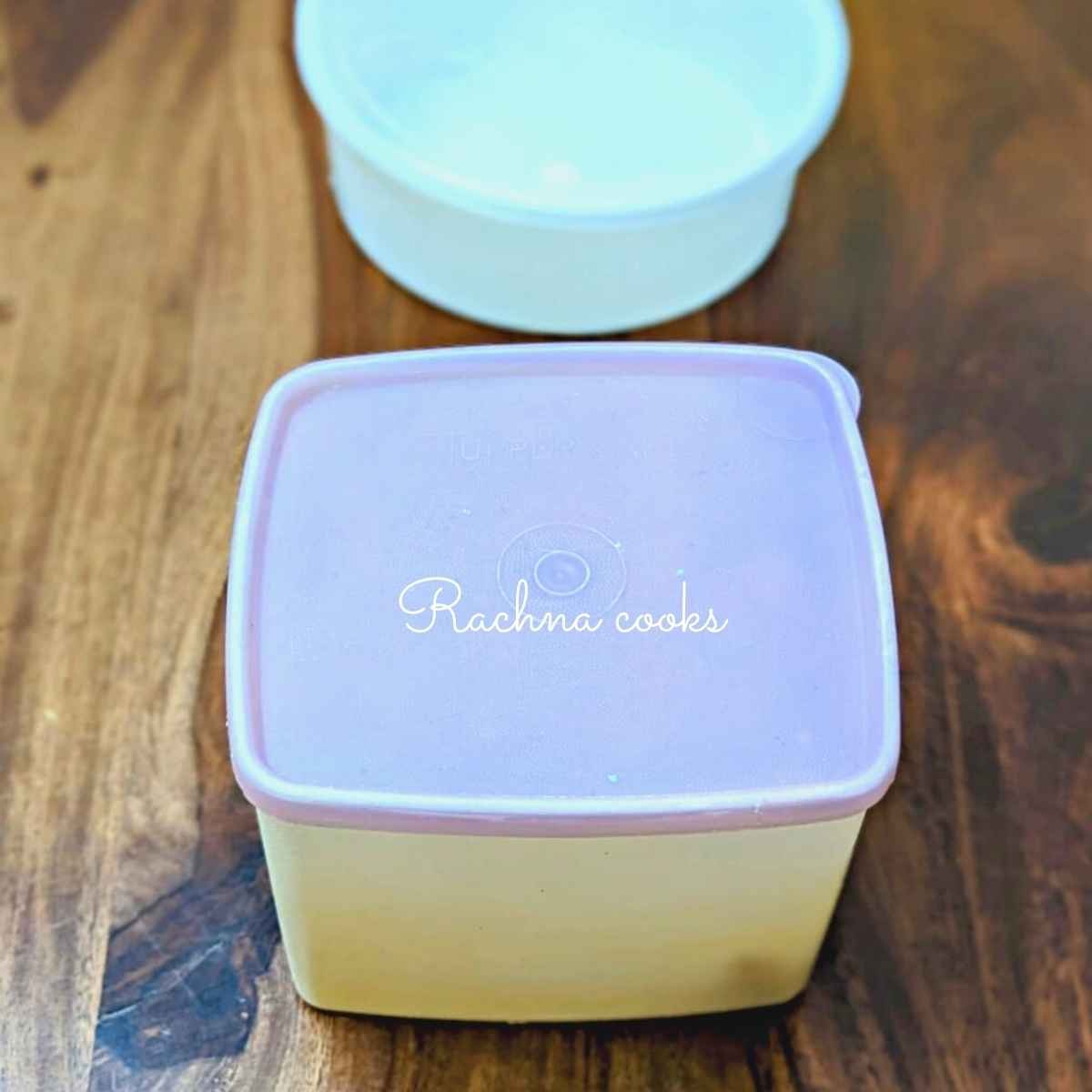
Microwave-Safe Does Not Always Mean Oven-Safe
Microwave ovens usually heat food by exciting water molecules. The bowl itself may remain fairly cool, although hot food can transfer heat to it. An air fryer works more like a small convection oven. A heating element produces intense radiant heat, while a fan moves hot air around the cooking chamber.
This difference matters. In an air fryer, the outside of a bowl can heat quickly while the inside remains cooler. That uneven change can create thermal stress. Think of it like placing a cold glass under very hot water. The sudden temperature shift may cause it to break.
A microwave-safe label mainly addresses microwave use. An oven-safe label addresses exposure to dry heat at a stated temperature. When you can use a microwave safe bowl in an air fryer, the answer depends on both labels, not the microwave label alone.
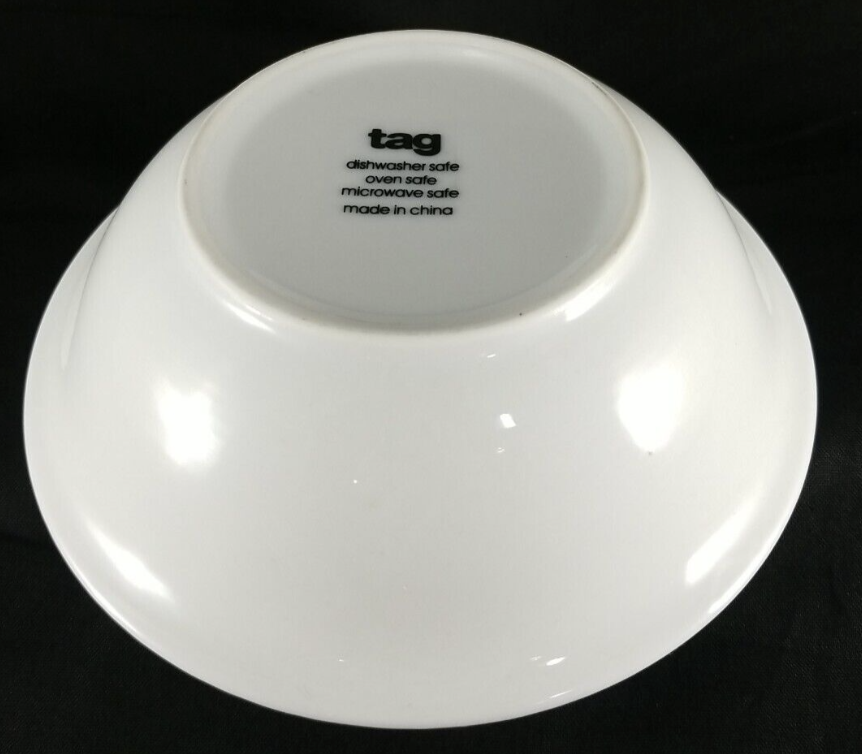
Check the bottom of the bowl, its packaging, or the care instructions. If the label only says “microwave-safe,” treat the bowl as unsuitable for an air fryer unless the maker confirms otherwise.
Which Bowls Are Usually Safe in an Air Fryer?
The material and design of the bowl both matter. Some bowls handle air fryer heat well, while others can fail quickly.
Oven-safe glass
Heat-resistant glass can work in an air fryer when the manufacturer approves oven use. Tempered or borosilicate glass is often more suitable than ordinary glass.
Still, glass needs care. Do not place a cold glass bowl into a fully heated air fryer. Do not pour cold liquid into a hot bowl. Never put a hot glass bowl on a wet or cold surface.
Oven-safe ceramic
many ceramic and stoneware bowls are suitable for air fryer use if they are marked oven-safe. Thick ceramic tends to hold heat well, but it can crack when exposed to fast temperature changes.
Inspect ceramic bowls for chips, hairline cracks, or damaged glaze. Even a small crack can spread under heat.
Stainless steel
Stainless steel bowls are generally heat-resistant and can work in an air fryer. They do not absorb microwave energy, but that does not matter in an air fryer because the appliance uses hot air and a heating element.
Use a small, shallow stainless steel bowl. A tall bowl may restrict air circulation and leave food undercooked.
Silicone
Food-grade silicone bowls can be useful in an air fryer when they have a clear heat rating. Many silicone products are rated for temperatures around 400°F, but ratings vary.
Use only silicone made for cooking. Avoid soft plastic containers that look similar to silicone.
Aluminum and other metal containers
Metal pans and foil trays can work in an air fryer when they fit properly and do not touch the heating element. Metal is not safe in most microwave ovens, but air fryers are different.
Do not let loose foil move into the heating element. A solid metal container is safer than a loose sheet of foil.
:max_bytes(150000):strip_icc()/air-fryer-amazon-arrow-2x1-9f60b3e46888409ea376b8c7fe7bc86f.jpg)
Bowls You Should Not Use in an Air Fryer
Some bowls may look sturdy but are poor choices for air fryer cooking. Avoid them unless the manufacturer clearly states that they are oven-safe.
• Plastic bowls can melt, warp, release odors, or transfer unwanted chemicals into food.
• Melamine bowls may become damaged under high heat and are usually intended for serving, not cooking.
• Disposable takeout bowls may deform or catch fire.
• Thin glass bowls can crack from thermal shock.
• Wooden bowls can dry out, scorch, or catch fire.
• Bowls with glued handles or decorative parts may separate.
• Bowls with metallic paint or trim can damage the appliance and are not suitable for microwave use.
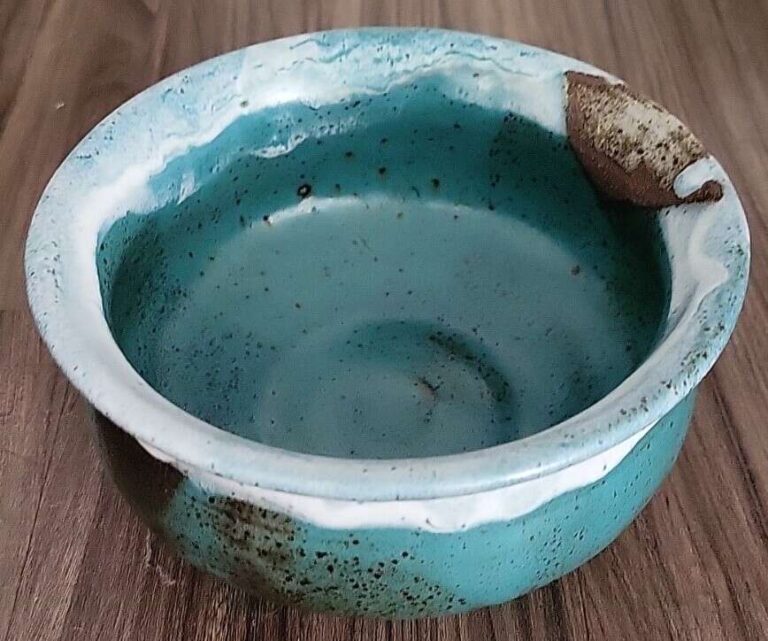
• Antique or handmade pottery may contain unknown materials or hidden cracks.
If you are unsure, do not use the bowl. A small oven-safe dish is cheaper than replacing a cracked bowl or damaged air fryer.
How to Check If a Bowl Is Safe
When deciding whether you can use a microwave safe bowl in an air fryer, use a simple safety check.
- Read the label
Look for “oven-safe,” “air fryer-safe,” or a maximum temperature. If the only label says “microwave-safe,” do not assume it can handle air fryer heat.
- Check the temperature rating
The bowl should tolerate the highest temperature you plan to use. For example, a bowl rated to 350°F may not be suitable for a 400°F cooking cycle.
- Inspect the bowl
Look for cracks, chips, scratches, weak seams, and damaged glaze. Do not use a bowl with visible damage.
- Check the size
The bowl should sit flat and remain stable. It must not touch the heating element or block the fan.
- Consider the food
A bowl filled with wet food may heat more slowly than the surrounding air. Dry foods may brown faster around the edges. Adjust the cooking time and stir when needed.
- Start with moderate heat
If the bowl is approved for oven use, begin around 325°F rather than using the highest setting. Watch for unusual smells, warping, smoke, or cracking.
When testing a new bowl, never leave the air fryer unattended. Stop the appliance immediately if you see smoke or notice damage.

How to Use a Bowl Safely in an Air Fryer
Even a suitable bowl can cause problems if it is used incorrectly. Follow these practical steps.
Leave room for airflow
Air fryers depend on circulation. Do not fill the basket with a large bowl that covers every opening. Hot air must move around the bowl and reach the food.
A shallow dish often works better than a deep bowl. It gives food more exposure to circulating heat and helps prevent soggy results.
Do not overfill the bowl
Keep food below the rim. Overfilled bowls can spill, block airflow, and cook unevenly. They may also place food too close to the heating element.
Avoid thermal shock
Do not move a bowl straight from the refrigerator into a hot air fryer. Let it warm slightly first if the manufacturer allows it.
Likewise, do not place a hot bowl on a cold stone counter or rinse it with cold water. Set it on a dry, heat-resistant pad.
Do not use a sealed bowl
Never air fry food in a sealed container. Steam needs a way to escape. Pressure can build inside a covered container and create a dangerous burst.
A loose cover may also block the fan. For most recipes, use the bowl uncovered.
Keep handles and edges clear
If the bowl has handles, make sure they do not touch the heating element. Check that you can safely remove the bowl without burning your hands.
Use heat-resistant gloves or silicone tongs when removing hot cookware.
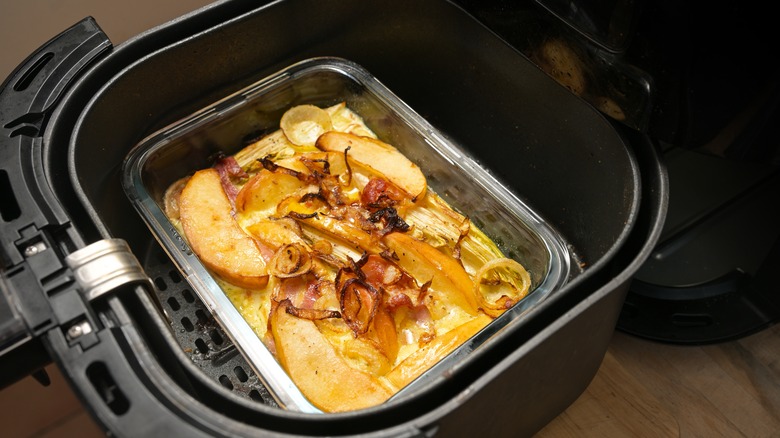
What Can You Cook in a Bowl in an Air Fryer?
A heat-safe bowl can help with many foods. It is especially useful when you want to contain sauces, melted cheese, or small ingredients.
Good uses include:
• Baked eggs
• Small cakes or brownies
• Dips and sauces
• Roasted vegetables with seasoning
• Macaroni and cheese
• Reheated rice or pasta
• Oatmeal-style baked dishes
• Small casseroles
• Melted butter or cheese
Keep in mind that a bowl changes how food cooks. The sides may shield food from direct airflow, so the center can take longer to cook. Stir food halfway through when practical.
For baked foods, use a food thermometer or a clean toothpick to check doneness. Cooking time may vary based on bowl depth, material, food amount, and air fryer model.
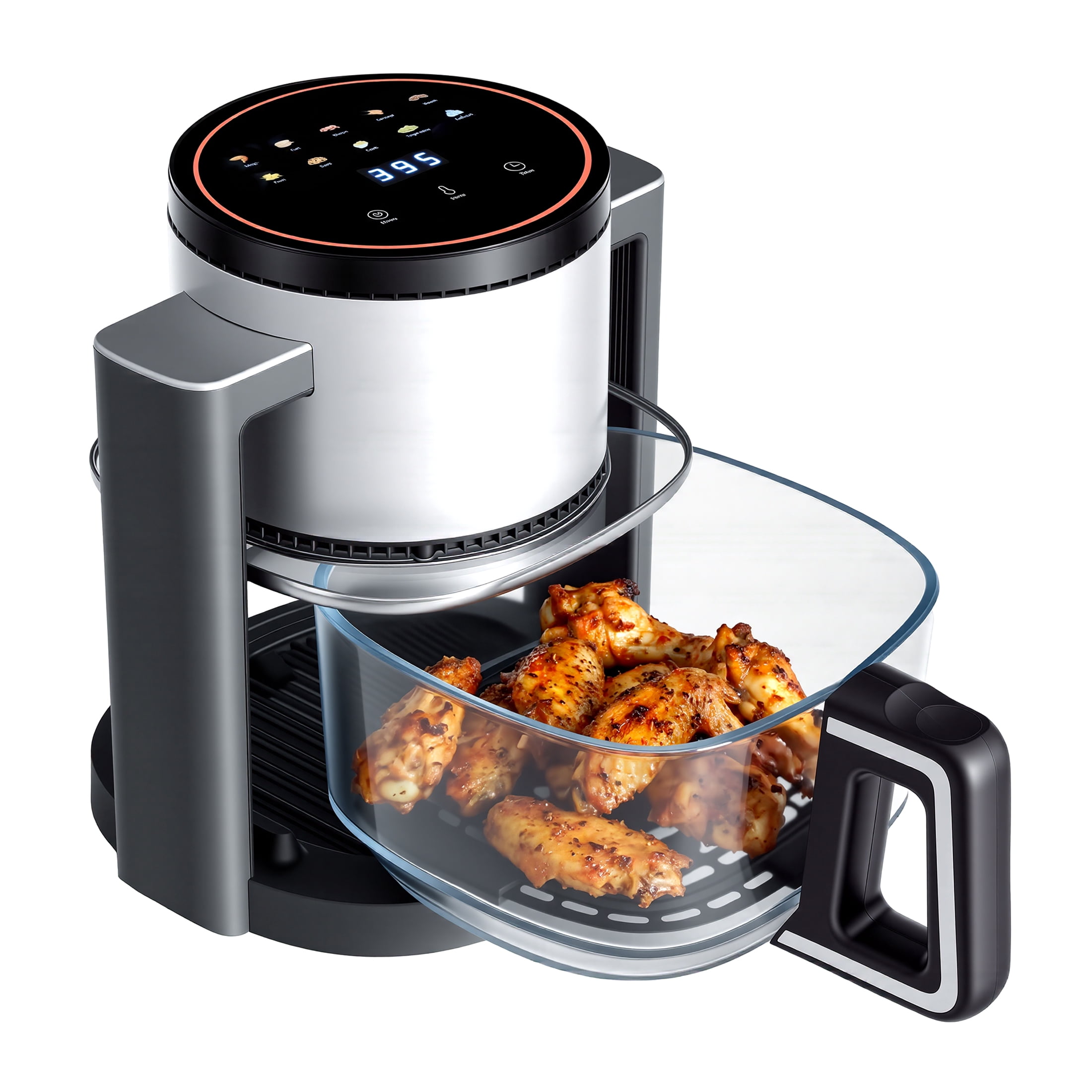
Common Mistakes to Avoid
Many air fryer problems come from treating the appliance like a microwave. The following mistakes are common.
Assuming the microwave symbol is enough
The microwave symbol does not prove that a bowl is oven-safe. Always look for a separate oven temperature rating.
Using a bowl that is too large
A large bowl can block hot air and may sit too close to the heating element. Choose a bowl that leaves space around its sides.
Starting with extreme heat
High heat can cause a sudden temperature change. Moderate heat is a safer starting point, especially with glass or ceramic.
Ignoring the air fryer manual
Some air fryer makers allow oven-safe dishes. Others warn against certain materials or sizes. The appliance manual should guide your final decision.
Leaving the bowl empty during preheating
An empty bowl can heat very quickly. If the recipe does not require preheating, place the food and bowl in the fryer together. Follow the bowl maker’s instructions.
Handling the bowl without protection
A bowl may look cool while its rim or base is dangerously hot. Use oven mitts, even for short cooking cycles.
In my own kitchen testing, the biggest issue is rarely the bowl’s label. It is usually poor airflow or a dish that is too deep. A bowl can be technically safe and still produce weak cooking results when it crowds the basket.
:max_bytes(150000):strip_icc()/air-fryer-amazon-arrow-4x3-f96eac195c0145799ebfff01ce948143.jpg)
Bowl or Air Fryer Pan: Which Is Better?
An air fryer pan is usually the better choice for frequent use. It is designed for high heat, proper fit, and airflow. Many pans also have handles that make removal easier.
A microwave safe bowl can be useful for occasional cooking, especially if it is also oven-safe. It may help when you already have one available and need to contain liquid food.
Use an air fryer pan when:
• You cook often.
• You need crisp food.
• You want even airflow.
• You are unsure about a bowl’s temperature rating.
• The bowl feels unstable in the basket.
Use a bowl when:
• It is clearly oven-safe.
• It fits with space around it.
• The recipe benefits from a deeper container.
• You are cooking a saucy or soft food.
The right container depends on both safety and cooking quality. A shallow pan usually gives crispier results, while a deep bowl gives better containment.
Safety Standards and Manufacturer Guidance
Reliable safety advice starts with the product instructions. The U.S. Food and Drug Administration explains that cookware should be used according to its intended purpose and manufacturer directions. Product safety organizations also warn that heat resistance depends on material, construction, and temperature.
There is no universal rule that every microwave-safe bowl can go into an air fryer. Brands may use different glass formulas, ceramic finishes, silicone blends, and adhesives. Some products also have separate limits for ovens, broilers, stovetops, and air fryers.
For the most accurate answer, check:
• The bowl’s packaging.
• The manufacturer’s care page.
• The air fryer manual.
• The maximum temperature for both products.
If the instructions conflict, follow the lower temperature limit. If no temperature information is available, choose a known oven-safe dish instead.
Frequently Asked Questions
Can you use a microwave safe bowl in an air fryer?
You can use a microwave safe bowl in an air fryer only if it is also rated oven-safe for the cooking temperature. A microwave-safe label alone is not enough.
Can glass bowls go in an air fryer?
Oven-safe, heat-resistant glass bowls can usually go in an air fryer. Avoid sudden temperature changes, damaged glass, and bowls that sit too close to the heating element.
Can you put a ceramic bowl in an air fryer?
A ceramic bowl can go in an air fryer when the manufacturer marks it oven-safe. Do not use chipped, cracked, or decorative ceramic with unknown heat limits.
Can plastic bowls go in an air fryer?
Most plastic bowls should not go in an air fryer because they can melt, warp, or release odors. Use heat-rated silicone or oven-safe glass instead.
Can stainless steel bowls go in an air fryer?
Stainless steel bowls are generally suitable for air fryer heat if they fit safely. Choose a shallow bowl and make sure it does not block airflow or touch the heating element.
Can you use a bowl while preheating an air fryer?
You can use an oven-safe bowl during preheating, but an empty bowl may heat rapidly. Follow the bowl maker’s instructions and avoid preheating with an unverified dish.
Does a bowl make food cook faster in an air fryer?
Usually, a bowl does not make food cook faster. It can slow browning because the sides block direct airflow, although it may help retain moisture in wet dishes.
Conclusion
You can use a microwave safe bowl in an air fryer only when it is also oven-safe and rated for the required heat. Glass, ceramic, stainless steel, and heat-rated silicone may work, while plastic, damaged dishes, and unknown materials should stay out.
Check the labels, leave room for airflow, avoid thermal shock, and follow both product manuals. When there is any doubt, use a dedicated air fryer pan or a clearly marked oven-safe dish. Choose safety first, then experiment with small recipes to find what works best in your appliance.

Liora Pennings is a seasoned chef and kitchen enthusiast with a passion for turning everyday cooking into an effortless experience. With years of hands-on culinary expertise, she specializes in practical techniques, ingredient know-how, and smart kitchen solutions that help home cooks elevate their meals. At KitchFlair.com, Liora shares her best tips, time-saving tricks, and honest product reviews to guide readers toward a more efficient, enjoyable, and inspired cooking routine. Whether you’re a beginner or a seasoned home chef, Liora’s friendly, knowledge-packed insights make every visit to the kitchen a little easier—and a lot more delicious.