Can You Wash A HEPA Filter For A Vacuum Cleaner: Safe Tips
You can wash a HEPA filter for a vacuum cleaner only when the manufacturer labels it washable.
Knowing whether can you wash a HEPA filter for a vacuum cleaner can protect your vacuum, improve air quality, and save money. Some filters use washable plastic or foam media, while many true HEPA filters use delicate pleated glass or synthetic fibers that water can ruin. This guide explains how to check the label, clean each filter type safely, and know when replacement is the better choice.

Can You Wash a HEPA Filter for a Vacuum Cleaner?
The short answer is: sometimes. A washable HEPA filter can usually be rinsed with cool water, but a standard disposable HEPA filter should not be washed.
The filter’s design matters more than its appearance. Two filters may look alike, yet one may be built for repeated washing while the other may lose its shape, seal, or filtering power after contact with water.
Always check:
• The owner’s manual
• The label printed on the filter frame
• The manufacturer’s product page
• The model number of your vacuum
• Any symbols showing “washable” or “rinse only”
If the manual says “do not wash,” follow that instruction. If you cannot find clear guidance, treat the filter as non-washable and replace it when dirty.
A HEPA filter is made to capture very small particles, including fine dust, pollen, and some other airborne particles. Its pleated material creates a large filtering surface in a small space. Water, soap, scrubbing, or high pressure can damage those pleats.
Washable HEPA Filters vs. Disposable HEPA Filters
Understanding the filter type is the most important part of answering can you wash a HEPA filter for a vacuum cleaner. The word “HEPA” describes filtration performance, not whether the filter can be washed.
Washable HEPA filters
Washable filters are designed with materials that can handle gentle rinsing. They often have a plastic frame and a filter medium made from washable synthetic material.
A washable filter may include wording such as:
• Washable
• Rinse with water
• Permanent filter
• Reusable filter
• Clean under running water
Some washable filters are not true HEPA filters. They may be called high-efficiency filters or allergen filters. That does not make them ineffective, but the label should accurately describe the product.
Disposable HEPA filters
Disposable HEPA filters often use tightly folded glass fiber or synthetic media. They may also contain a paper-like layer, adhesive, or cardboard support.
These filters often include wording such as:
• Replace filter
• Do not wash
• Disposable
• Replace every six to twelve months
• Tap gently to remove dust
Washing can make the filter swell, tear, or develop gaps. It may still look clean after drying, but damaged filter media can allow dust to pass through the vacuum.
Pre-motor and post-motor filters
Many vacuums use more than one filter.
The pre-motor filter protects the motor from dust. It may be foam, felt, or washable fabric. The post-motor filter, often called the exhaust HEPA filter, cleans air before it leaves the vacuum. This filter is more likely to be disposable.
Do not assume that one washable filter means every filter in the vacuum is washable.

How to Check If Your Vacuum HEPA Filter Is Washable
Before using water, inspect the filter and find the vacuum’s exact model number. The model number is often printed near the dust cup, on the underside of the machine, or inside the battery compartment.
Follow these steps:
- Turn off and unplug the vacuum. Remove the battery if it is cordless.
- Take out the filter carefully. Avoid shaking it inside your home.
- Look for a washable symbol or printed cleaning instructions.
- Search the manual using the model number.
- Check whether the instructions say “rinse,” “wash,” or “replace.”
- Contact the manufacturer if the instructions are unclear.
A manufacturer’s cleaning guide is more reliable than a general rule from a blog or social media post. The same brand may use washable filters in one model and disposable filters in another.
If the filter has a paper edge, cardboard ring, glued seam, or fragile pleats, do not wash it unless the manual clearly approves water cleaning.
How to Wash a Washable HEPA Filter Safely
If the filter is confirmed washable, clean it with care. Think of the filter as a fine net. You want to remove dust without stretching or tearing the net.
Step-by-step cleaning method
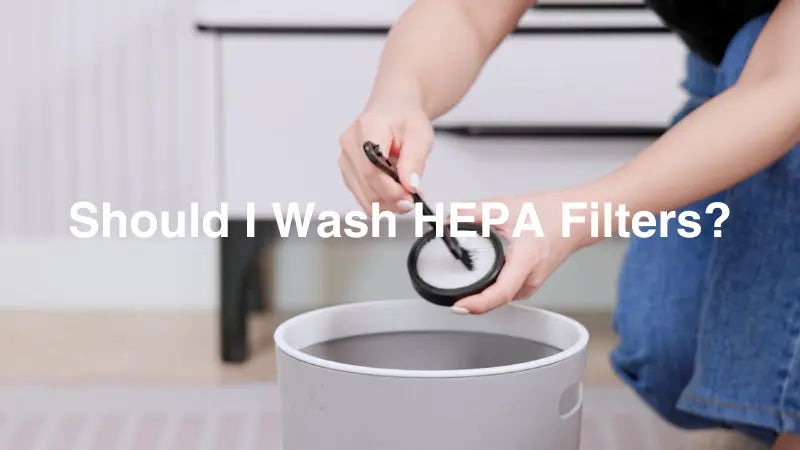
- Remove loose dust outdoors.
Take the filter outside if possible. Tap it gently against a trash can or use a soft brush on the outer surface. Do not hit it hard, since impact can damage the frame and pleats.
- Rinse with cool or lukewarm water.
Hold the filter under a gentle stream. In most designs, water should flow from the clean side toward the dirty side. This helps push trapped dust back out instead of driving it deeper into the filter.
- Do not use soap unless the manual allows it.
Soap can leave a film that attracts dust or affects airflow. It may also weaken adhesives used in the filter.
- Avoid a strong spray.
A high-pressure faucet, hose nozzle, or pressure washer can tear the filter material. Gentle running water is enough.
- Shake off excess water.
Do not twist, wring, or squeeze the filter. Those actions can bend pleats and break the seal around the frame.
- Air-dry it completely.
Place the filter in a warm, dry area with good airflow. Keep it away from direct heat, a clothes dryer, a hair dryer, and intense sunlight.
- Wait until it is fully dry.
Drying may take at least 24 hours. Thick filters can take longer. Never reinstall a damp filter.
- Inspect it before installation.
Look for cracks, loose edges, damaged pleats, or gaps. Replace the filter if it no longer looks intact.
One of the most common mistakes people make when asking can you wash a HEPA filter for a vacuum cleaner is putting it back while it is still damp. Moisture can encourage mold growth, create odors, and damage the vacuum motor.

What Happens If You Wash a Non-Washable HEPA Filter?
Washing a non-washable HEPA filter can cause damage that is hard to see. The filter may dry and appear normal, but its internal fibers may no longer form a tight barrier.
Possible problems include:
• Torn or stretched filter media
• Loose pleats
• A damaged adhesive seal
• Reduced suction
• Dust bypass around the filter
• Musty odors
• Motor strain
• Moisture damage inside the vacuum
A wet filter can also restrict airflow. Vacuums need steady airflow to cool the motor and move dirt through the system. If the filter remains damp or clogged, the motor may work harder than normal.
Do not try to rescue a disposable filter with dish soap, bleach, vinegar, or disinfectant. These products can leave residue and damage the filter. Replacement is usually safer and more effective.
How to Clean a Disposable HEPA Filter
A disposable HEPA filter should not be washed, but some manufacturers allow light surface cleaning.
Use only the method listed in the manual. If permitted, you may be able to:
• Tap the filter gently outdoors
• Brush loose dust from the exterior
• Use a soft, dry brush
• Vacuum the outside with another vacuum, if approved
Avoid compressed air unless the manufacturer specifically recommends it. High-pressure air can force particles through the filter or spread them around your home.
Replace the filter when it is visibly clogged, damaged, discolored, or producing a dusty smell. A filter can also need replacement when the vacuum has weaker suction, even if it does not look extremely dirty.
People with asthma, allergies, or other breathing concerns should be extra careful. A clogged or damaged filter may reduce the vacuum’s ability to capture fine particles.
How Often Should You Clean or Replace a HEPA Filter?
There is no single schedule for every home. Cleaning and replacement depend on the vacuum, filter design, floor type, pets, construction dust, and how often you vacuum.
As a general guide:
• Clean a washable pre-motor filter every one to three months
• Check a washable HEPA filter every one to three months
• Replace a disposable HEPA filter about every six to twelve months
• Inspect filters more often in homes with pets or heavy dust
• Replace a filter sooner if it is damaged or smells bad
These are starting points, not fixed rules. The owner’s manual takes priority.
A home with shedding pets may fill a filter much faster than a small apartment with hard floors. Fine powder, fireplace ash, drywall dust, and flour can also clog filter media quickly. Never use a household vacuum for large amounts of fine construction dust unless it is designed for that purpose.
Signs Your HEPA Filter Needs Attention
A filter may need cleaning or replacement when you notice changes in vacuum performance.
Watch for:
• Reduced suction
• A dusty smell during use
• More dust settling around the room
• Loud or unusual motor sounds
• The vacuum overheating
• A warning light
• Visible clogging
• A filter that stays damp
• Cracks or gaps around the frame
Reduced suction does not always mean the HEPA filter is the problem. Check the hose, brush roll, dust bin, intake path, and other filters too. A blocked brush roll can make a vacuum seem weak even when the HEPA filter is clean.
In my experience troubleshooting vacuum cleaning problems, people often focus on the most visible filter and overlook the small pre-motor filter. Checking the entire air path usually finds the problem faster than repeatedly washing one filter.

Mistakes to Avoid When Cleaning a Vacuum Filter
Cleaning a filter is simple, but a few habits can shorten its life.
Do not wash before checking the label
This is the biggest error. A filter that looks washable may still contain paper or delicate fiber media.
Do not use hot water
Hot water may warp plastic parts or affect adhesives. Cool or lukewarm water is safer for approved washable filters.
Do not scrub the pleats
A brush can tear the media. Use gentle rinsing or the cleaning method supplied by the manufacturer.
Do not use bleach or household cleaners
Cleaning chemicals may leave residue and damage the filter surface. They can also create unpleasant fumes when the vacuum runs.
Do not dry the filter with heat
Radiators, dryers, ovens, and hair dryers can warp the frame. Natural air drying is the safest choice.
Do not reinstall a damp filter
Even a small amount of moisture can create odor and harm the motor. When you think it is dry, give it more time.
Do not run the vacuum without its filter
The filter protects both your indoor air and the vacuum motor. Running the machine without it can spread dust and cause costly damage.
Can a HEPA Filter Be Vacuumed Instead of Washed?
Sometimes, but only if the manufacturer allows it. Vacuuming a HEPA filter can remove loose surface dust, but it may not remove particles trapped deep in the pleats.
If you use another vacuum, choose a low setting and avoid pressing the nozzle into the filter. For many disposable filters, gentle tapping is safer than aggressive vacuuming.
A washable filter still needs rinsing when the manual recommends it. Surface cleaning cannot replace proper maintenance when dust has built up inside the pleats.
Are Washable HEPA Filters as Effective After Cleaning?
A washable HEPA filter can continue working well when it is designed for repeated cleaning and remains undamaged. Its performance depends on the filter material, seal, construction, and cleaning method.
Repeated rough handling may weaken the filter over time. If the frame bends or the edges no longer seal tightly, air can flow around the filter instead of through it.
That is why “washable” does not mean “lasts forever.” Replace the filter if it has tears, loose seams, permanent odors, deep discoloration, or a poor fit.
A clean filter also does not make every vacuum a sealed HEPA system. Some dust may escape through gaps in the housing, hose, or dust bin. Filter quality and whole-vacuum design both affect air cleaning.