How To Choose Vacuum Cleaner Size: Best Capacity Guide
Choose vacuum capacity by floor area, debris level, storage space, and how often you plan to clean.
Learning how to choose vacuum cleaner size capacity for home space can save you money, time, and back strain. The right vacuum is not always the biggest one. A compact model may suit a small apartment, while a larger bin or bag works better for a busy home with pets, rugs, and children.
This guide explains how to choose vacuum cleaner size capacity for home space using practical size ranges, real cleaning needs, floor types, and storage limits. I have tested and compared many vacuum styles over the years, and one lesson stands out: capacity matters, but only when matched with suction, tools, weight, and daily habits.
What vacuum cleaner capacity really means
Vacuum capacity is the amount of dirt, dust, hair, and debris a machine can hold before you empty the bin or replace the bag. Brands may list capacity in liters, quarts, gallons, or cubic feet. These numbers describe storage space, not cleaning power.
A larger dust container lets you clean longer. However, it can also make the vacuum heavier and harder to store. A small vacuum may be easier to carry but may need frequent emptying.
When learning how to choose vacuum cleaner size capacity for home space, think of the vacuum as a trash can with a motor. A large trash can holds more, but it is not always the best choice for a small room.
Common vacuum capacity ranges
The following ranges are general. Exact capacity varies by vacuum type and brand.
• Small capacity: About 0.2 to 0.8 liters. Common in handheld and compact cordless vacuums.
• Medium capacity: About 0.8 to 2 liters. Common in stick vacuums and many cordless upright models.
• Large capacity: About 2 to 5 liters. Common in upright, canister, and bagged vacuums.
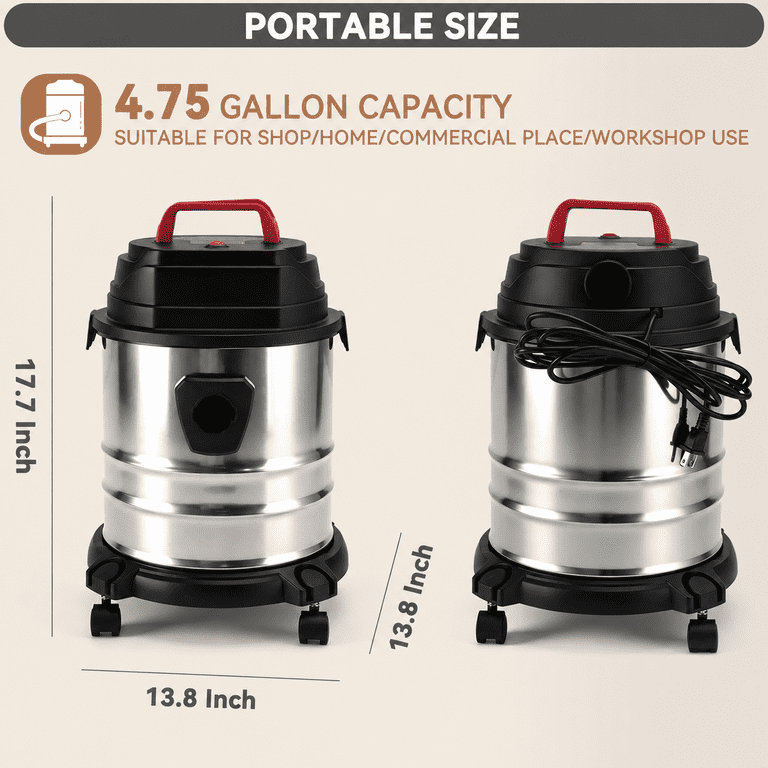
• Extra-large capacity: More than 5 liters. Often found in shop vacuums and heavy-duty machines.
A bagged vacuum may hold more usable dust than a bagless model with the same listed size. This is because the bag can expand, while a bagless bin may lose airflow as it fills.

Match vacuum size to your home’s floor area
Home size is a useful starting point, but it should not be the only factor. A 500-square-foot apartment with two shedding dogs may need more capacity than a 1,500-square-foot home with low-pile carpet and no pets.
Use your floor area as a guide, then adjust for dirt, hair, flooring, and cleaning frequency.
Small homes and apartments
For a studio, dorm, or apartment under about 800 square feet, a compact stick vacuum or small canister often works well. Look for a bin of at least 0.5 liters if you clean several times per week.
A small home with hard floors may need less capacity because dust and crumbs are easy to collect. If you have thick rugs, pets, or children, consider a medium-capacity model instead.
Medium homes
Homes from about 800 to 1,800 square feet often benefit from a vacuum with a 1 to 2.5-liter bin or a standard-size dust bag. This range offers a good balance between cleaning time and easy handling.
For larger homes, a cordless stick vacuum can still work if you clean in short sessions. You may need to empty it after each floor or room, which is not a problem for many people.
Large homes
For homes over about 1,800 square feet, a full-size upright or canister vacuum may be more practical. A 2 to 5-liter capacity can reduce interruptions during whole-home cleaning.
A central vacuum system can offer even more capacity. Its dirt canister is usually stored away from living areas, so you do not carry the weight of the container while cleaning.
How to choose vacuum cleaner size capacity for home space by square footage
A simple starting guide looks like this:
• Under 800 square feet: 0.5 to 1 liter
• 800 to 1,800 square feet: 1 to 2.5 liters
• Over 1,800 square feet: 2 to 5 liters
• Large homes with pets: 3 liters or more, or a bagged vacuum with a large bag
These figures are not strict rules. A small home with heavy shedding may need a large bin, while a large home that is cleaned daily may work well with a smaller bin.
Consider pets, children, and daily debris
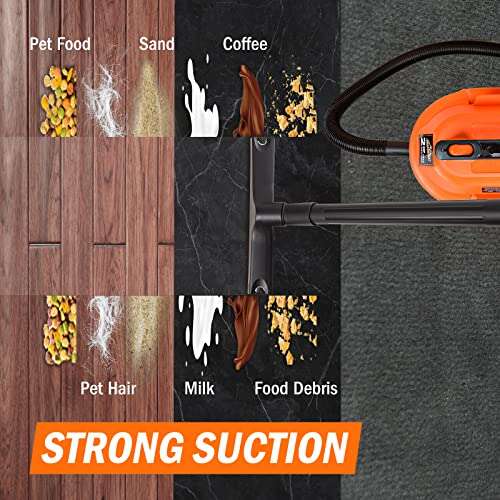
The amount of debris in your home can matter more than the number of rooms. Pet hair fills a dust bin quickly. Fine litter, sand, and food crumbs can also add up fast.
If you live with pets, look for a vacuum with:
• A sealed filtration system
• A washable or replaceable filter
• A brush roll designed for hair
• Tangle control or an easy-to-clean brush
• At least 1.5 to 3 liters of usable capacity
Pet owners should also check whether the listed capacity is the total bin size or the practical fill line. Many bins should not be filled to the top because airflow drops as dirt blocks the filter or intake.
Homes with young children may need frequent cleaning of crumbs, cereal, and small bits of paper. A vacuum that is easy to grab can be more useful than a large machine that stays in a closet.
In my experience, people often buy a large vacuum for pet hair but overlook the brush roll. A large bin does not help much if hair wraps around the roller every few minutes.
High-debris homes need more than a large bin
A bigger capacity helps, but the vacuum must also manage the type of debris.
• Long pet hair needs an anti-tangle brush.
• Fine dust needs strong filtration.
• Sand needs a sealed body and a durable floor head.
• Large crumbs need a wide intake path.
• Carpet fibers need a powered brush roll.
This is a key part of how to choose vacuum cleaner size capacity for home space. Capacity tells you how much the vacuum can hold. The floor head and filter determine how well it collects that material.

Choose between bagged and bagless capacity
Bagged and bagless vacuums both have benefits. Your best choice depends on allergies, maintenance habits, and ongoing cost.
Bagged vacuum cleaners
Bagged vacuums collect dirt in a replaceable bag. The bag often acts as part of the filtration system and can hold a large amount of dust.
Benefits include:
• Less contact with dust during disposal
• Large usable capacity
• Often quieter operation
• Good containment for allergy-sensitive homes
Limitations include:
• The need to buy replacement bags
• Possible loss of suction when the bag becomes full
• Extra storage for spare bags
A bagged canister or upright is often a strong choice for homes with pets, carpets, or allergy concerns. The American Lung Association and other health groups commonly emphasize reducing indoor dust and using suitable filtration, but no vacuum removes every airborne particle.
Bagless vacuum cleaners
Bagless vacuums collect dirt in a reusable dust bin. You do not need to buy bags, but you must empty and clean the container and filters.
Benefits include:
• No replacement bag cost
• Easy view of the dirt level
• Simple emptying for many users
• Often lighter in cordless models
Limitations include:
• Dust can escape during emptying
• Filters need regular cleaning
• Capacity may seem large but have a lower fill line
If you choose a bagless vacuum, empty it before the dirt reaches the maximum line. Wash or replace filters according to the manual. A clogged filter can reduce airflow and place extra stress on the motor.
Compare vacuum types and their capacity
Vacuum design affects both capacity and ease of use. A 2-liter upright does not feel the same as a 2-liter canister or cordless stick vacuum.
Upright vacuums
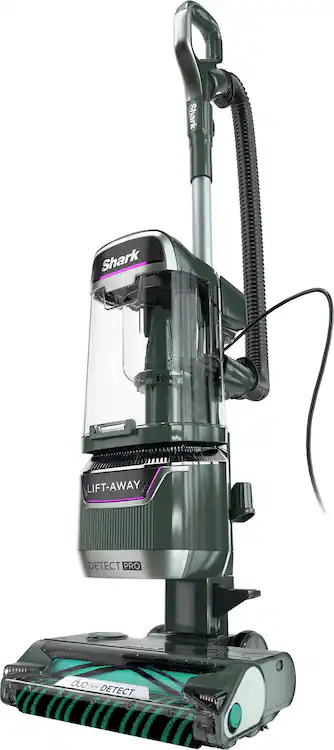
Uprights often have medium to large dust capacity. They work well on carpet and cover wide areas with fewer passes.
Choose an upright if you:
• Have several carpeted rooms
• Need strong floor agitation
• Want a large dust bag or bin
• Prefer not to recharge a battery
The tradeoff is weight. An upright may be difficult to carry up stairs, even when its dust capacity is ideal.
Canister vacuums
Canister vacuums usually offer good capacity and strong suction. Their flexible hose makes them useful on stairs, hard floors, furniture, and under beds.
They are a good fit for homes with mixed flooring. The main drawback is that you must pull the canister behind you.
Stick vacuums
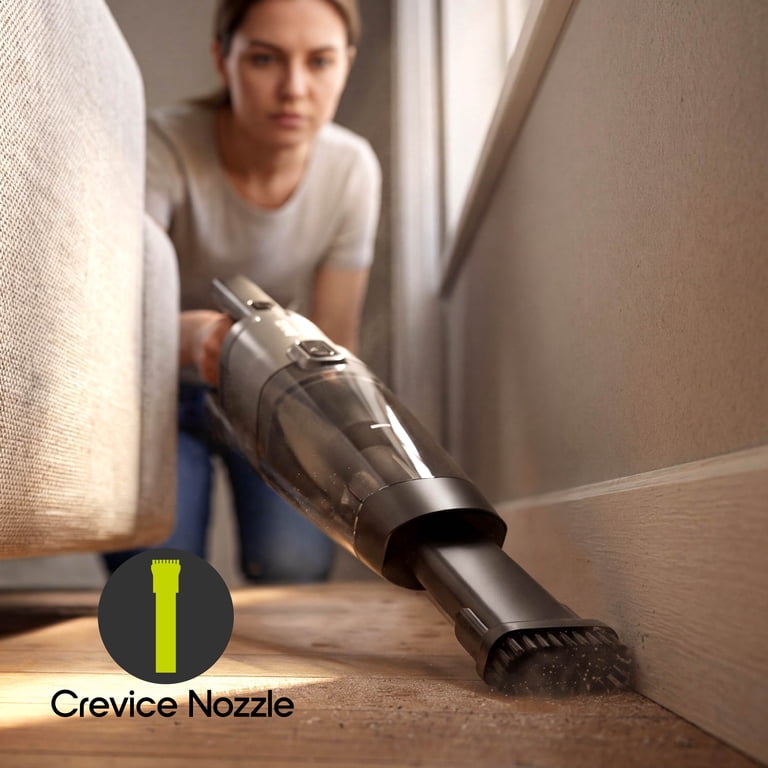
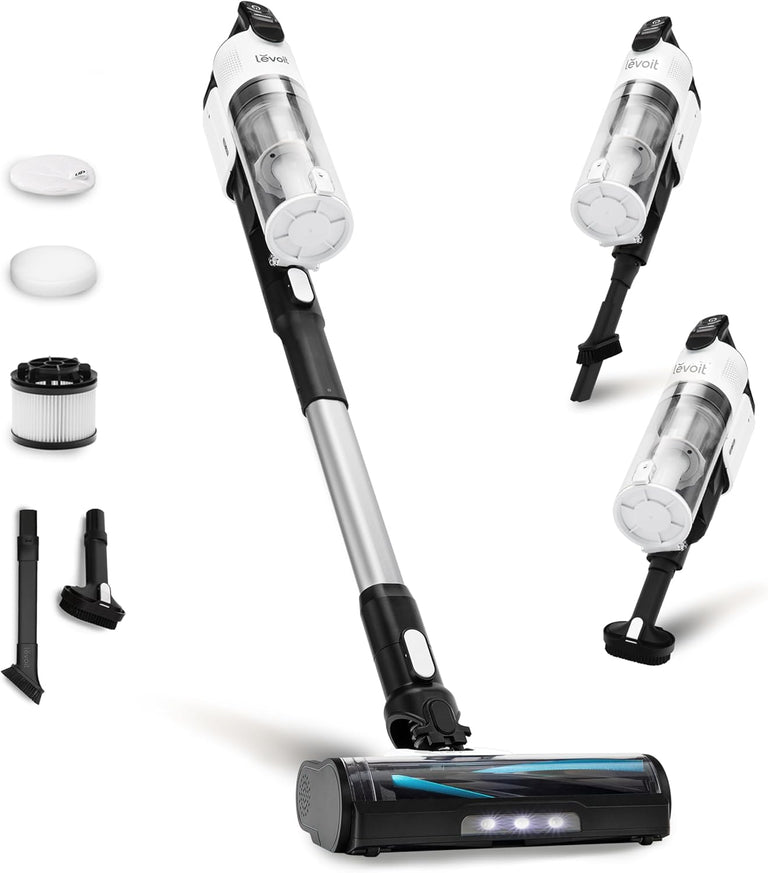
Stick vacuums are light and easy to store. Many have bins from about 0.3 to 1 liter.
They suit small spaces, quick cleanups, and homes with mostly hard floors. A stick vacuum may be less convenient for a large home if you dislike frequent emptying or charging.
Handheld vacuums
Handheld models have very small bins. They are made for stairs, cars, sofas, and small spills, not full-home cleaning.
They are helpful as a second vacuum. They are rarely a good replacement for a full-size machine unless your home is very small.
Robot vacuums
Robot vacuums often have bins from about 0.3 to 0.7 liters. Because they clean more often, the smaller bin may work well in a low-debris home.
Homes with pets may require daily emptying. A self-emptying dock can transfer debris to a larger bag or container, which reduces this task.
Shop vacuums
Shop vacuums can have capacities from about 2.5 gallons to more than 16 gallons. They are built for garages, workshops, renovations, and wet or large debris.
They are usually too bulky and loud for normal indoor cleaning. Do not use a wet-dry vacuum on liquid unless the model and filter are designed for it.

Think about storage, weight, and handling
A vacuum can have perfect capacity on paper and still be wrong for your home. If it is hard to lift, you may avoid using it.
Measure your storage area before buying. Check the vacuum’s height, width, hose position, charging dock size, and cord length.
Ask yourself:
• Can I carry it up the stairs?
• Will it fit in a closet or cabinet?
• Can I reach the dust bin without hitting a wall?
• Is the handle comfortable?
• Can I push it across my flooring?
• Will the cord or charger create a trip risk?
This is where how to choose vacuum cleaner size capacity for home space becomes a real-life decision. A compact model that gets used three times a week may clean better over time than a powerful model that is too heavy to move.
I once saw a homeowner choose a large canister because of its impressive capacity. It cleaned well, but the machine could not fit near the stairs. The owner ended up using a small handheld most of the time. Storage is not a minor detail; it shapes your cleaning habits.

Do not confuse capacity with suction power
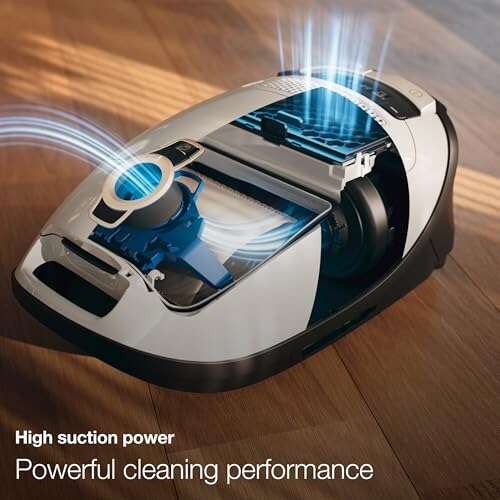
Capacity measures storage. Suction measures the vacuum’s ability to move air and lift dirt. These are related only in limited ways.
A large bin does not guarantee strong cleaning. A small vacuum can have excellent airflow and a well-designed floor head. Motor wattage also does not tell the full story because higher wattage can mean more energy use without better pickup.
Look for these features instead:
• Airflow and suction information, when the manufacturer provides it
• Independent test results
• A sealed filtration system
• A powered brush roll for carpet
• Adjustable suction for delicate rugs and hard floors
• Strong edge cleaning
• A floor head that matches your surface
Manufacturers do not always use the same tests or publish the same data. This makes direct comparison difficult. Reviews can help, but pay attention to tests on the flooring you have at home.
Adjust capacity for different floor types
Flooring changes how much debris a vacuum collects and how hard it must work.
Hardwood and other hard floors
Hard floors usually need a soft brush or suction-only tool. A smaller bin may be enough if you clean often.
Avoid using a stiff rotating brush on delicate floors unless the manufacturer says it is safe. Fine grit can scratch surfaces when pulled under a hard brush.
Low-pile carpet
Low-pile carpet works well with many upright, canister, and stick vacuums. A medium bin is often enough for small and medium homes.
Choose a floor head that creates good contact without being difficult to push.
High-pile carpet
High-pile carpet can trap more hair and dust. It may need a powered brush with height adjustment. A larger bin can reduce emptying during long cleaning sessions.
Make sure the vacuum does not seal too tightly to the carpet. Excessive resistance can make the machine hard to move.
Area rugs
Area rugs may require adjustable suction. Strong suction can lift thin rugs or pull at loose edges.
A vacuum with a brush-roll shutoff gives you more control. Test the setting on a small area first.
Stairs
Stairs favor a lighter vacuum, long hose, or detachable handheld unit. Capacity matters less than safe handling.
Never pull a heavy upright up stairs by its cord. Use the hose and stair tool as directed.

Calculate how often you will empty the vacuum
The listed bin size is not the same as the number of cleaning sessions. A home with pets may fill a bin much faster than a dust-free apartment.
Use this simple method:
-
Estimate how often you vacuum each week.
-
Note whether you have pets, children, rugs, or nearby outdoor dirt.
-
Check how much debris your current vacuum collects after one full cleaning.
-
Choose a capacity that gives you at least one full cleaning session before emptying.
-
Add extra capacity if you dislike frequent maintenance.
For example, suppose your 1,000-square-foot home has one dog and two carpeted bedrooms. A 0.4-liter cordless vacuum may fill before you finish. A 1.5 to 2-liter model could be more comfortable.
If you vacuum small areas every day, a smaller bin may be fine. If you deep-clean once each week, choose more capacity.
This practical approach is often more accurate than choosing by square footage alone. It is also one of the best ways to understand how to choose vacuum cleaner size capacity for home space.
Balance battery life with dust capacity
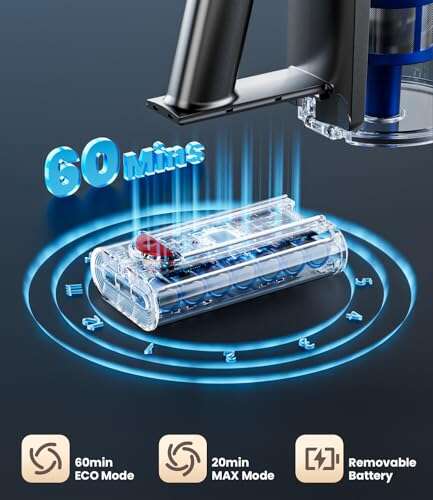
Cordless vacuums create two limits: battery runtime and dust capacity. A large bin does not help if the battery runs out halfway through the job.
Check runtime in the cleaning mode you will use. Advertised runtime often refers to the lowest power setting without a motorized tool. High power and carpet tools can reduce runtime.
For cordless models, look for:
• A removable battery
• A second battery option
• A clear charging indicator
• A charge time that suits your routine
• A bin large enough for one cleaning session
A small cordless vacuum may be perfect for daily maintenance. For deep cleaning, a corded upright or canister may offer longer, steady power.
How to choose vacuum cleaner size capacity for home space also means choosing the right balance between runtime and storage. Capacity is only useful when the machine can stay powered long enough to fill it.
Consider filters and indoor air quality
A vacuum’s filter system affects the air it releases. This matters most for people with asthma, allergies, or strong sensitivity to dust.
Look for a sealed system and a high-efficiency filter. “HEPA” has a specific performance meaning, but product claims can vary. Check whether the filter is washable, replaceable, or part of a sealed system.
Remember these maintenance steps:
• Empty the bin outdoors when possible.
• Replace full bags before they block airflow.
• Wash washable filters only as instructed.
• Let wet filters dry fully before reinstalling them.
• Replace filters at the recommended interval.
No vacuum can replace source control. Regular dusting, washing bedding, controlling humidity, and using ventilation also help reduce indoor particles. The Environmental Protection Agency notes that indoor air quality depends on several sources and control methods, not one appliance alone.
Avoid common vacuum size mistakes
Many buying mistakes come from focusing on one number. Capacity is important, but it should fit your full routine.
Avoid these errors:
• Buying the largest vacuum without checking its weight
• Choosing a tiny bin for a shedding pet
• Assuming watts equal cleaning power
• Ignoring the cost of replacement bags or filters
• Forgetting stair and storage needs
• Selecting a robot vacuum without planning for bin emptying
• Using a shop vacuum as a daily household vacuum
• Choosing a carpet brush for delicate hard floors
• Treating advertised capacity as usable capacity
My biggest practical lesson is to value convenience. A vacuum that is easy to grab, empty, and store often wins over a larger machine with better specifications.
A simple buying checklist
Before you buy, compare the following details:
• Home size and number of floors
• Carpet, rugs, tile, wood, or other flooring
• Number of pets
• Amount of daily debris
• Desired cleaning schedule
• Bin or bag capacity
• Vacuum weight
• Storage dimensions
• Corded or cordless power
• Battery runtime
• Filter type
• Brush-roll design
• Noise level
• Replacement bag and filter cost
• Warranty and repair support
If possible, visit a store and test the vacuum on a floor like yours. Push it forward and backward. Lift it with one hand. Open the bin. Check whether the release button feels clean and simple.
How to choose vacuum cleaner size capacity for home space becomes much easier when you test the machine as a tool, not just read its product label.
Frequently asked questions about how to choose vacuum cleaner size capacity for home space
What vacuum capacity is best for a small apartment?
A bin of about 0.5 to 1 liter is often enough for a small apartment with light debris. Choose a larger capacity if you have pets, thick rugs, or long gaps between cleaning sessions.
Is a bigger vacuum bin always better?
No. A larger bin reduces emptying, but it can add weight and take up more storage space. The best capacity matches your debris level, home size, and ability to handle the machine.
What vacuum size is best for a house with pets?
A bagged vacuum or bagless model with about 1.5 to 3 liters is a practical starting point for many pet homes. Prioritize a sealed filter system and anti-tangle brush because capacity alone will not manage hair well.
How often should I empty a bagless vacuum?
Empty the bin when debris reaches the marked fill line, even if the bin is not completely full. Waiting longer can reduce airflow and may send more dust into the filter.
Is a cordless stick vacuum enough for a large home?
It can be enough if you clean in short sessions and choose a model with suitable battery life and capacity. A corded upright or canister may be better for deep cleaning large carpeted areas.
Does vacuum capacity affect suction?
Capacity itself does not determine suction. However, an overfilled bin or bag can block airflow and reduce cleaning performance.
What capacity is best for allergy sufferers?
A large bagged vacuum with a sealed system can reduce contact with collected dust. Look for a high-efficiency filter, follow the maintenance instructions, and empty or replace the bag before it becomes full.
Conclusion
Choosing the right vacuum capacity starts with your home’s floor area, but pets, flooring, debris, storage, and cleaning habits matter just as much. Small homes often suit compact vacuums, while large or high-debris homes benefit from medium or large bags and bins.
Remember that capacity is not suction power. Check the floor head, filtration, weight, battery life, and maintenance needs before you buy. Use the practical ranges in this guide as a starting point, then match the machine to your real routine.
Take a quick look at your floors, measure your storage space, and estimate how much debris you collect in one cleaning session. With that information, you can choose a vacuum that works comfortably in your home instead of simply choosing the biggest model. Share your home size and flooring in the comments to help others make a smarter choice.

Liora Pennings is a seasoned chef and kitchen enthusiast with a passion for turning everyday cooking into an effortless experience. With years of hands-on culinary expertise, she specializes in practical techniques, ingredient know-how, and smart kitchen solutions that help home cooks elevate their meals. At KitchFlair.com, Liora shares her best tips, time-saving tricks, and honest product reviews to guide readers toward a more efficient, enjoyable, and inspired cooking routine. Whether you’re a beginner or a seasoned home chef, Liora’s friendly, knowledge-packed insights make every visit to the kitchen a little easier—and a lot more delicious.