How To Make Coffee Jelly: Easy Homemade Dessert Recipe
Make coffee jelly with strong coffee, gelatin, sugar, and a short chill for a firm, silky dessert.
Learning how to make coffee jelly is simple, but small details shape the final texture. After testing different coffee strengths, gelatin amounts, and chilling times, I have found that the best version balances a bold coffee flavor with a soft, clean wobble. This guide explains each step, common mistakes, serving ideas, and safe storage so you can make coffee jelly with confidence.
What Is Coffee Jelly?
Coffee jelly is a chilled dessert made from brewed coffee, sugar, and a setting agent such as unflavored gelatin. It is cut into cubes or spooned into small dishes, then served with cream, milk, sweetened condensed milk, or ice cream.
The dessert has a smooth, bouncy texture. Think of it as coffee transformed into a soft jelly, much like a cup of iced coffee you can eat with a spoon.
The best coffee jelly does not taste flat or overly sweet. It should have a clear coffee aroma, gentle sweetness, and enough firmness to hold its shape without feeling rubbery.
You can use drip coffee, instant coffee, espresso, or cold brew concentrate. The key is to keep the coffee flavor strong because gelatin and dairy can soften its taste.
Ingredients for Coffee Jelly
This basic recipe makes about four servings.
- 2 cups strong brewed coffee
- ¼ cup granulated sugar
- 1 tablespoon unflavored powdered gelatin
- ¼ cup cold water
- ½ teaspoon vanilla extract, optional
- Milk, heavy cream, whipped cream, or sweetened condensed milk for serving
For a richer coffee jelly, replace ½ cup of the brewed coffee with strong espresso. If you use instant coffee, dissolve 2 to 3 teaspoons of instant coffee in 2 cups of hot water, depending on the brand and your preferred flavor.
Use plain gelatin rather than flavored gelatin. Flavored gelatin may hide the coffee taste and can make the dessert much sweeter than expected.
Agar agar also works, but it creates a firmer, more brittle set. Gelatin gives coffee jelly the classic soft and springy texture.
How to Make Coffee Jelly Step by Step
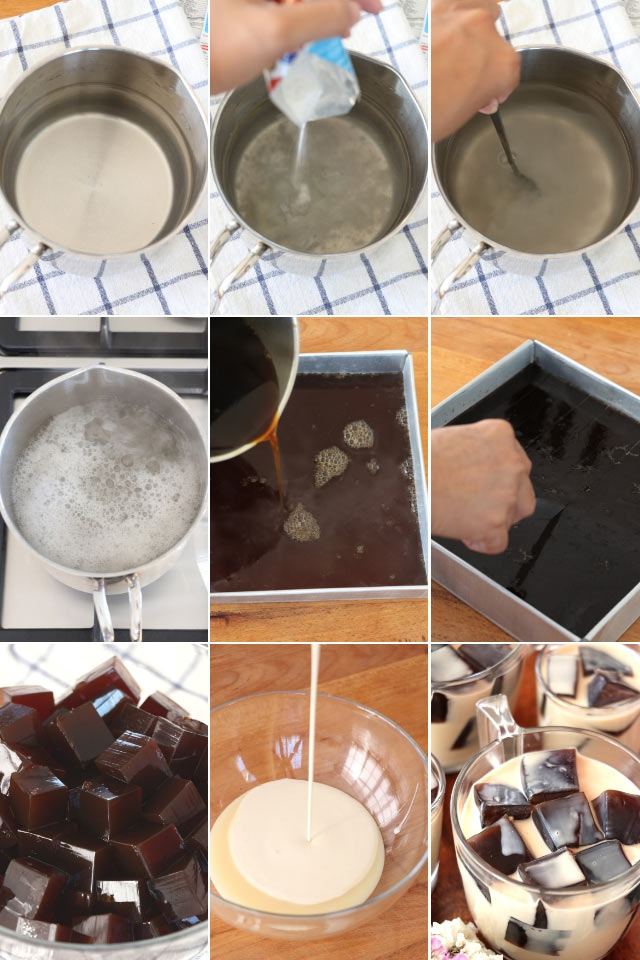
The process has four main parts: brew the coffee, bloom the gelatin, dissolve the mixture, and chill it until set.
1. Brew strong coffee
Brew 2 cups of coffee at a strength slightly higher than you would drink. Dark or medium-dark roast coffee works well, but medium roast can give the dessert a brighter flavor.
If you use leftover coffee, warm it gently before adding the gelatin mixture. Avoid using coffee that has sat at room temperature for many hours.
2. Bloom the gelatin
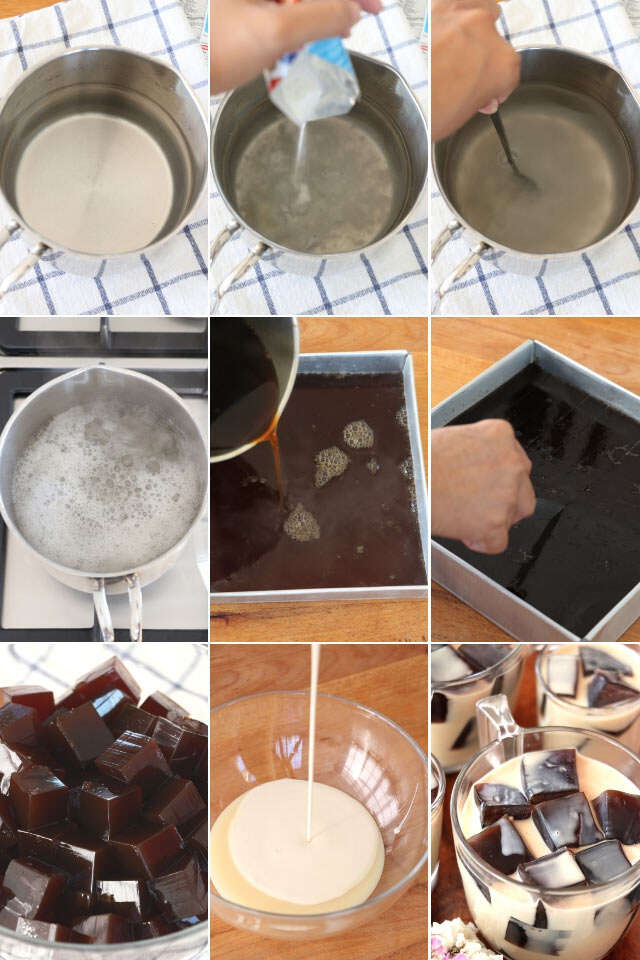
Place ¼ cup of cold water in a small bowl. Sprinkle the gelatin evenly over the surface.
Let it stand for 5 to 10 minutes. This step is called blooming, and it allows the gelatin granules to absorb water. Skipping it can lead to lumps or weak spots in the jelly.
3. Sweeten the coffee
Pour the hot coffee into a saucepan. Add the sugar and stir until it dissolves.
Warm the coffee over low heat if needed, but do not boil it. High heat can reduce the coffee and change its flavor. It can also make the final dessert taste bitter.
4. Add the gelatin
Remove the coffee from the heat. Add the bloomed gelatin and stir until it fully dissolves.
This usually takes about 1 to 2 minutes. Run a spoon through the liquid and check for tiny grains. If you still see grains, keep stirring gently until the mixture is smooth.
Stir in vanilla extract if you want a softer, rounder flavor.
5. Pour and chill
Pour the coffee mixture into a shallow glass dish, loaf pan, or individual cups.
Let it cool for a few minutes, then cover it and place it in the refrigerator. Chill for at least 4 hours, or until the jelly feels firm when lightly pressed.
For the cleanest cubes, chill the jelly overnight. Once set, cut it into squares with a sharp knife or scoop it into rough pieces with a spoon.
6. Serve the coffee jelly
Add the jelly to small glasses or bowls. Pour cold milk or cream over it just before serving.
You can also add:
- Sweetened condensed milk
- Whipped cream
- Vanilla ice cream
- Chocolate shavings
- A dusting of cocoa powder
- Caramel sauce
- Crushed cookies
- A small scoop of coffee ice cream
When I make coffee jelly for guests, I use small cubes with cold cream and a little condensed milk. The contrast between bitter coffee, sweet milk, and cool jelly makes each bite feel balanced.

The Best Coffee Jelly Ratio
The coffee-to-gelatin ratio controls the texture more than any other part of the recipe.
For a soft, spoonable jelly, use about 1 tablespoon of powdered gelatin for 2½ cups of total liquid. For a firmer jelly that holds sharp cubes, use 1 tablespoon for 2 cups of liquid.
Here is a simple guide:
- Soft texture: 2½ cups liquid with 1 tablespoon gelatin
- Medium texture: 2 cups liquid with 1 tablespoon gelatin
- Firm texture: 2 cups liquid with 1¼ tablespoons gelatin
Do not add extra gelatin just because the mixture looks thin while warm. Gelatin remains liquid when hot and sets as it cools.
A common mistake I made early on was judging the texture before chilling. The mixture looked too loose, so I added more gelatin. The result was a stiff jelly with a chewy texture. Waiting for the full chill time is the better approach.
How to Choose the Right Coffee
Coffee quality matters because coffee is the main flavor in this dessert.
Brewed coffee
Fresh, strong brewed coffee gives the most natural flavor. Use coffee that you enjoy drinking because weak or stale coffee will remain weak or stale in the jelly.
Instant coffee
Instant coffee is fast and reliable. It is useful when you want a strong flavor without adding extra liquid. Choose a dark roast instant coffee for a deeper taste.
Espresso
Espresso creates a bold and rich coffee jelly. Since espresso is concentrated, mix it with hot water to reach the recipe’s total liquid amount.
Cold brew
Cold brew concentrate can create a smooth and less bitter dessert. Dilute it according to the product instructions before measuring the liquid.
Avoid using sweetened bottled coffee unless you reduce the added sugar. These drinks often contain milk, flavoring, or sugar that can change how the gelatin sets and how sweet the dessert becomes.
How to Adjust the Flavor
Coffee jelly is easy to customize, but add-ins should support the coffee rather than cover it.
For a less bitter taste, add more sugar in small amounts. Start with 1 tablespoon at a time because sweetness becomes more noticeable after chilling.
For a stronger coffee flavor, use a darker roast, espresso, or instant coffee concentrate. You can also replace a small amount of the water used to bloom the gelatin with extra coffee, as long as the total liquid stays close to the recipe amount.
For a mocha version, stir 1 tablespoon of unsweetened cocoa powder into the hot coffee. Mix the cocoa with a little hot coffee first to form a smooth paste, then add it to the saucepan.
For a dairy version, keep the jelly itself dairy-free and add milk or cream at serving time. This creates a cleaner coffee taste and makes storage easier.
Common Coffee Jelly Mistakes
Knowing what can go wrong makes learning how to make coffee jelly much easier.
The jelly is too firm
Too much gelatin creates a rubbery texture. Measure the gelatin with a level tablespoon rather than a heaping spoon.
Firmness can also increase if some liquid evaporates during heating. Keep the coffee warm, not boiling, and maintain the original liquid amount.
The jelly does not set
Weak gelatin, too much liquid, or an incomplete chill can cause a soft result. Check that the gelatin was fresh and fully dissolved.
Give the dessert at least 4 hours in the refrigerator. If it still does not set after chilling overnight, it may need to be remade with a slightly higher gelatin ratio.
The jelly has lumps
Lumps usually form when gelatin is not bloomed or is added to liquid that is too cool. Bloom the gelatin in cold water first, then dissolve it in hot coffee off the heat.
Straining the liquid through a fine mesh sieve before chilling can remove small particles.
The coffee flavor is weak
Milk, cream, sugar, and gelatin all soften the coffee taste. Brew the coffee stronger than usual, or add a small amount of espresso or instant coffee.
Taste the warm mixture before chilling. It should taste slightly stronger and sweeter than you want because cold temperatures reduce the perception of flavor.
The jelly tastes bitter
Overheated coffee, very dark roast coffee, or too little sugar can create bitterness. Do not boil the coffee, and add sugar gradually until the flavor tastes rounded.
A splash of cream can also soften sharp notes without making the jelly overly sweet.
Serving Ideas for Coffee Jelly
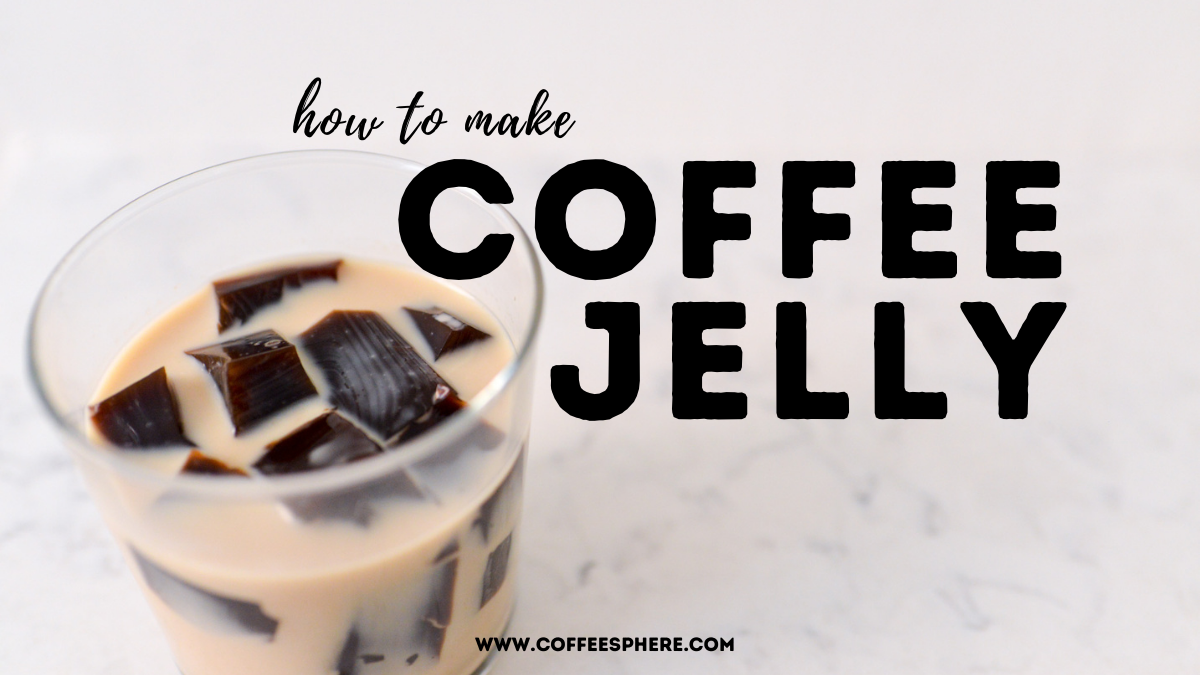
The classic way to serve coffee jelly is with milk or cream. Cut the jelly into small cubes, add them to a glass, and pour cold milk over the top.
For a Japanese-inspired dessert, serve the cubes with sweetened condensed milk and a scoop of vanilla ice cream. The ice cream slowly melts into the coffee jelly and creates a creamy sauce.
You can also layer coffee jelly in a dessert glass:
- Add a layer of coffee jelly cubes.
- Spoon in chilled cream or yogurt.
- Add another layer of jelly.
- Finish with whipped cream or cocoa powder.
For a party, make the jelly in a large shallow pan. Cut it into even cubes and place the cubes in small cups. Add the dairy topping just before serving so it stays fresh and attractive.
Coffee jelly also works as a topping for puddings, panna cotta, shaved ice, and blended coffee drinks. Keep the pieces small when using it in drinks so they are easy to scoop with a wide straw or spoon.
Storage and Food Safety
Store coffee jelly in a covered container in the refrigerator. Use it within 3 to 4 days for the best texture and flavor.
Keep milk, cream, and whipped cream separate until serving. This helps the jelly stay fresh and prevents the topping from becoming watery.
Do not leave coffee jelly with dairy toppings at room temperature for long periods. Perishable foods should be chilled promptly, and food safety guidance commonly recommends limiting time in the temperature danger zone.
Coffee jelly does not freeze well. Freezing can damage the gel structure and create a watery or crumbly texture after thawing.
Use clean utensils when cutting and serving the jelly. If the dessert develops an unusual smell, color, or texture, discard it rather than tasting it.
:max_bytes(150000):strip_icc()/JF_214724_CoffeeJelly_3x2_14658-aa343bd53dca453db682c3201aaf8e80.jpg)
Easy Variations on the Basic Recipe
Once you know how to make coffee jelly, you can adapt the base recipe in many ways.
Vietnamese-style coffee jelly
Use strong coffee and serve the jelly with sweetened condensed milk. Add a little evaporated milk for a creamy, caramel-like flavor.
Mocha coffee jelly
Add unsweetened cocoa powder and serve with whipped cream. A few chocolate curls make a simple but attractive garnish.
Vanilla coffee jelly
Add ½ to 1 teaspoon of vanilla extract. This version pairs well with fresh berries and lightly sweetened cream.
Coconut coffee jelly
Serve the jelly with chilled coconut milk. Add toasted coconut on top for a gentle tropical flavor.
Brown sugar coffee jelly
Replace some or all of the white sugar with light brown sugar. Brown sugar adds a mild molasses note that works especially well with dark roast coffee.
Decaffeinated coffee jelly
Use decaf coffee if you want the dessert later in the day. The method stays the same, and the flavor can still be rich if the coffee is brewed strongly.
How to Make Coffee Jelly Without Gelatin
Agar agar is the main alternative to gelatin. It comes from seaweed and creates a plant-based gel.
Agar sets more firmly and can feel slightly brittle. It also sets at room temperature, so it needs different handling.
To use agar agar, follow the package instructions carefully. Most agar products must be boiled briefly in liquid to activate, unlike gelatin, which should not be boiled.
The exact amount varies by product. Too much agar can make the coffee jelly hard and breakable, so start with the manufacturer’s recommended amount for the total liquid in your recipe.
This option is useful for vegetarian or vegan desserts, but always check the label and serving ingredients. Milk, cream, and ice cream may still contain animal products.
Frequently Asked Questions About How to Make Coffee Jelly
Can I use instant coffee to make coffee jelly?
Yes, instant coffee works well and gives you control over the flavor strength. Dissolve it fully in hot water before adding the bloomed gelatin.
How long does coffee jelly take to set?
Coffee jelly usually needs at least 4 hours in the refrigerator. For the firmest texture and cleanest cuts, chill it overnight.
Why is my coffee jelly not firm?
The gelatin may not have dissolved fully, the mixture may contain too much liquid, or the jelly may need more chilling time. Use fresh gelatin and keep the liquid close to the recipe’s measured amount.
Can I make coffee jelly without sugar?
Yes, you can reduce or skip the sugar, but the coffee will taste more bitter. Sugar does not control the set, so it can be adjusted to suit your taste.
Can I use agar agar instead of gelatin?
Yes, agar agar can replace gelatin, but it creates a firmer texture and requires boiling to activate. Follow the instructions on your agar agar package because strength varies between brands.
How should I serve coffee jelly?
Serve coffee jelly in cubes or spoonfuls with cold milk, cream, condensed milk, or ice cream. Add toppings just before eating for the best texture.
Can I make coffee jelly ahead of time?
Yes, you can make it 1 to 2 days ahead. Keep it covered and refrigerated, and store dairy toppings separately until serving.
Conclusion
Learning how to make coffee jelly takes only a few ingredients and a little patience. Brew strong coffee, bloom the gelatin in cold water, dissolve it gently, and chill the mixture until firm. From there, add milk, cream, condensed milk, or ice cream to create the flavor and texture you enjoy.
Start with the basic recipe, then adjust the coffee strength and sweetness on your next batch. Make a batch this week, try one new topping, and share your favorite coffee jelly combination in the comments.

Liora Pennings is a seasoned chef and kitchen enthusiast with a passion for turning everyday cooking into an effortless experience. With years of hands-on culinary expertise, she specializes in practical techniques, ingredient know-how, and smart kitchen solutions that help home cooks elevate their meals. At KitchFlair.com, Liora shares her best tips, time-saving tricks, and honest product reviews to guide readers toward a more efficient, enjoyable, and inspired cooking routine. Whether you’re a beginner or a seasoned home chef, Liora’s friendly, knowledge-packed insights make every visit to the kitchen a little easier—and a lot more delicious.