
How To Make Perfect French Press Coffee: Easy Expert Guide
Use fresh coffee, hot water, a four-minute steep, and a gentle plunge for balanced flavor.
Learning how to make perfect French press coffee is less about fancy equipment and more about control. The grind, water temperature, coffee ratio, steep time, and pouring method all shape the final cup.
With the right process, a French press can produce rich, full-bodied coffee with clear flavor and a smooth aroma. This guide explains how to make perfect French press coffee at home, avoid common mistakes, and adjust each step to match your taste.

What You Need to Make Perfect French Press Coffee
A French press is simple, but each tool affects the result. Start with fresh coffee and clean equipment. Old grounds or coffee oils left in the carafe can make a fresh brew taste flat or bitter.
For one standard 34-ounce French press, gather:
• 60 grams of whole coffee beans
• 900 grams, or about 30 fluid ounces, of filtered water
• A burr grinder
• A digital kitchen scale
• A gooseneck or steady-pour kettle
• A timer
• A clean French press
• Two warm coffee mugs
A burr grinder is worth using because it creates more even grounds than a blade grinder. Even grounds extract at a similar rate, which helps prevent a cup that tastes both sour and bitter.
Fresh, filtered water also matters. Coffee is mostly water, so water with a strong chlorine taste or very high mineral content can hide the coffee’s natural flavor.
Choose the Right Coffee and Grind
The best coffee for a French press is usually a medium or medium-dark roast with a full body. Chocolate, nut, caramel, and dried fruit notes often work well with this brewing method. Light roasts can also taste excellent, but they may need a longer steep or a slightly finer grind.
Buy whole beans when possible. Coffee begins to lose aroma soon after grinding, especially when exposed to air, heat, light, and moisture. Grind the beans just before brewing for the freshest cup.
Use a coarse grind for French press coffee. The grounds should look similar to coarse sea salt. If the grind is too fine, the coffee may taste muddy and bitter, and fine particles may pass through the filter.
If the coffee tastes sour or weak, use a slightly finer grind or steep it longer. If it tastes harsh, dry, or bitter, use a slightly coarser grind or shorten the steep.

Use the Best Coffee-to-Water Ratio
A reliable starting ratio is 1:15. That means one gram of coffee for every 15 grams of water.
For example:
• 20 grams of coffee needs 300 grams of water
• 30 grams of coffee needs 450 grams of water
• 60 grams of coffee needs 900 grams of water
A 1:15 ratio usually creates a rich and balanced cup. If you want stronger coffee, try 1:14. For a lighter cup, try 1:16.
Use a scale instead of measuring spoons. A spoonful of coffee can vary widely, while a scale gives you the same recipe each time. Consistency makes it much easier to improve your brew.
When teaching how to make perfect French press coffee, I always start with the ratio before changing anything else. It gives you a stable base. You can then adjust the grind, time, or temperature without guessing.
:max_bytes(150000):strip_icc()/__opt__aboutcom__coeus__resources__content_migration__serious_eats__seriouseats.com__images__2014__07__20140714-french-press-pour-675fbb49d50744c3a8385cac2537d137.jpg)
How to Make Perfect French Press Coffee Step by Step
Follow these steps for a dependable French press brew.
1. Heat the water
Heat filtered water to about 200°F, or 93°C. If you do not have a thermometer, bring the water to a boil and let it rest for about 30 seconds.
Water that is too cool may underextract the coffee. The cup can taste thin, sour, or dull. Water that is extremely hot can increase bitterness, although grind size and steep time often have a larger effect.
2. Warm the French press
Pour a little hot water into the empty French press. Swirl it for a few seconds, then discard the water.
This small step helps maintain a stable brewing temperature. It also warms the glass, which can reduce heat loss during steeping.
3. Add the coffee grounds
Add your freshly ground coffee to the French press. For a 34-ounce press, start with 60 grams of coarse-ground coffee.
Shake the press gently so the grounds form an even bed. This helps the water reach all the coffee at the same rate.
4. Add the first water
Start your timer and pour in about twice the weight of the coffee. For 60 grams of coffee, use about 120 grams of water.
Make sure all the grounds become wet. This first pour allows carbon dioxide to escape from the coffee. This process is called blooming, and it helps water reach the coffee more evenly.
5. Add the remaining water
After about 30 seconds, pour in the rest of the water. Pour slowly and evenly, then stir the mixture once or twice with a spoon.
Do not stir aggressively. A gentle stir is enough to break up dry clumps without creating too much sediment.
6. Steep for four minutes
Place the lid on the French press, but do not push the plunger down yet. Let the coffee steep for four minutes.
Four minutes is a useful starting point, not a strict rule. Some coffees taste better at three minutes, while dense light roasts may benefit from five minutes.
7. Break the crust and skim the foam
At four minutes, remove the lid and gently break the crust of grounds on the surface. Skim away excess foam and floating grounds with two spoons if you want a cleaner cup.
This optional step can reduce bitterness and sediment. It is especially helpful when using a large French press.
8. Press slowly
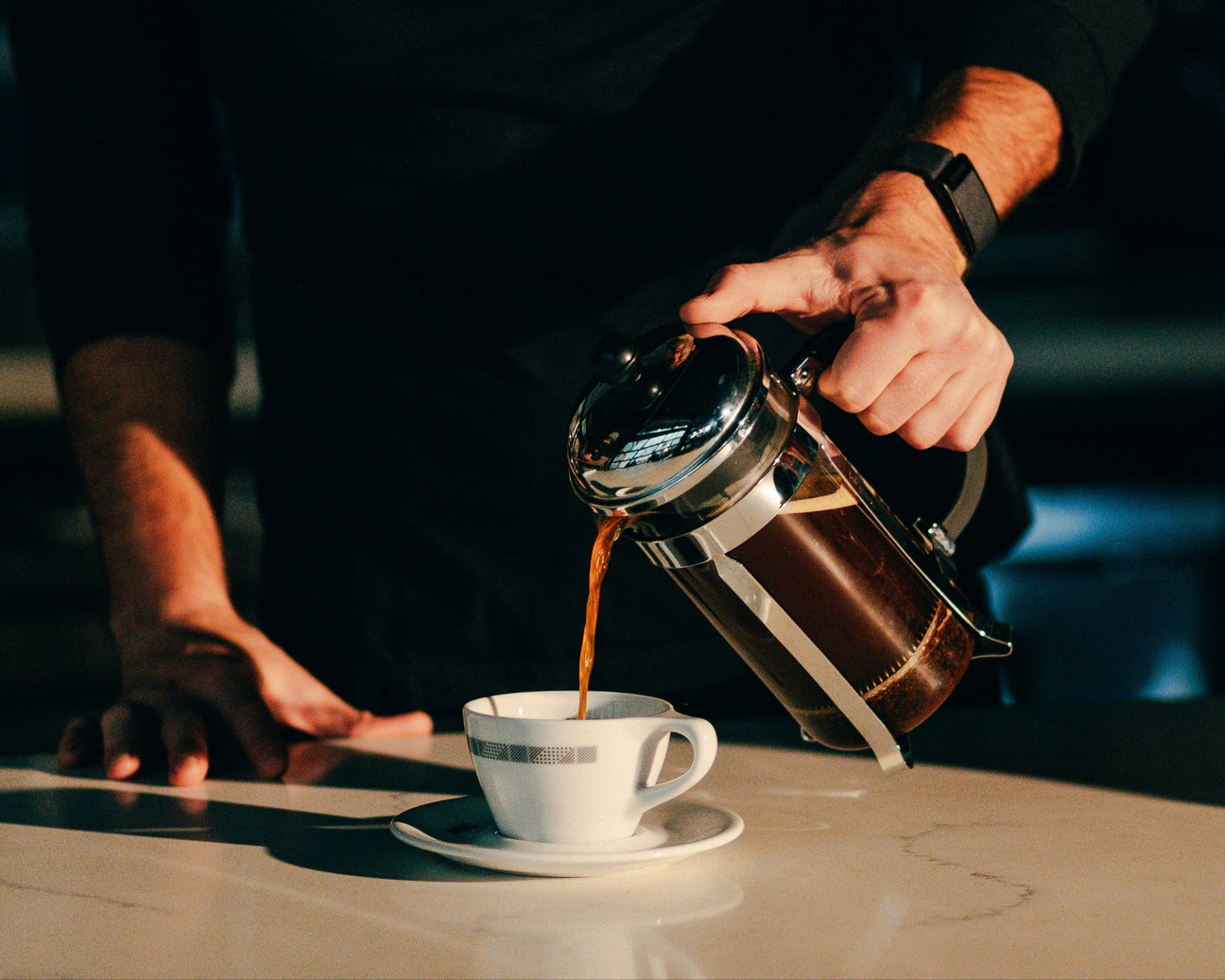
Replace the lid and press the plunger down with steady, gentle pressure. Take about 20 to 30 seconds.
If the plunger feels hard to push, the coffee may be ground too fine. Never force it. Lift the plunger slightly and press again with less pressure.
9. Pour all the coffee
Pour the coffee into mugs or a separate serving carafe right away. Do not let brewed coffee sit over the grounds.
The coffee continues extracting while it remains in the French press. This can turn a balanced cup into a bitter one within minutes.

Control the Four Main Brewing Variables
The method for how to make perfect French press coffee becomes easier when you understand the main variables.
Grind size
Grind size controls how quickly water extracts flavor from coffee. Fine grounds expose more surface area, so they extract faster. Coarse grounds extract more slowly.
A coarse grind is usually best for French press coffee because it reduces sludge and helps prevent overextraction.
Water temperature
Water near 200°F works well for most coffee. Cooler water extracts less flavor, while hotter water can make delicate notes harder to taste.
Do not obsess over one exact temperature. A range of about 195°F to 205°F is practical for most home brews.
Steep time
Four minutes is a strong starting point. If the coffee tastes weak or sour, add 30 to 60 seconds. If it tastes bitter or dry, reduce the time.
Change one variable at a time. If you change the grind, ratio, and time together, you will not know which adjustment helped.
Agitation
Stirring affects extraction. A gentle stir spreads water through the grounds. Too much stirring can increase extraction and push more fine particles into the drink.
Think of agitation like mixing pancake batter. You want the dry spots gone, but you do not need to whip the mixture.

How to Adjust the Flavor
Your cup gives you useful clues. Use its taste to guide your next brew.
If the coffee tastes sour
Sourness often points to underextraction. Try one of these changes:
• Use a slightly finer grind
• Increase the steep time
• Use hotter water
• Add a small amount of coffee
Make only one change first. A finer grind is often the easiest adjustment.
If the coffee tastes bitter
Bitterness often suggests overextraction. Try these changes:
• Use a slightly coarser grind
• Reduce the steep time
• Use slightly cooler water
• Stir less
• Pour the coffee out immediately after plunging
Do not automatically use less coffee. A low coffee dose can create weak flavor while leaving bitterness unchanged.
If the coffee tastes weak
Weak coffee may need a stronger ratio rather than a longer brew. Try using more coffee while keeping the same water amount.
For example, move from a 1:16 ratio to a 1:15 ratio. This creates more body without greatly changing the extraction process.
If the coffee feels gritty
Grit usually comes from fine particles. Use a coarser grind, press more slowly, and avoid shaking the press after brewing.
You can also pour the coffee through a clean paper filter. This removes more sediment but also removes some body and oils.
:max_bytes(150000):strip_icc()/__opt__aboutcom__coeus__resources__content_migration__serious_eats__seriouseats.com__images__2014__07__20140714-french-press-side-bdb5df539e33491d8a4b13f625256844.jpg)
Common French Press Mistakes to Avoid
Even a simple method has a few traps. Avoiding these mistakes can improve your coffee quickly.
• Using pre-ground coffee that has lost its aroma
• Choosing a grind that is too fine
• Measuring coffee only by volume
• Using stale or strongly flavored tap water
• Pouring boiling water over very delicate coffee
• Skipping the bloom
• Stirring too hard
• Pressing the plunger quickly
• Leaving coffee on the grounds after brewing
• Failing to clean the mesh filter
One common mistake is pressing the plunger as soon as the timer rings and then leaving the coffee in the press. The plunge does not stop extraction completely. Pour the coffee into cups or another container as soon as possible.
Another mistake is changing several factors at once. When I troubleshoot a brew, I treat it like a simple experiment. I keep the ratio steady and adjust only the grind or steep time.

How to Clean a French Press
Clean the French press after every use. Coffee oils collect on the mesh filter and glass, and these oils can become rancid.
Separate the plunger parts when possible. Rinse the mesh filter, rod, lid, and frame with warm water. Wash them with mild dish soap, then rinse well.
For deeper cleaning, soak the plunger parts in warm water with a small amount of baking soda. Use a soft brush to remove trapped grounds. Avoid abrasive tools that can scratch glass or damage the filter.
Let every part dry fully before reassembling the press. A clean French press protects the flavor of every future batch.
French Press Variations to Try
Once you know how to make perfect French press coffee with a basic recipe, you can explore different styles.
Cold brew French press coffee
Use a coarse grind and a ratio near 1:8 for a concentrated cold brew. Combine coffee and cool water, steep in the refrigerator for 12 to 16 hours, then press and dilute with water or milk.
The exact time depends on the coffee and your taste. A longer steep creates more strength but may also increase woody or bitter notes.
French press coffee with milk
A medium-dark roast pairs well with whole milk, oat milk, or half-and-half. Brew the coffee slightly stronger by using a 1:14 ratio.
Warm the milk gently. Very hot milk can taste scorched and may cover the coffee’s aroma.
Iced French press coffee
Brew a concentrated batch using about 1.5 times your usual coffee dose. Pour it over a glass filled with ice.
A normal-strength brew may taste watery as the ice melts. A stronger brew keeps the flavor balanced.
Single-cup French press coffee
For one mug, use 18 to 20 grams of coffee and 270 to 300 grams of water. Follow the same four-minute method, then pour the coffee into your mug.
Small presses can lose heat faster than large ones. Warming the press first becomes even more important.
French Press Coffee Benefits and Limitations
French press coffee is popular because it is affordable, portable, and easy to control. It does not need paper filters, electricity, or complicated settings.
The metal mesh filter allows natural coffee oils into the cup. These oils give French press coffee its thick texture and full body.
However, the method also produces more sediment than a paper-filtered brewer. Unfiltered coffee contains diterpenes, including cafestol and kahweol, which may affect blood cholesterol when consumed in large amounts. People managing cholesterol should follow advice from a qualified health professional and may prefer paper-filtered coffee.
French press coffee also requires immediate serving. If you need coffee that stays hot and consistent for a long time, a separate insulated carafe may work better.
Frequently Asked Questions About How to Make Perfect French Press Coffee
What is the best coffee-to-water ratio for French press coffee?
Start with a 1:15 ratio, such as 30 grams of coffee to 450 grams of water. Use 1:14 for a stronger cup or 1:16 for a lighter cup.
How long should French press coffee steep?
Four minutes is a reliable starting point for most coffees. Adjust the time by 30 to 60 seconds based on taste, grind size, and roast level.
Should French press coffee use coarse or fine grounds?
Use coarse grounds that look similar to coarse sea salt. Fine grounds can create bitter coffee and allow more sediment to pass through the mesh filter.
What temperature should water be for French press coffee?
Use water between 195°F and 205°F, with about 200°F as a practical target. If you boil water, let it cool for roughly 30 seconds before pouring.
Why does my French press coffee taste bitter?
Bitter coffee often comes from overextraction, a grind that is too fine, a steep time that is too long, or coffee left sitting on the grounds. Try a coarser grind or a shorter brew time.
Can I make French press coffee without a scale?
Yes, but a scale gives more reliable results. If needed, begin with about two level tablespoons of ground coffee for every 6 ounces of water, then adjust to taste.
Should I stir French press coffee?
A gentle stir helps wet all the grounds during brewing. Avoid vigorous stirring because it can increase extraction and create more sediment.
Do I need to plunge the French press slowly?
Yes. Press slowly and gently over about 20 to 30 seconds. Fast or forceful plunging can disturb the grounds and push more grit into the coffee.
Conclusion
Perfect French press coffee comes from a few simple habits: use fresh beans, choose a coarse grind, measure a consistent ratio, use hot water, steep for about four minutes, and pour the coffee immediately after plunging.
Treat your first recipe as a starting point. Taste the coffee, make one small change, and keep notes until you find the balance you enjoy. Brew a fresh batch today, then share your favorite ratio and roast in the comments.

Liora Pennings is a seasoned chef and kitchen enthusiast with a passion for turning everyday cooking into an effortless experience. With years of hands-on culinary expertise, she specializes in practical techniques, ingredient know-how, and smart kitchen solutions that help home cooks elevate their meals. At KitchFlair.com, Liora shares her best tips, time-saving tricks, and honest product reviews to guide readers toward a more efficient, enjoyable, and inspired cooking routine. Whether you’re a beginner or a seasoned home chef, Liora’s friendly, knowledge-packed insights make every visit to the kitchen a little easier—and a lot more delicious.