How To Make Espresso Coffee At Home: Easy Barista Guide
Make espresso at home by grinding fresh coffee, dosing precisely, tamping evenly, and pulling a balanced shot.
Learning how to make espresso coffee at home is easier when you treat each shot like a small recipe, not a guessing game. With fresh beans, a capable espresso machine, good water, and a little practice, you can make rich coffee with golden crema in your own kitchen.
This guide explains the equipment, grind size, coffee dose, extraction time, troubleshooting steps, and milk techniques that baristas use every day. It also shares practical lessons from testing home espresso setups, including the common mistakes that waste coffee and cause bitter or sour shots.
What Is Espresso?
Espresso is a concentrated coffee drink made by forcing hot water through finely ground coffee under pressure. A typical shot uses about 18 to 20 grams of coffee and produces 36 to 40 grams of liquid espresso.
The brewing process is fast. Most modern espresso recipes aim for about 25 to 30 seconds of extraction. The result should have a strong aroma, a smooth body, balanced acidity, and a pleasant finish.
Crema is the golden foam that forms on top of espresso. It comes from carbon dioxide and coffee oils released during brewing. Crema can look impressive, but it does not always prove that the espresso tastes good. Flavor matters more than appearance.
Espresso is the base for many popular drinks:
• Americano: Espresso diluted with hot water
• Latte: Espresso with steamed milk and a thin layer of foam
• Cappuccino: Espresso with a larger amount of airy steamed milk
• Flat white: Espresso with smooth, fine textured milk
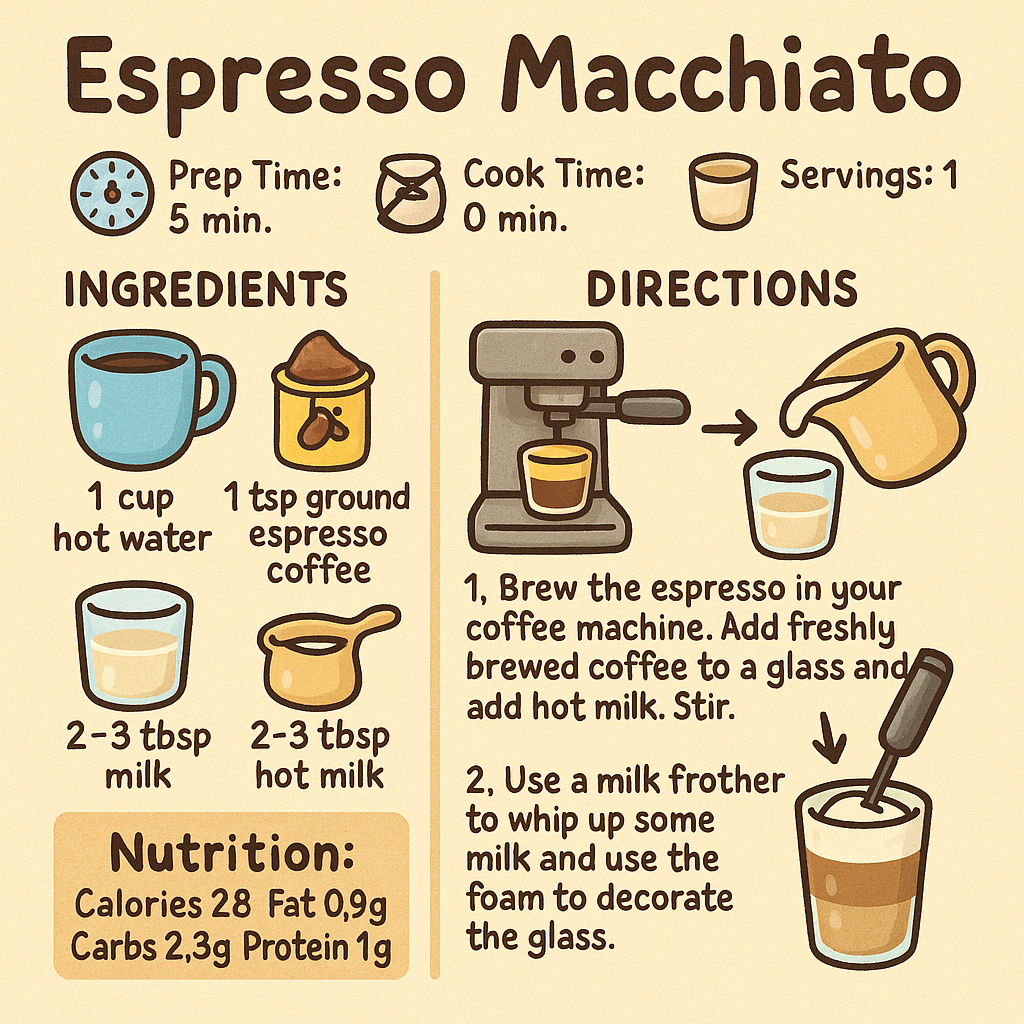
• Macchiato: Espresso marked with a small amount of milk foam

Equipment You Need to Make Espresso at Home
The right tools make how to make espresso coffee at home far more consistent. You do not need the most expensive setup, but every tool should perform its basic job well.
Espresso machine
An espresso machine heats water and pushes it through the coffee puck. Look for a machine with stable temperature control and a pump that can reach around 9 bars during extraction.
Useful machine features include:
• A sturdy portafilter
• A proper metal brew basket
• A steam wand for milk drinks
• A pressure gauge
• Temperature control
• A removable water tank
A basic single boiler machine can make excellent espresso, but it may need time to switch between brewing and steaming. Dual boiler and heat exchange machines are faster for making several milk drinks.
Burr grinder
A burr grinder is one of the most important parts of an espresso setup. It crushes coffee between two surfaces and creates more even particles than a blade grinder.
A blade grinder chops coffee unevenly. Some pieces become powder while others remain too large. This causes uneven extraction, where some coffee tastes bitter and other coffee tastes sour.
Choose a grinder with:
• Fine grind adjustment
• Low clumping
• Consistent burrs
• A setting designed for espresso
A quality grinder can improve a modest espresso machine more than an expensive machine can improve poor grinding.
Scale
Use a digital scale that reads in grams. A scale helps you measure the coffee dose and the espresso output.
For example, you might use 18 grams of coffee and aim for 36 grams of espresso. This creates a 1:2 brew ratio, which is a useful starting point for many coffees.
Tamper
A tamper compresses the ground coffee into an even puck. It should fit the basket closely without scraping the sides.
Many machines include a plastic tamper. It may work, but a solid metal tamper often gives better control and a flatter surface.
Fresh coffee beans
Use whole beans roasted for espresso or beans that taste good when brewed under pressure. Look for a roast date rather than only a “best by” date.
Coffee often tastes best between about one and six weeks after roasting, although the ideal period depends on the roast and storage. Very fresh coffee can release too much gas and produce unstable shots.
Other useful tools
• A dosing cup
• A small brush for cleaning the grinder
• A knock box
• A thermometer for milk practice
• A puck screen
• A clean microfiber towel
• A water filter if your tap water is hard

How to Make Espresso Coffee at Home Step by Step
The most reliable approach to how to make espresso coffee at home is to control one variable at a time. Start with a simple recipe, record your results, and adjust the grind before changing everything else.
1. Warm the machine and portafilter
Turn on the espresso machine and allow it to reach its full operating temperature. Many home machines need 10 to 30 minutes to warm evenly, even if the indicator light says they are ready sooner.
Lock the empty portafilter into the group head while the machine heats. This warms the metal and prevents it from cooling the brewing water.
Run a short flush of water through the group head. This removes old coffee residue and helps stabilize the temperature.
2. Weigh the coffee dose
For a standard double espresso, start with 18 grams of coffee. Use the dose that matches your basket size.
Place the portafilter or dosing cup on the scale. Tare the scale, then grind the coffee until you reach your target dose.
Do not fill the basket by sight. A small difference in dose can change the shot time and flavor. Consistent dosing is one of the simplest ways to improve how to make espresso coffee at home.
3. Grind the coffee finely
Espresso requires a fine grind. The texture should feel finer than table salt but not as powdery as flour.
Grind the coffee just before brewing. Ground coffee loses aroma quickly because more surface area is exposed to air.
If the shot runs too fast, make the grind finer. If it runs too slowly, make the grind coarser. Make small changes because a single notch can have a large effect on some grinders.
4. Distribute the grounds
Ground coffee may form clumps as it leaves the grinder. Break up those clumps and spread the coffee evenly across the basket.
You can gently tap the portafilter or use a thin distribution tool. Avoid hitting the portafilter hard against the counter, since this can damage the basket or create uneven density.
An even coffee bed helps water pass through the puck at the same rate. Without good distribution, water may find weak paths and create channeling.
5. Tamp evenly
Place the portafilter on a stable surface and press the tamper straight down. Use firm, steady pressure until the coffee bed is flat and compact.
The exact force matters less than a level tamp. A tilted puck creates areas of low resistance, allowing water to rush through one side.
Do not tamp several times or polish the puck aggressively. One level tamp is usually enough. Wipe loose grounds from the rim before locking in the portafilter.
6. Brew the shot
Lock the portafilter into the machine and start the extraction at once. Place a cup on the scale beneath the spouts.
Stop the shot when you reach your target output. For 18 grams of coffee, try 36 grams of espresso as a starting point.
Track both time and weight. A useful first recipe is:
• Coffee dose: 18 grams
• Espresso output: 36 grams
• Extraction time: 25 to 30 seconds
• Water temperature: about 195 to 205°F
These numbers are a starting point, not strict laws. Dark roasts may taste better with a shorter ratio or lower temperature. Light roasts often need a finer grind, more time, or a higher temperature.
7. Taste before changing the recipe
Let the espresso cool for a few moments, then taste it without milk or sugar. Notice the flavor, body, acidity, bitterness, and aftertaste.
If it tastes balanced, write down the recipe. If it tastes unpleasant, change one thing at a time.
When I test a new coffee, my first mistake used to be changing the dose, grind, and extraction time all at once. That made it impossible to know what helped. A simple notebook solved the problem: I record the roast, dose, yield, time, and taste.

How to Adjust Espresso When It Tastes Wrong
Taste is your best guide when learning how to make espresso coffee at home. Time and pressure provide useful clues, but they do not replace your palate.
Sour or sharp espresso
Sour espresso is often under extracted. The water has not removed enough flavor from the coffee.
Try these adjustments:
• Grind slightly finer
• Increase the brew time
• Raise the water temperature slightly
• Increase the espresso output
• Use a more even distribution
Light roasted coffee often has natural acidity. A bright flavor is not always a problem, but sourness can feel thin, harsh, or unfinished.
Bitter or dry espresso
Bitter espresso is often over extracted. Too much flavor has been pulled from the coffee, especially from the later stage of brewing.
Try these changes:
• Grind slightly coarser
• Reduce the brew time
• Lower the water temperature slightly
• Stop the shot earlier
• Check that the machine and basket are clean
Dark roasts can become bitter more easily. They often work well with a shorter extraction and a lower temperature.
Weak or watery espresso
Weak espresso may result from too little coffee, too much water, stale beans, or a grind that is too coarse.
Check the following:
• Confirm the coffee dose with a scale
• Use fresher beans
• Reduce the espresso output
• Grind finer
• Make sure the machine reaches full temperature
A large drink made from one small espresso shot may taste weak even when the shot itself is good. Add a second shot instead of extracting one shot into a very large cup.
Fast, pale extraction
If espresso starts flowing almost at once and turns pale quickly, the grind may be too coarse. The puck may also be uneven or under dosed.
Make the grind finer, improve distribution, and check that the basket matches the dose. A good shot often begins with slow drops before becoming a steady stream.
Slow or blocked extraction
A shot that barely flows may have a grind that is too fine. Too much coffee in the basket can create the same problem.
Make the grind slightly coarser. If the coffee touches the shower screen after you lock in the portafilter, reduce the dose.

The Best Espresso Recipe for Beginners
A simple recipe removes stress while you learn how to make espresso coffee at home. Start with a double basket and use the following recipe:
-
Measure 18 grams of whole coffee beans.
-
Grind the beans finely.
-
Distribute the grounds evenly in the basket.
-
Tamp once with a level surface.
-
Brew until the scale reads 36 grams.
-
Aim for about 25 to 30 seconds.
-
Taste and adjust the grind.
If the espresso reaches 36 grams in 18 seconds, grind finer. If it reaches 36 grams in 40 seconds, grind coarser.
You can also change the brew ratio. A 1:1.5 ratio produces a shorter, heavier shot. A 1:2 ratio is balanced for many coffees. A 1:2.5 ratio produces more liquid and may highlight lighter flavors.
Do not chase a number while ignoring taste. A coffee that tastes delicious at 23 seconds is better than one that tastes harsh at exactly 30 seconds.

How to Steam Milk for Espresso Drinks
Steamed milk should feel smooth and glossy, like wet paint. It should contain tiny bubbles rather than large, dry foam.
Start with cold milk in a stainless steel pitcher. Fill the pitcher only one third full because milk expands as it heats.
Purge the steam wand before steaming. Place the wand tip just below the milk surface and turn on the steam. You should hear a soft paper tearing sound as air enters the milk.
Once the milk expands slightly, lower the pitcher so the wand sits deeper. Create a gentle whirlpool to mix the foam into the milk.
Stop steaming when the pitcher feels hot but still comfortable to touch for a few seconds. For most milk drinks, a temperature around 140 to 150°F works well. Higher temperatures can make milk taste flat or scorched.
Wipe and purge the steam wand immediately after use. Dried milk is difficult to remove and can create a hygiene problem.
Plant based milk can also work well. Barista style oat and soy milk often produce better foam than thin almond or rice milk, but results vary by brand.
:max_bytes(150000):strip_icc()/How-to-Make-Better-Espresso-Drinks-at-Home-FT-BLOG0625-02-9b5566c8584e4e9f97bd460d92cb4ab6.jpg)
Espresso Without an Espresso Machine
A true espresso machine uses pressure, temperature control, and a designed brewing system. Some alternative tools can make concentrated coffee, but they do not produce exactly the same result.
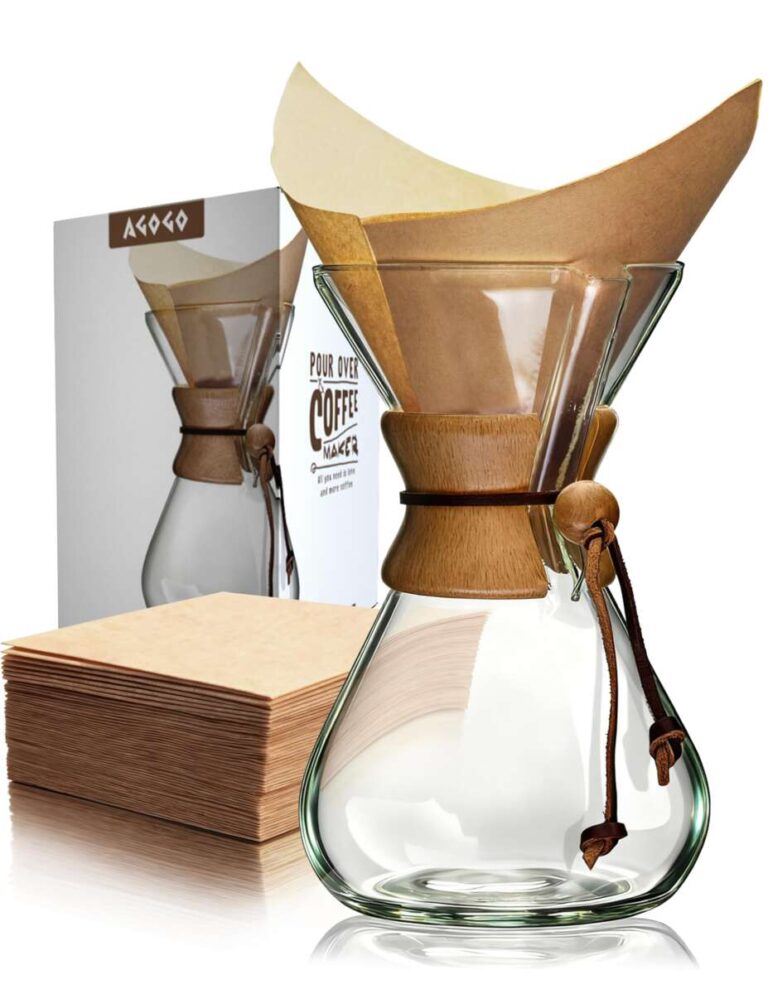
AeroPress
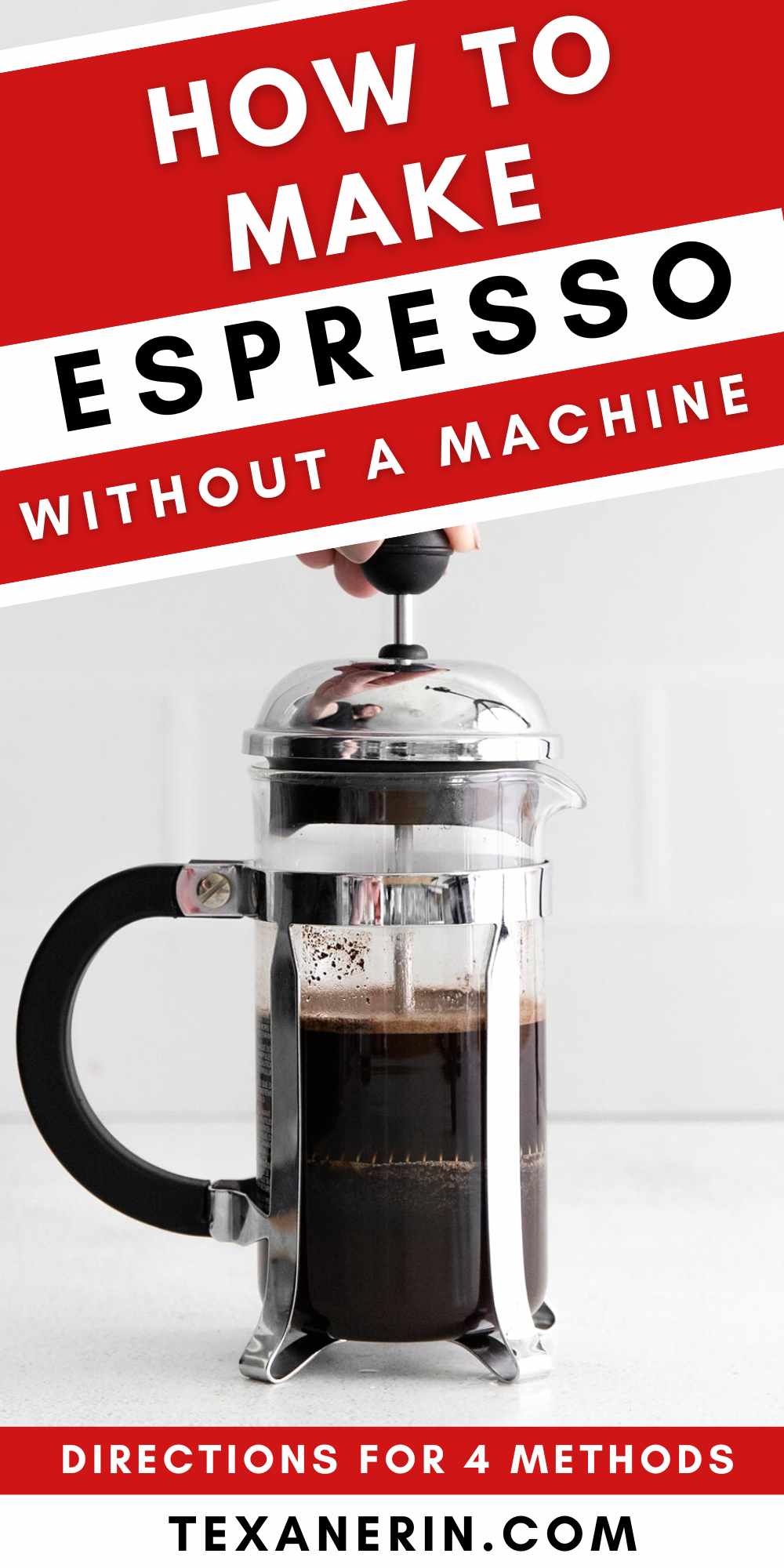
An AeroPress can make a strong coffee concentrate with a fine grind and short brew time. It is affordable and easy to clean, but the pressure and crema will differ from traditional espresso.
Moka pot
A moka pot makes rich, concentrated coffee on the stovetop. It uses steam pressure, but not the same brewing pressure as an espresso machine.
Use medium fine coffee, avoid tamping, and remove the pot from heat when the upper chamber fills. Moka pot coffee works well in milk drinks.
Manual lever brewer
A manual lever brewer can produce real espresso with careful control. It requires more practice, but many coffee enthusiasts enjoy the control over pressure and flow.
These methods are useful when a machine is not practical. However, if your goal is how to make espresso coffee at home with traditional crema and café style texture, use an espresso machine and espresso grinder.
Water, Coffee Freshness, and Storage
Water makes up most of every espresso, so its quality affects the final cup. Use fresh, clean water with moderate mineral content.
Very soft water can produce flat coffee. Very hard water can create scale inside the machine and may produce harsh flavors. Filtered water is often a practical choice, but avoid distilled water unless the machine manufacturer approves it.
Store whole beans in an airtight container away from heat, light, and moisture. Do not store them in the refrigerator, where condensation and food odors can affect the coffee.
Buy smaller amounts if you drink espresso slowly. Fresh beans are easier to manage than a large bag that sits open for months.
Coffee roast level also changes the recipe:
• Light roast: Often needs more heat, a finer grind, and a longer extraction
• Medium roast: Usually offers a flexible balance of sweetness and acidity
• Dark roast: Often needs less heat and a shorter extraction

Cleaning and Maintaining Your Espresso Machine
Clean equipment is essential for good flavor and safe use. Old coffee oils become rancid and can make every shot taste bitter.
After each use:
• Knock out the coffee puck
• Rinse the basket and portafilter
• Flush the group head
• Wipe the shower screen
• Purge and wipe the steam wand
At least once a week, inspect the group gasket and clean the drip tray. Follow the machine manual for backflushing and detergent use.
Descale the machine only as often as the manufacturer recommends. Frequent descaling with the wrong product can damage some machines, while ignoring scale can reduce performance.
A clean grinder also matters. Brush away loose grounds and check for old coffee around the burrs. Do not wash grinder parts unless the manufacturer says they are water safe.
Common Mistakes to Avoid
Many beginners focus on pressure because espresso machines advertise 15 or 20 bars. In practice, extraction commonly occurs near 9 bars. More pressure does not automatically create better espresso.
Other common mistakes include:
• Using pre ground coffee that has lost its aroma
• Grinding too coarse
• Skipping the scale
• Tamping at an angle
• Changing several variables at once
• Brewing with a cold portafilter
• Letting the shot run far past the target yield
• Failing to clean milk from the steam wand
• Using stale or poorly stored beans
• Treating crema as the only sign of quality
The biggest lesson from home espresso practice is consistency. Make the same recipe several times before deciding that a coffee or machine does not work.
How Much Does a Home Espresso Setup Cost?
You can make espresso at home with a modest setup, but the grinder deserves a serious part of the budget.
A basic setup may include:
• Entry level espresso machine
• Burr grinder
• Digital scale
• Tamper
• Fresh whole beans
A more advanced setup may add temperature control, a quieter grinder, a bottomless portafilter, and better water treatment.
Do not buy accessories before solving the main brewing problems. A distribution tool may look useful, but fresh beans, a consistent grinder, and a scale usually produce a larger improvement.
The limitation of home espresso is that machines vary widely. Some inexpensive machines use pressurized baskets, which make brewing easier but offer less control. They can still produce enjoyable coffee, but upgrading to a nonpressurized basket requires a better grinder and more accurate technique.
Frequently Asked Questions of How to Make Espresso Coffee at Home
What is the best coffee grind for espresso?
Use a fine, consistent grind that is finer than table salt. Adjust it based on flow: grind finer when the shot runs too fast and coarser when it runs too slowly.
How many grams of coffee do I need for one espresso?
A common double espresso uses 18 grams of coffee. Your basket may require a different dose, so check its size and use a scale for accuracy.
How long should espresso take to brew?
A useful starting range is 25 to 30 seconds for about 36 grams of espresso from 18 grams of coffee. Taste should guide the final recipe because different beans extract at different speeds.
Why does my espresso taste sour?
Sour espresso is often under extracted because the grind is too coarse, the shot is too fast, or the water is not hot enough. Try grinding finer and keep the dose and output steady.
Why does my espresso taste bitter?
Bitter espresso may be over extracted, brewed too hot, or made with a dark roast for too long. Grind slightly coarser or stop the shot sooner, then taste again.
Can I make espresso without an espresso machine?
You can make concentrated coffee with an AeroPress or moka pot, but these methods do not produce traditional espresso in the same way. A manual lever brewer is a closer alternative.
Do I need an expensive espresso grinder?
You do not need the most expensive grinder, but you do need consistent fine adjustments. A capable burr grinder is usually more important than buying a premium machine with a poor grinder.
How should I store espresso beans?
Keep whole beans in an airtight container in a cool, dark, dry place. Buy small amounts and avoid storing coffee in the refrigerator because moisture and odors can damage the flavor.
Conclusion
How to make espresso coffee at home becomes much simpler when you control the key steps: use fresh beans, grind just before brewing, weigh the dose, tamp level, and measure the espresso output. Start with 18 grams in and 36 grams out in about 25 to 30 seconds, then adjust the grind based on taste.
Good espresso is built through small improvements, not expensive gear alone. Keep notes, change one variable at a time, and clean your equipment after each use. Try the beginner recipe today, then share your favorite beans, machine, and results in the comments.

Liora Pennings is a seasoned chef and kitchen enthusiast with a passion for turning everyday cooking into an effortless experience. With years of hands-on culinary expertise, she specializes in practical techniques, ingredient know-how, and smart kitchen solutions that help home cooks elevate their meals. At KitchFlair.com, Liora shares her best tips, time-saving tricks, and honest product reviews to guide readers toward a more efficient, enjoyable, and inspired cooking routine. Whether you’re a beginner or a seasoned home chef, Liora’s friendly, knowledge-packed insights make every visit to the kitchen a little easier—and a lot more delicious.