How To Make Coffee When You Have No Filter Paper: Quick Fix
Brew with a clean cloth, fine mesh, or the cowboy boil method—no paper filter needed.
I’ve taught baristas and solved many travel coffee crises, so I know practical ways to make great coffee when you have no filter paper. This guide covers safe, simple methods, step-by-step instructions, equipment swaps, tasting tips, and problems to avoid so you can confidently make coffee when you have no filter paper.

Why you might need alternatives and what to expect
Running out of paper filters is common at home, work, or on the road. Knowing how to make coffee when you have no filter paper keeps your routine steady and saves money.
Most no-filter methods change texture and clarity. Some make a fuller cup with sediment. Others give a cleaner cup but need care to avoid cloth taste or paper towel residue. I’ll show the trade-offs and how to get a clean, tasty brew.
Best no-filter methods and when to use each
Here are the most reliable ways to make coffee when you have no filter paper. Choose based on gear and taste.
- Cloth or cotton: Use a clean tea towel, bandana, or cotton cloth. It yields a smooth cup and traps most fines.
- Fine-mesh sieve or strainer: Fast and easy. Some fine grounds get through, so use coarser grinds.
- Cowboy coffee (boil and settle): No tools needed. Works great outdoors. Expect some grounds or sediment.
- French press style steep-and-plunge alternative: Steep grounds and pour slowly, leaving the sediment behind.
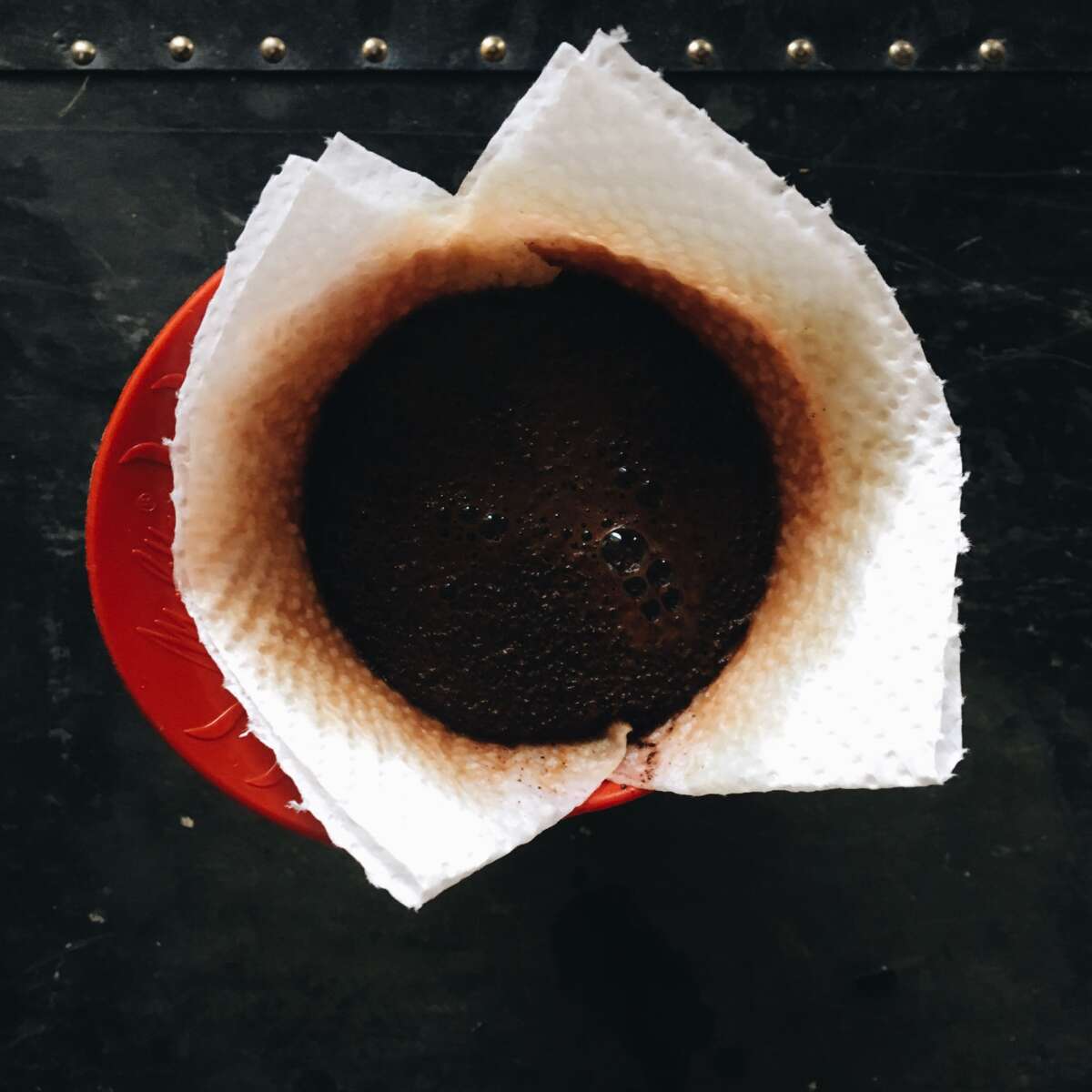
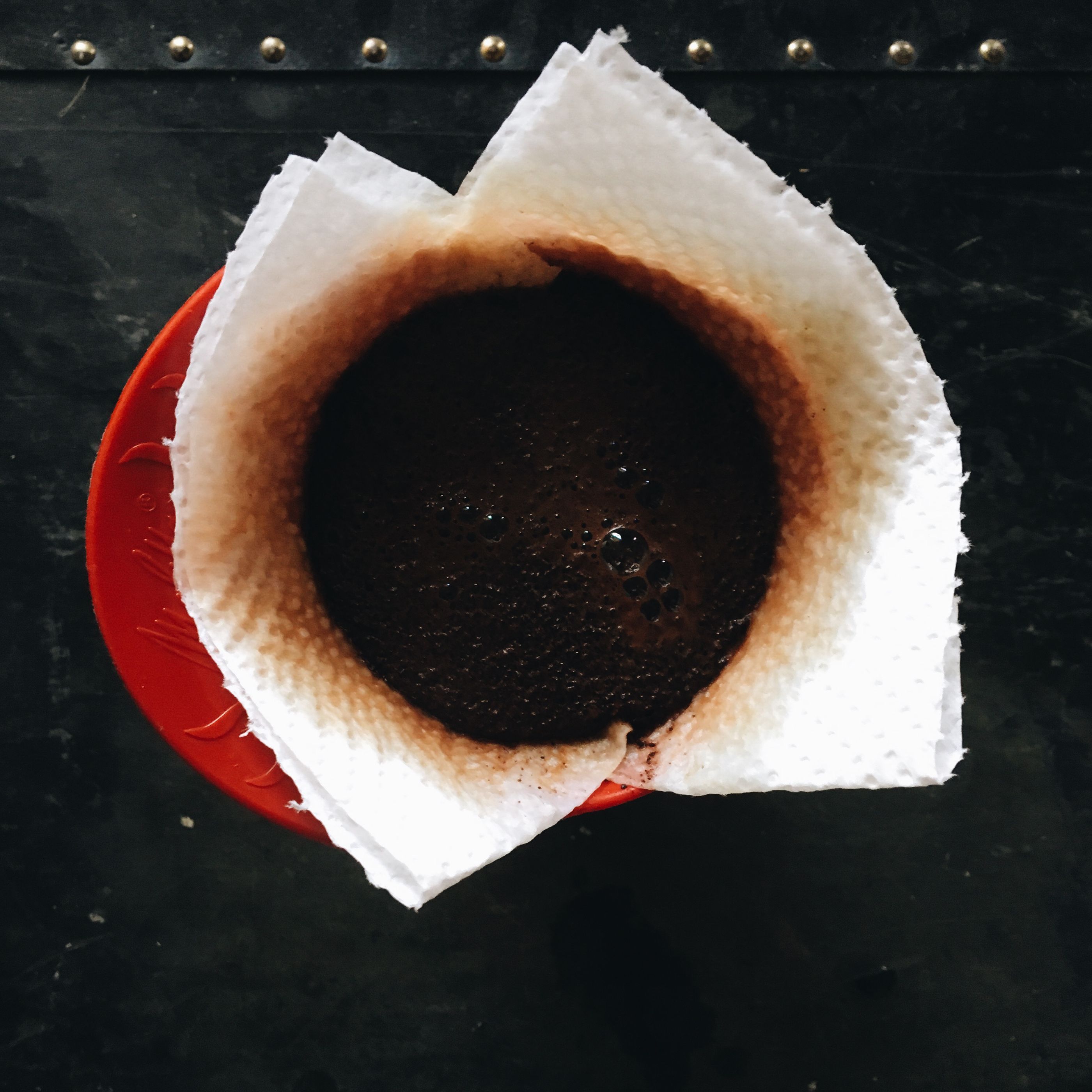
- Paper substitutes (paper towel, napkin) — use with caution: They work in a pinch but may affect taste and can tear.
How to make coffee when you have no filter paper depends on the method. I prefer cloth for balance and cowboy coffee for camping. Below are step-by-step guides for the top three.

Cloth method (best for cleaner taste)
- Use a clean 100% cotton cloth or tightly woven bandana.
- Place cloth over a mug or into a funnel to form a pocket.
- Add medium-fine grounds. Use slightly coarser than pour-over.
- Pour hot water in small circles, letting coffee drip slowly.
- Rinse cloth well after use and air dry.
This cloth technique is repeatable and low-waste. It’s how I brew on long trips. It makes a cup similar to a pour-over but with less waste.
Fine-mesh sieve or strainer (fast and simple)
- Heat water to near boiling and place 1–2 tablespoons of coffee per 6 ounces of water.
- Add grounds to a mug or pot. Pour slowly through a fine-mesh sieve into the mug.
- If grounds pass through, let them settle then pour carefully.
This method is quick. For clearer coffee, line the sieve with a thin cloth if available.
Cowboy coffee (no tools)
- Add coffee grounds to cold water in a pot (about 1 tablespoon per 6 ounces).
- Bring to a near boil, then remove from heat and let sit 3–4 minutes.
- Add a splash of cold water to help grounds settle to the bottom. Let rest 2 minutes.
- Pour slowly into cups, leaving the last bit in the pot.
Cowboy coffee is bold and rustic. It’s how I make coffee while camping or when I truly have no filter paper and no other gear.

Equipment alternatives and safety notes
When you need to learn how to make coffee when you have no filter paper, pick safe materials. Use these alternatives when available.
- Clean cotton cloth or bandana: Reusable and safe. Avoid scented detergents.
- Fine-mesh metal sieve: Durable and common in kitchens.
- Reusable tea infuser: Great for single cups and keeps sediment low.
- Coffee sock: A purpose-made cloth filter exists; keep it clean.
- Paper towel or napkin: Only if necessary. Use a single-ply option and test for tearing. Do not use tissues with lotion or prints.
Avoid using fabrics with dyes or strong detergent smells. Also avoid fabric softeners on cloths used for coffee. Safety means clean materials and no chemical residues.

Brewing tips, ratios, and grind guide
To make better coffee when you have no filter paper, control grind, ratio, and water.
- Ratio: Aim for 1:15 to 1:17 coffee to water by weight. For quick use, 1 heaping tablespoon per 6 ounces of water works.
- Grind: Use coarser grounds for sieves and cowboy coffee. Use medium-fine for cloth. Coarser grind reduces sediment.
- Water temp: 195–205°F (just off boil). Let boiling water rest 30 seconds.
- Bloom: For cloth and sieve methods, pour a little water to bloom grounds for 30 seconds, then continue pouring.
- Pour speed: Slow, steady pour extracts evenly. Fast pouring can cause channeling and bitterness.
I learned these tips from trial and error. One mistake was using very fine grounds with a sieve—result was sludge. Adjust grind to your method.

Flavor control and troubleshooting
If your cup is bitter, thin, or gritty, here’s what to try when you make coffee when you have no filter paper.
- Bitter flavor: Use slightly coarser grind or lower water temperature. Shorten brew time.
- Weak or sour taste: Use finer grind, more coffee, or longer steep time.
- Too much sediment: Use coarser grind, decant carefully, or add a cloth layer inside the sieve.
- Cloth taste: Rinse the cloth with hot water before brewing and use unscented detergent for washing.
- Paper towel residue or breakage: Stop using it if it leaves fibers. Switch to cloth or sieve.
Small changes make big differences. I often adjust grind size by eye when tools aren’t perfect.

People also ask (PAA-style quick answers)
Q: Can I use a paper towel instead of a coffee filter?
A: Yes, in a pinch, but use a strong single-ply paper towel and watch for tearing or taste changes.
Q: Is cowboy coffee safe to drink?
A: Yes, it’s safe if you boil the water. Expect sediment and a stronger, heavier cup.
Q: Will a metal sieve remove oils and fines?
A: A sieve removes larger grounds but allows oils and some fines through. Use a cloth liner for clearer coffee.

Frequently Asked Questions of how to make coffee when you have no filter paper
What is the easiest way to make coffee when you have no filter paper?
The easiest is the fine-mesh sieve method: add grounds to a mug, pour hot water through a sieve, and pour carefully. It’s fast and needs only common kitchen gear.
Can I use a T-shirt or sock as a filter?
A clean, unscented cotton T-shirt or purpose-made coffee sock can work. Make sure it’s washed without fabric softener and rinsed well before first use.
How do I avoid too much grit with no paper filter?
Use a coarser grind and let the brew settle before pouring. Lining a sieve with a cloth also reduces grit.
Does using a paper towel change the taste of coffee?
Paper towels can give a slightly papery or chemical taste, especially if they’re scented or layered. Test first and use as a last resort.
How do I clean cloth filters between uses?
Rinse soon after brewing, wash in hot water with mild unscented soap, and air dry completely. Deep clean monthly by boiling the cloth for a few minutes.
Conclusion
You can make great coffee when you have no filter paper by using cloth, a fine-mesh sieve, or cowboy coffee techniques. Choose a method that matches your gear and taste, control grind and ratio, and clean your tools well. Try one method at home to learn the tweaks, then use it confidently on the road. If this helped, try a cloth filter next time and leave a comment about which method worked best for you.

Liora Pennings is a seasoned chef and kitchen enthusiast with a passion for turning everyday cooking into an effortless experience. With years of hands-on culinary expertise, she specializes in practical techniques, ingredient know-how, and smart kitchen solutions that help home cooks elevate their meals. At KitchFlair.com, Liora shares her best tips, time-saving tricks, and honest product reviews to guide readers toward a more efficient, enjoyable, and inspired cooking routine. Whether you’re a beginner or a seasoned home chef, Liora’s friendly, knowledge-packed insights make every visit to the kitchen a little easier—and a lot more delicious.