How To Make Coffee For A Large Group: Easy Guide
Use fresh coffee, the right water ratio, and a reliable brewer to serve a large group well.
Knowing how to make coffee for a large group can turn a busy breakfast, office meeting, wedding, or family gathering into a smooth event. The key is to plan the amount, choose the right brewing method, and protect the coffee’s flavor from heat, time, and poor storage.
This guide explains how to make coffee for a large group with simple math, practical tools, and lessons learned from serving coffee at crowded events. You will also find batch recipes, serving tips, common mistakes, and answers to the questions people ask most.
Plan the Amount of Coffee You Need
The first step in learning how to make coffee for a large group is estimating how much people will drink. A good rule is to plan for about 1 to 2 cups per guest, depending on the event.
Most coffee urns call a small serving 5 or 6 fluid ounces. Many guests, however, use an 8-ounce mug. This difference can leave you short if you rely only on the number printed on the brewer.
Use this simple guide:
• Light coffee service: 1 cup per guest
• Normal breakfast or meeting: 1.5 cups per guest
• Long event or brunch: 2 cups per guest
• Heavy coffee crowd: 2.5 cups per guest
For example, a group of 25 people may need:
• 25 servings for a short meeting
• About 38 servings for a breakfast
• Up to 50 servings for a long event
If each serving is 8 ounces, 38 servings equals 304 ounces. That is about 2.4 gallons of brewed coffee. It is often better to make a little extra than to run out, but avoid making far more than guests can drink.
Quick coffee quantity chart
| Guests | Light service | Average service | Heavy service |
|---|---|---|---|
| 10 | 10 cups | 15 cups | 20 cups |
| 20 | 20 cups | 30 cups | 40 cups |
| 30 | 30 cups | 45 cups | 60 cups |
| 50 | 50 cups | 75 cups | 100 cups |
| 100 | 100 cups | 150 cups | 200 cups |
Here, “cup” means a standard 5-ounce coffee maker cup. If you serve large mugs, reduce the number of servings or increase the total coffee volume.

Choose the Best Brewing Method
The best way to make coffee for a large group depends on your guest count, equipment, serving time, and access to electricity. No single method works perfectly for every event.
Coffee urn
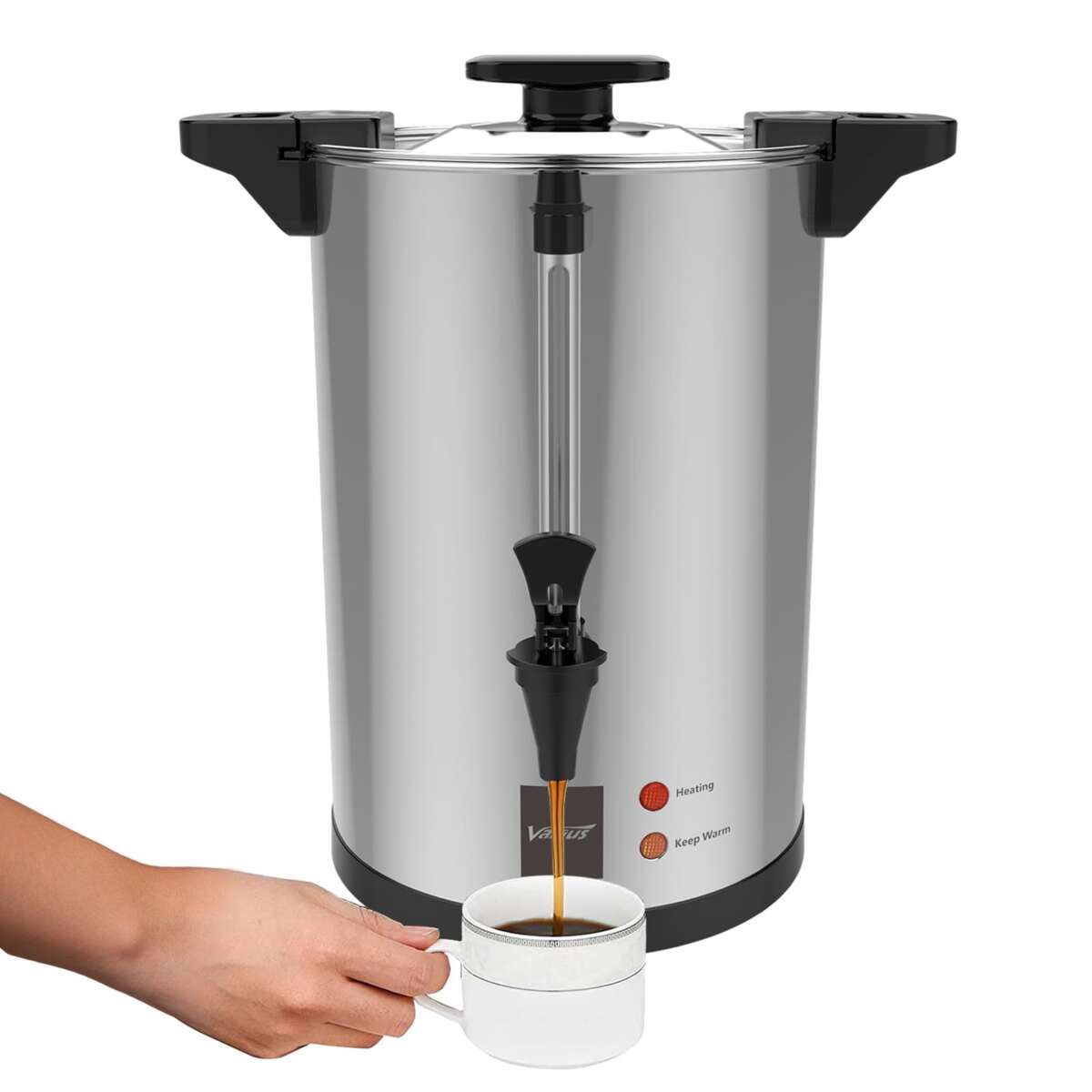
A coffee urn is a practical choice for weddings, church events, school breakfasts, and large meetings. It can brew and hold many servings in one container.
Advantages include:
• Large capacity
• Simple self-service
• Easy transport
• Built-in warming function
The main limitation is flavor. Coffee that sits on a hot plate or heating element for a long time can taste bitter or burnt. For the best result, brew smaller batches when possible.
Commercial drip brewer
A commercial drip brewer is usually the best option for an office, café, or professional event. It gives you better control over water flow, brewing time, and batch size.
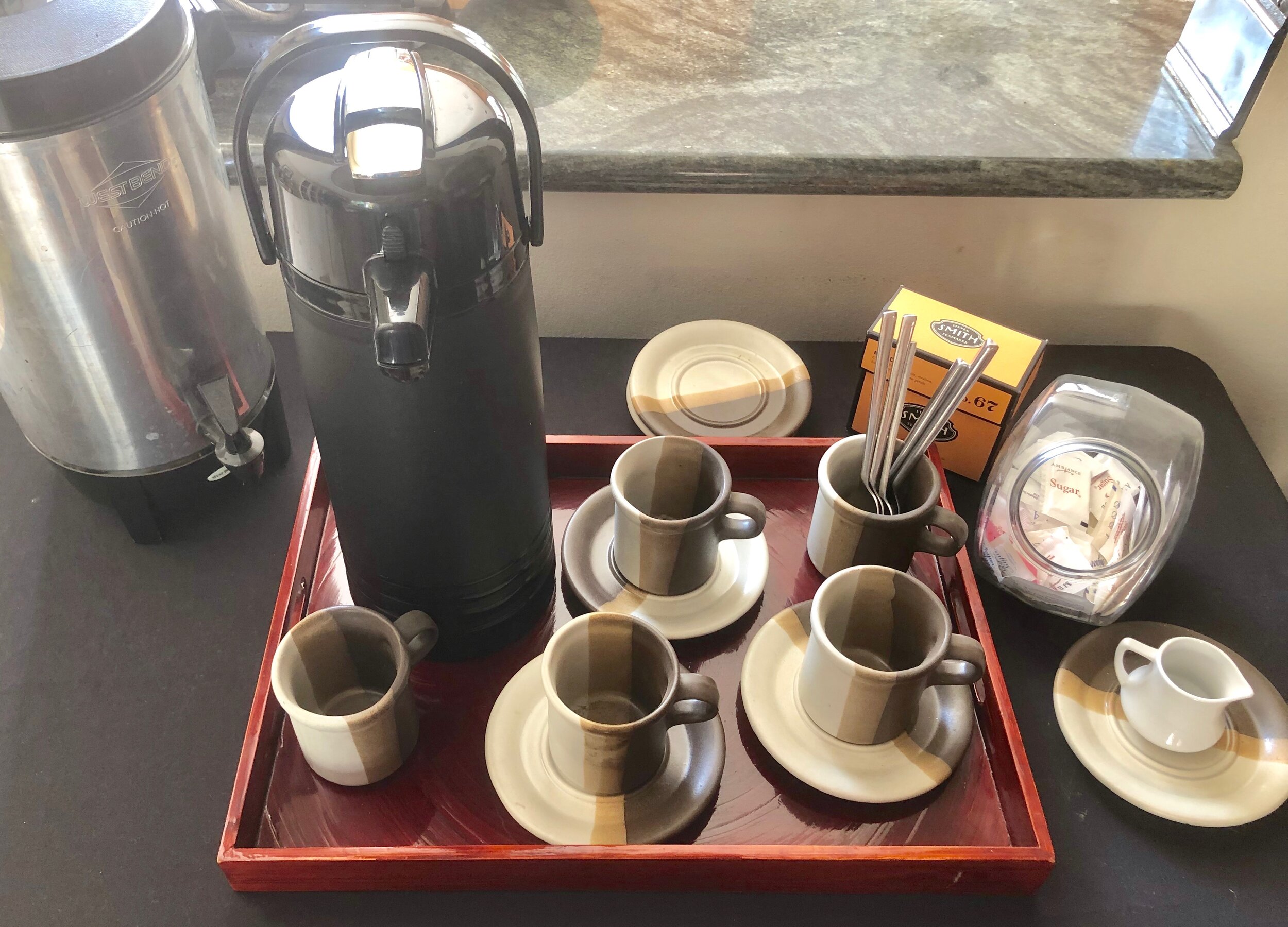
Many commercial brewers use insulated airpots or thermal servers. These keep coffee hot without cooking it on a hot plate. That usually produces better flavor than a glass pot left on heat.
Multiple home coffee makers
For 10 to 30 people, two or more standard drip coffee makers may work well. This method is flexible and lets you offer regular and decaf coffee at the same time.
The drawback is timing. Home brewers often need 8 to 12 minutes per batch, and several machines may overload one electrical circuit. Check the venue’s power limits before plugging in multiple appliances.
French press
A French press can make excellent coffee, but it is not ideal for very large groups. It requires several batches, careful timing, and quick serving.
It works well for a small premium coffee station. Use multiple presses if you want to serve 10 to 20 people.
Cold brew concentrate
Cold brew is useful for warm-weather events and can be made ahead. It also allows guests to add water, milk, or ice to suit their taste.
Because cold brew uses a different recipe and steeping time, it should be treated as a separate drink rather than a replacement for hot coffee.
Measure Coffee and Water Correctly
A dependable coffee-to-water ratio is the heart of how to make coffee for a large group. Too little coffee creates a weak, thin drink. Too much coffee creates a harsh drink and increases cost.
A strong starting point is:
• 55 to 60 grams of ground coffee per 1 liter of water
• About 2 ounces of coffee per 34 fluid ounces of water
• Roughly 1 level tablespoon of ground coffee per 5-ounce coffee maker cup
The exact amount depends on the beans, grind, brewer, and taste of your guests. For a large event, start near the middle of the range. You can adjust the next batch after tasting it.
Batch recipe examples
For 10 standard coffee maker cups:
• Water: 50 fluid ounces
• Ground coffee: about 3.5 ounces, or 100 grams
For 30 standard coffee maker cups:
• Water: 150 fluid ounces
• Ground coffee: about 10.5 ounces, or 300 grams
For 50 standard coffee maker cups:
• Water: 250 fluid ounces
• Ground coffee: about 17.5 ounces, or 500 grams
These amounts use 5-ounce coffee maker cups. If your cups hold 8 ounces, calculate by total water volume instead.
Use a scale when possible
A digital kitchen scale is more accurate than scooping coffee by volume. Ground coffee can vary in weight because of grind size, roast level, and how tightly it settles in a spoon.
When I have prepared coffee for large meetings, weighing the grounds made the biggest difference between batches. A scoop that looked full one day could produce noticeably weaker coffee the next day.

Select Fresh Beans and the Right Grind
Fresh coffee beans improve every large batch. Look for a roast date when possible, and use beans within a few weeks of that date for the best flavor.
Whole beans stay fresh longer than pre-ground coffee because less surface area is exposed to air. If you can grind the beans shortly before brewing, do so.
Use a medium grind for most drip brewers. A grind that is too fine can slow the water and produce bitter coffee. A grind that is too coarse can make the coffee taste weak or sour.
For common brewing methods:
• Drip brewer: medium grind
• Coffee urn: medium to medium-coarse grind
• French press: coarse grind
• Pour-over: medium-fine grind
Do not use espresso-fine coffee in a standard drip machine. It may clog the filter, slow extraction, and create an unpleasant taste.
For a mixed crowd, a medium roast is often a safe choice. It has enough flavor for regular coffee drinkers without the sharp bitterness that some dark roasts can bring.
Use Good Water
Water makes up most of every cup, so its quality matters. If your tap water tastes clean and fresh, it may work well. If it smells strongly of chlorine or leaves mineral scale, use filtered water.
Avoid distilled water for regular coffee brewing. It lacks many minerals that help coffee extract properly and may produce a flat taste.
The water should be cold when it enters the brewer. The machine should heat it to the proper brewing range. Industry brewing guidance commonly places this range around 195°F to 205°F.
Never pour boiling water directly over the coffee grounds. Extremely hot water can create uneven extraction and may damage some coffee equipment.
Before the event, taste the water by itself. This quick test can reveal problems before you brew several gallons.

How to Make Coffee for a Large Group With a Drip Brewer
A drip brewer is one of the easiest ways to make coffee for a large group. Follow a repeatable process for every batch.
-
Clean the brewer, basket, and thermal server.
-
Fill the reservoir with the measured amount of cold water.
-
Place the correct filter in the basket.
-
Weigh and add the ground coffee.
-
Start the brewing cycle.
-
Stir the finished coffee gently if the brewer does not mix the batch evenly.
-
Transfer the coffee to a clean thermal server if needed.
-
Label the server as regular or decaf.
-
Serve the coffee as soon as possible.
Do not fill the filter basket beyond the manufacturer’s limit. A very large amount of coffee in one basket can cause slow water flow and uneven brewing.
For several batches, keep a simple log. Write down the water amount, coffee weight, brew time, and guest feedback. This makes it easier to repeat a successful recipe.
Create a brewing schedule
For a 50-person breakfast, you might use this plan:
• 60 minutes before serving: set up equipment and heat water
• 45 minutes before serving: brew the first regular batch
• 30 minutes before serving: brew a second regular batch
• 20 minutes before serving: brew decaf
• 10 minutes before serving: set out cups, cream, sugar, and labels
This schedule prevents the coffee from sitting too long and keeps the serving area ready before guests arrive.
How to Make Coffee for a Large Group With an Urn
A coffee urn can simplify service, but it needs careful preparation. Read the capacity markings because some urns measure 5-ounce cups, not standard kitchen cups.
-
Wash and dry the urn before use.
-
Add cold water to the desired level.
-
Place the stem and filter basket correctly.
-
Add the measured coffee grounds.
-
Secure the lid.
-
Turn on the urn and allow the full cycle to finish.
-
Remove the filter basket if the model requires it.
-
Keep the lid closed between servings.
-
Check the coffee before guests arrive.
Many urns use a percolation process. The coffee may become stronger and more bitter if it continues to cycle or sit on heat for too long.
Do not assume the urn’s “40-cup” label means 40 large mugs. If each urn cup is 5 ounces, a 40-cup urn holds about 200 fluid ounces, or 25 standard 8-ounce servings.
When I first used a large urn for an outdoor event, I made the mistake of filling it to the top without checking the serving size. We had enough liquid, but not nearly as much coffee as the guest count suggested. Capacity labels deserve a closer look.

Keep Coffee Hot Without Ruining the Flavor
Hot coffee should be served hot, but heat can damage flavor over time. A warming plate keeps coffee hot by continuing to apply heat. This may lead to a bitter, stale taste after 30 to 60 minutes.
Thermal servers are usually a better choice. They hold heat without constant direct heating, so the coffee stays smoother for longer.
Use these serving practices:
• Brew in smaller batches when possible.
• Use insulated airpots or thermal carafes.
• Keep lids closed.
• Do not mix fresh coffee with an old batch.
• Replace coffee that tastes stale or burnt.
• Keep dairy products chilled according to food safety guidance.
Food service guidance commonly recommends keeping hot foods at 135°F or above. Coffee quality, however, may decline before it reaches a safety concern. Flavor and food safety are related but not identical goals.
Do not reheat coffee in a coffee urn. Make a fresh batch instead. Fresh brewing usually takes less time than trying to rescue coffee that has been overheated.
Offer Regular, Decaf, and Simple Add-Ins
A thoughtful coffee station serves more than one type of coffee. Many guests want regular coffee, but some avoid caffeine for health, sleep, pregnancy, or personal reasons.
For a group of 25 or more, prepare at least one decaf option. A useful starting split is:
• 75% regular coffee
• 25% decaf coffee
Adjust that ratio based on the event. A morning business meeting may need more regular coffee. An evening gathering may need more decaf.
Label every container clearly. Use separate scoops, airpots, and stirrers for regular and decaf coffee.
Set out:
• Coffee cups and lids
• Wooden stirrers or spoons
• Sugar and artificial sweetener
• Half-and-half or milk
• Non-dairy milk
• Napkins
• A small waste bin
For outdoor events, keep milk and cream in a cooler with ice. Do not leave dairy at room temperature for long periods.
Common Mistakes to Avoid
Learning how to make coffee for a large group also means learning what can go wrong. Most problems come from poor planning rather than complicated brewing science.
Making too little
Running out of coffee is hard to fix once guests have arrived. Estimate the guest count, include staff and volunteers, and prepare a small backup batch when practical.
Using the wrong cup measurement
A coffee maker cup may hold 5 ounces, while a household cup often holds 8 ounces. Always check whether your recipe uses fluid ounces, kitchen cups, or urn cups.
Brewing too far ahead
Coffee can lose its fresh aroma quickly. Try to finish each batch within 30 minutes of serving when possible.
Using stale coffee
Old grounds may taste flat, dusty, or bitter. Store coffee in an airtight container away from heat, light, and moisture.
Overloading the machine
A brewer has a maximum capacity for both water and grounds. Exceeding it can cause weak coffee, spills, or equipment failure.
Forgetting decaf
A small decaf batch can make the coffee station more welcoming. Make it clearly visible and label it well.
Plugging in too many machines
Several brewers may overload a circuit. Ask the venue manager about electrical limits and use separate circuits when required.
Leaving coffee on direct heat
This is one of the fastest ways to turn good coffee bitter. Use a thermal server or brew fresh batches throughout the event.
A Simple Large-Batch Coffee Checklist
Use this checklist the day before the event:
• Confirm the guest count.
• Decide how many regular and decaf servings you need.
• Check brewer capacity and serving size.
• Buy fresh coffee and filters.
• Test the equipment.
• Confirm access to power and water.
• Prepare labels for regular and decaf.
• Gather cups, lids, cream, sugar, and stirrers.
• Plan the brewing schedule.
• Bring extra coffee, filters, and paper supplies.
On the event day:
• Taste the water.
• Clean the equipment.
• Measure coffee by weight.
• Brew a test batch if time allows.
• Label each container.
• Track serving time.
• Replace old coffee instead of topping it off.
A little planning acts like a safety net. It gives you room to handle delays, unexpected guests, and second cups.
How to Make Coffee for a Large Group on a Budget
You do not need expensive equipment to make coffee for a large group. The best value often comes from using fresh medium-quality beans, accurate measurements, and thermal storage.
To control costs:
• Buy whole beans or ground coffee in bulk from a trusted seller.
• Use a commercial brewer or borrow an urn.
• Brew regular coffee in larger batches and decaf in smaller batches.
• Avoid making every batch far ahead of time.
• Choose simple add-ins rather than many specialty toppings.
• Use reusable airpots when available.
Do not reduce the coffee amount too much to save money. Weak coffee often leads guests to use more cream, sugar, or a second drink, and it can leave a poor impression.
A balanced medium roast is usually more economical than buying several niche roasts. If you want variety, offer one regular roast and one decaf rather than five different choices.
Frequently Asked Questions About How to Make Coffee for a Large Group
How much coffee do I need for 20 people?
Plan for 20 to 40 standard 5-ounce coffee servings, depending on the event. For an average gathering, 30 servings is a practical target, which equals about 150 fluid ounces of water.
How many tablespoons of coffee do I need for a large group?
Use about 1 level tablespoon of ground coffee per 5-ounce coffee maker cup. For better accuracy, use 55 to 60 grams of coffee per liter of water.
Can I make coffee the night before a large event?
It is better to prepare the equipment and measure the ingredients the night before, then brew the coffee close to serving time. Coffee made hours ahead may taste stale, especially if it sits on a hot plate.
Is a coffee urn better than a drip coffee maker?
A coffee urn is easier for self-service and large crowds, while a drip brewer often offers better flavor control. For the freshest taste, use a commercial drip brewer with an insulated thermal server.
How long can coffee stay in a thermal carafe?
Coffee quality is usually best within a few hours, although a good thermal carafe can keep it hot for longer. Taste the coffee before serving, and replace it if it has become flat, sour, or burnt.
Should I serve decaf coffee at a large event?
Yes. Serving decaf makes the coffee station more inclusive and helps guests who limit caffeine. For many events, preparing about 25% of the total coffee as decaf is a useful starting point.
Conclusion
Great group coffee comes down to four things: plan the servings, measure the coffee and water, brew in sensible batches, and protect the flavor with thermal storage. Whether you use a drip brewer, coffee urn, or several home machines, accurate measurements and fresh timing will make the biggest difference.
Now that you know how to make coffee for a large group, test your equipment before the event and write down the recipe that works best. Your guests may not notice every detail, but they will remember coffee that is fresh, hot, and ready when they need it. Share your favorite large-batch coffee tips or explore more practical event-planning guides for your next gathering.
Liora Pennings is a seasoned chef and kitchen enthusiast with a passion for turning everyday cooking into an effortless experience. With years of hands-on culinary expertise, she specializes in practical techniques, ingredient know-how, and smart kitchen solutions that help home cooks elevate their meals. At KitchFlair.com, Liora shares her best tips, time-saving tricks, and honest product reviews to guide readers toward a more efficient, enjoyable, and inspired cooking routine. Whether you’re a beginner or a seasoned home chef, Liora’s friendly, knowledge-packed insights make every visit to the kitchen a little easier—and a lot more delicious.