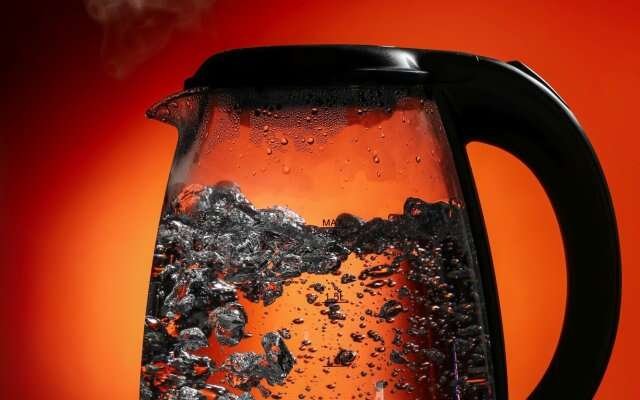
In U.S. homes, an electric kettle turns electrical energy from a 120-volt outlet into heat. That heat passes through a metal heating element and warms the water. When the water reaches a boil, steam activates a thermostat or switch, which cuts power to the heater.
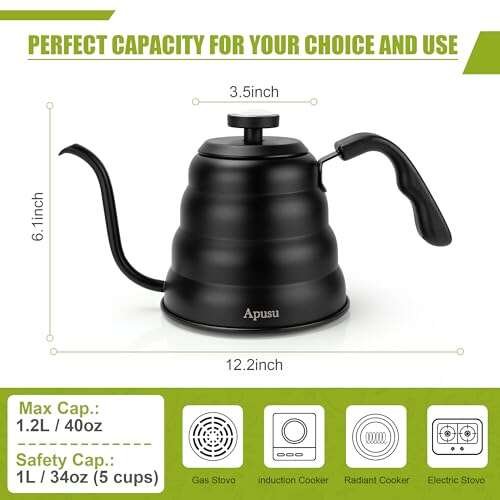
A stovetop kettle works in a similar way, but a stove supplies the heat instead of electricity.
This guide explains how an electric kettle works, shows a simple kettle diagram, and covers the parts, boiling cycle, automatic shutoff, energy use, and safety limits.
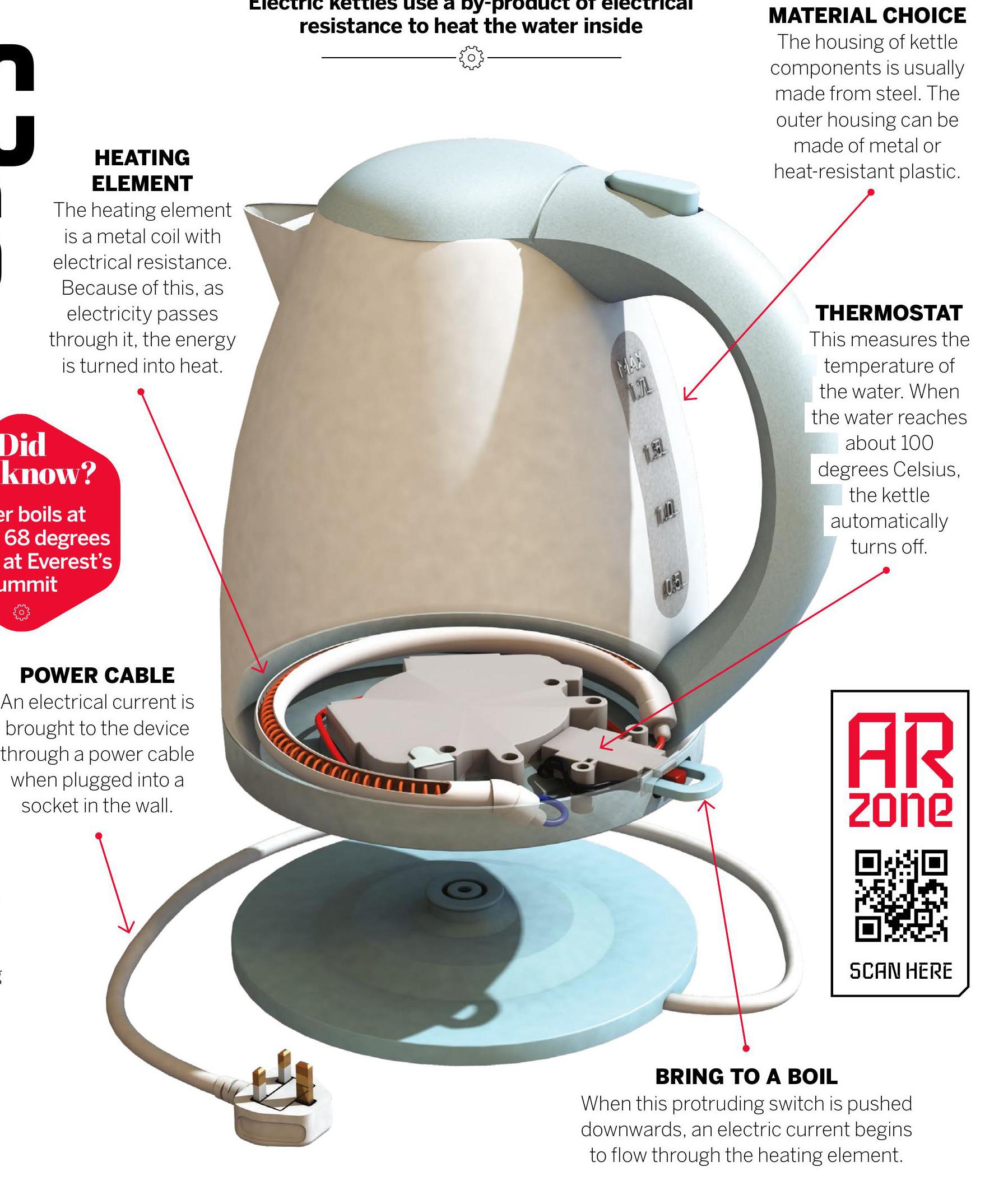


How an Electric Kettle Works: Simple Diagram
The basic process is:
        U.S. wall outlet
120 V AC
|
v
Power cord and base
|
v
On/off switch
|
v
Thermostat and cutoff
|
v
Heating element
|
v
Water tank
|
v
Heat + steam forms
|
v
Steam or heat trips thermostat
|
v
Power turns off
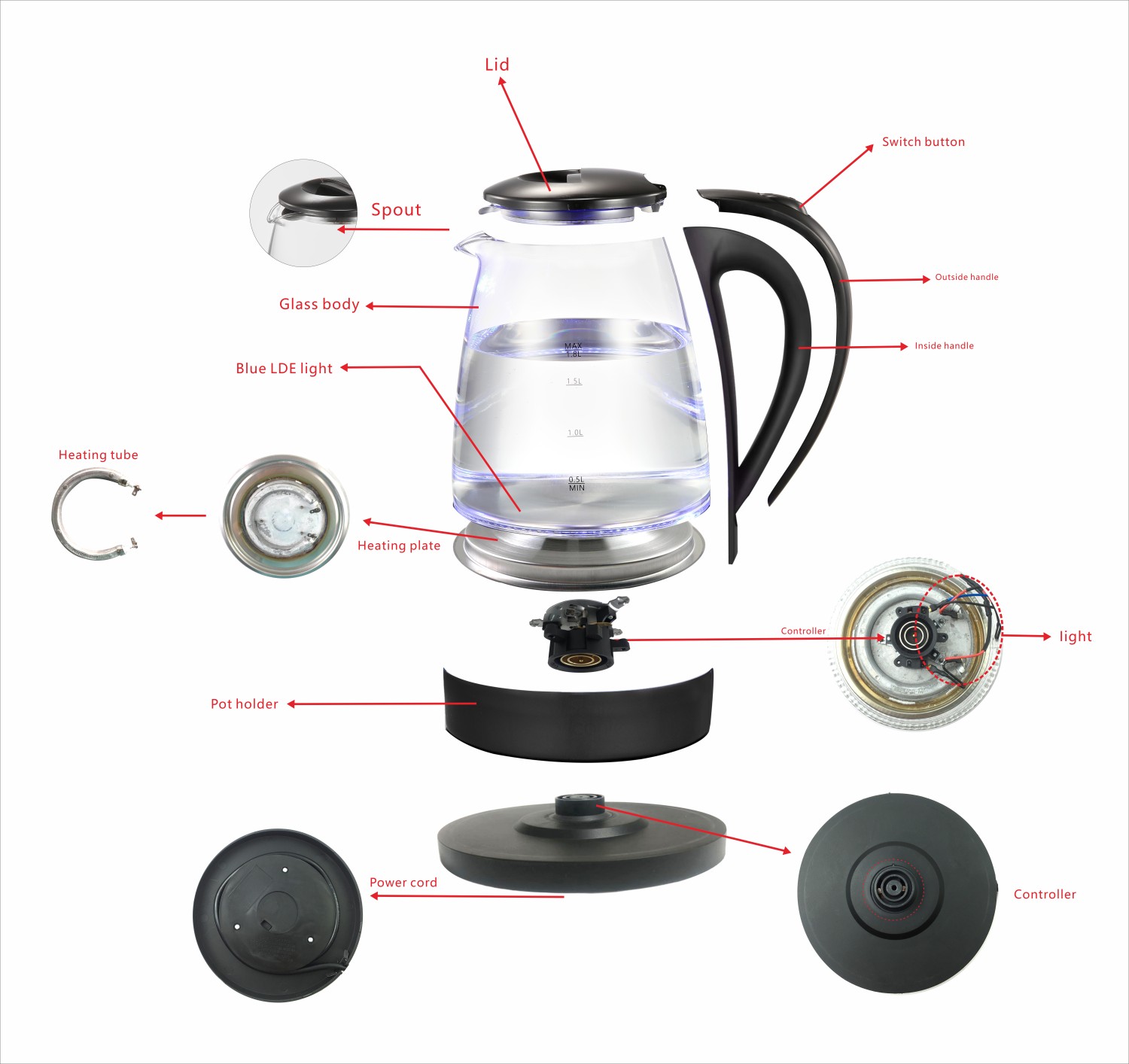
Most electric kettles contain these main parts:
        __________________________
/                          \
/        Lid and vent        \
|------------------------------|
|                              |
|          Water               |
|                              |
|       Heating element        |
|______________________________|
|        |
Metal <a href="https://en.wikipedia.org/wiki/Bookseller%2FDiagram_Prize_for_Oddest_Title_of_the_Year" target="_blank" rel="dofollow" style="color: #6b21a8; text-decoration: underline; font-weight: 600;">contacts
</a>              |
__________________
|  Power base     |
|__________________|
|
Cord and plug
The heating element sits near the bottom of the water chamber. In many modern kettles, it is sealed under a flat metal plate. This design keeps the element protected and makes the kettle easier to clean.
The power base sends electricity to the kettle through metal contacts. Many cordless kettles can rotate on the base, but the electrical path remains the same.
The thermostat is the control part. It senses heat or steam and opens the circuit when the water boils.

What Parts Are Inside a Kettle?
Each part has a specific job. If one part fails, the kettle may not heat, may not shut off, or may become unsafe to use.
Heating element
The heating element changes electrical energy into heat. It works much like the heating wire in a toaster, but it is sealed and shaped for contact with the kettle body.
Electrical resistance causes the element to heat. The water then absorbs that heat through the metal base.
Most electric kettles use a high-power element. In the United States, many models are designed for a standard household circuit and may draw around 1,000 to 1,500 watts. Always check the rating label on the kettle.
Water chamber
The water chamber holds the liquid. It is often made from stainless steel, glass, or heat-resistant plastic.


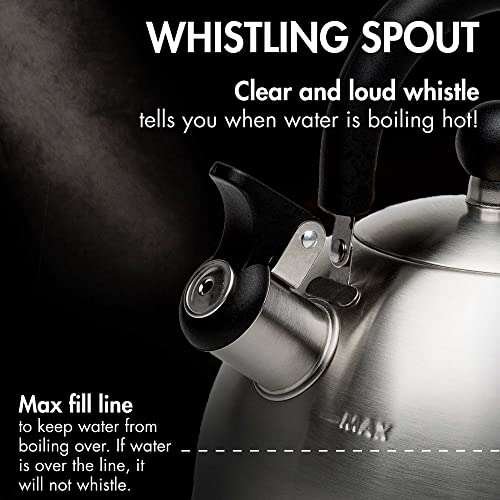
A minimum and maximum fill line helps control the water level. The minimum level makes sure the heating element is covered. The maximum level leaves room for boiling water and steam.
Do not fill above the maximum line. Boiling water can rise, splash, or enter the steam path.
Power base
The base connects the kettle to the wall outlet. A cordless kettle lifts away from this base, while the base stays attached to the power cord.
The base usually contains electrical contacts. Keep it dry. Water on the base can create a shock risk or damage the contacts.
On/off switch
The switch starts the heating cycle. On a basic kettle, pressing the switch closes the circuit and sends power to the heating element.
Many switches are spring-loaded. They stay on only while the kettle's control system allows current to flow.
Thermostat
A thermostat monitors temperature. It can use a bimetal strip, a steam sensor, or an electronic temperature sensor.
A bimetal strip contains two metals that expand at different rates. As heat changes the strip's shape, it moves a contact and opens the circuit.
Steam channel
As water boils, steam rises. A small channel can guide that steam toward the thermostat.
Steam is useful because it gives the kettle a strong signal that the water has reached its boiling point. The steam may be hotter than the liquid water near the surface.
Dry-boil protection
Many kettles include a second safety device. It cuts power if the kettle is switched on with too little water or no water.
This feature protects the heating element from excessive heat. It is a backup, not permission to run the kettle empty.

Step by Step: How Does a Kettle Boil Water?
An electric kettle follows a short chain of events.
1. You add water
Fill the kettle between the marked minimum and maximum levels. The element must be covered, but the chamber must not be overfilled.


The amount of water affects boiling time. More water needs more energy.
2. You place the kettle on its base
The kettle's electrical contacts meet the contacts on the base. This completes the path from the cord to the kettle.
On a cordless model, the kettle can usually sit in several positions. The contacts still need to align correctly.
3. You press the switch
The switch closes the circuit. Electricity flows through the thermostat and into the heating element.
The element begins to heat within seconds. The water near the bottom warms first.
4. Heat moves through the water
Water moves as it warms. Warm water becomes less dense and rises. Cooler water sinks toward the element.
This circulation is called convection. It helps spread heat through the chamber.
The water does not heat at the same rate in every location. Small bubbles may form on the element before the whole volume reaches a boil.
5. Steam reaches the control
Near the boiling point, water changes from liquid to gas. Steam rises through the kettle.
The steam path directs heat toward the thermostat. The thermostat then senses the boiling condition.
6. The kettle switches off
The thermostat opens the electrical circuit. Current stops flowing to the element.
The switch may move back to its original position. A click often signals that the shutoff has occurred.
7. The water remains hot
The kettle does not usually cool the water after shutoff. It only stops adding heat.
The water may continue to bubble for a short time because the element and nearby metal remain hot.


Why Does a Kettle Switch Off Automatically?
An electric kettle shuts off because its control system detects boiling conditions. This usually happens through steam, temperature, or both.
A basic mechanical kettle often uses a steam-operated thermostat:
- Water heats inside the chamber.
- Steam rises through an internal channel.
- The steam warms a bimetal control.
- The bimetal control bends or moves.
- The electrical contact opens.
- Power to the heating element stops.
Some kettles use electronic controls. These models may measure temperature with a sensor and control the element with electronic switching parts.
Automatic shutoff reduces the chance of continued heating after the water boils. It also reduces energy use compared with a heater that stays on continuously.
However, automatic shutoff is not instant in every situation. The kettle may not shut off correctly if:
- The lid is open.
- The steam path is blocked.
- The kettle is overfilled.
- Mineral scale covers the sensor area.
- The thermostat is damaged.
- The kettle sits unevenly on the base.
- The switch or control board has failed.
If a kettle continues heating after the water boils, unplug it when safe and stop using it. Do not open the housing to repair it unless you are trained to work on mains-powered appliances.

How Much Energy Does a Kettle Use?
A kettle's energy use depends on its power rating and run time.
Use this simple formula:
Energy in watt-hours = Power in watts × Time in hours
For example, this is a hypothetical calculation:
1,500 watts × 4 minutes ÷ 60
= 100 watt-hours
= 0.1 kilowatt-hour
The kettle would use about 0.1 kilowatt-hour under those conditions. Actual use can differ because of water volume, starting temperature, heat loss, and automatic shutoff time.
A useful comparison is the amount of water boiled. Heating one cup uses less energy than heating a full kettle. For that reason, fill only the amount you need, as long as the water level stays above the minimum mark.
What affects boiling speed?
| Factor | Effect |
|---|---|
| More water | Takes longer and uses more energy |
| Colder starting water | Takes longer to boil |
| Higher wattage | May heat water faster |
| Mineral scale | Can reduce heat transfer |
| Open lid | Allows more heat loss |
| High elevation | Water boils at a lower temperature |
At higher elevations, water boils below 212°F because air pressure is lower. The kettle may still shut off when steam reaches its thermostat, but the water may be cooler than boiling water at sea level.

Electric Kettle vs. Stovetop Kettle
An electric kettle has its own heating element. A stovetop kettle receives heat from a gas, electric, or induction cooking surface.


| Feature | Electric kettle | Stovetop kettle |
|---|---|---|
| Heat source | Internal electrical element | Stove burner |
| Automatic shutoff | Common | Not always present |
| Portability | Needs an outlet | Needs a stove |
| Heat control | Usually simple | Controlled by the stove |
| Main risk | Electrical contact with water | Hot stove and open flame |
| Boil signal | Switch, light, or sound | Whistle or visual steam |
An electric kettle is convenient when you want a separate boiling appliance. A stovetop kettle can be useful when there is no suitable countertop outlet or when you prefer to use an existing cooking surface.
Neither type should be left unattended while heating. Follow the instructions supplied with the specific kettle.

Why Is My Kettle Not Working?
Check the safest and simplest causes first. Unplug the kettle before inspecting or cleaning it.
The kettle does not turn on
Possible causes include:
- The plug is not fully inserted.
- The wall outlet has no power.
- The kettle is not seated on its base.
- The water level is below the minimum mark.
- The dry-boil cutoff has activated.
- The switch or heating element has failed.
Try a different known-working outlet. If the kettle has cooled and still does not work, stop using it.
The kettle turns off too soon
Possible causes include:
- Too little water.
- A blocked steam channel.
- Mineral buildup near the thermostat.
- An open or poorly fitted lid.
- A faulty thermostat.
Clean the kettle according to its manual. Do not scrape delicate sensors or pour water into the base.
The kettle does not turn off
This is a safety concern. Unplug the kettle if you can do so without touching wet surfaces or hot water.
Do not keep using a kettle that boils continuously. The thermostat, switch, or control system may have failed.
The kettle makes noise
A low rumble, clicking sound, or bubbling sound is usually linked to heating and boiling. Hard-water scale can make the noise louder.
A burning smell, smoke, sparks, melted plastic, or repeated breaker trips is not normal. Disconnect power if safe and replace or professionally service the kettle.

Kettle Safety Rules for U.S. Homes
Follow the manufacturer's manual first. General safety rules include:
- Keep the power base and plug dry.
- Never immerse the kettle, base, cord, or plug in water.
- Do not fill above the maximum line.
- Do not operate the kettle empty.
- Keep the cord away from hot surfaces.
- Place the base on a stable, dry counter.
- Keep children away from hot water and steam.
- Open the lid carefully after boiling.
- Pour slowly to prevent splashing.
- Unplug the kettle when it is not in use if the manual recommends it.
- Stop using the kettle if the cord, plug, body, or base is damaged.
Steam can burn skin quickly. Treat the spout and lid area as hot even after the kettle switches off.
Do not try to defeat the automatic shutoff. Do not bypass a dry-boil cutoff. These devices are part of the appliance's protection system.
For U.S. products, check the rating label and use the appliance only with a suitable household outlet. A qualified appliance technician should handle internal electrical repairs.

How to Clean Scale From a Kettle
Mineral scale forms when dissolved minerals remain after water evaporates. It is more common in hard-water areas.
Scale can:
- Make boiling slower.
- Increase noise.
- Affect the taste of water.
- Interfere with a sensor or steam path.
- Reduce the useful life of the heating element.
To clean the kettle:
- Unplug it and let it cool.
- Follow the cleaning method in the manual.
- Use a manufacturer-approved descaling product or method.
- Rinse the chamber well.
- Run fresh water through one or more heating cycles if the manual allows it.
- Empty the rinse water.
Do not use abrasive tools on the heating plate. Do not use a chemical cleaner unless the manual says it is safe for that kettle's materials.

Key Takeaways
- An electric kettle uses a resistive heating element to warm water.
- The thermostat detects boiling conditions and opens the circuit.
- Steam often triggers the automatic shutoff.
- A dry-boil cutoff protects the element when water is missing.
- Water level, wattage, starting temperature, and scale affect boiling time.
- Keep the base dry and stop using the kettle if it will not shut off.
Frequently Asked Questions
Does a kettle boil water or just heat it?
A kettle heats water until it reaches its boiling condition. The exact boiling temperature depends on air pressure, so water boils at a lower temperature at higher elevations.
Why does steam make the kettle turn off?
Steam carries heat to a thermostat or sensor. When the control detects that condition, it opens the circuit and stops power to the heating element.
Can a kettle work without water?
It may turn on briefly, but it should not be operated empty. Many kettles have dry-boil protection, but that safety feature is only a backup.
Is it safe to leave water in an electric kettle?
Leaving water in the chamber for a short time is usually not the same as operating the kettle empty. Still, emptying and drying the kettle after use can reduce stale odors and mineral buildup. Follow the product manual.
Why does my kettle shut off before the water fully boils?
A blocked steam path, excess scale, an open lid, low water, or a faulty thermostat can cause early shutoff. Clean the kettle as directed. Replace it if the problem continues.
What is the difference between a kettle and a coffee maker?
A kettle heats water for pouring or for another use. A coffee maker heats and directs water through coffee grounds. Their heating controls and water paths are designed for different jobs.
Conclusion
An electric kettle is a simple heat-and-control system. The heating element warms the water, convection spreads the heat, and steam or temperature activates the thermostat. That thermostat cuts power when the kettle reaches its boiling point.
The diagram is easiest to remember as:
Outlet → switch → thermostat → heating element → water
↑
steam signals boil
Use the correct fill level, keep the base dry, clean mineral scale, and stop using the kettle if its automatic shutoff fails.

Liora Pennings is a seasoned chef and kitchen enthusiast with a passion for turning everyday cooking into an effortless experience. With years of hands-on culinary expertise, she specializes in practical techniques, ingredient know-how, and smart kitchen solutions that help home cooks elevate their meals. At KitchFlair.com, Liora shares her best tips, time-saving tricks, and honest product reviews to guide readers toward a more efficient, enjoyable, and inspired cooking routine. Whether you’re a beginner or a seasoned home chef, Liora’s friendly, knowledge-packed insights make every visit to the kitchen a little easier—and a lot more delicious.