
For people in the United States, coffee is a common way to start work, school, or a long drive. Yet some people feel tired, foggy, or irritable a few hours after drinking it. Yes, coffee can make you feel like you are crashing, but caffeine does not usually cause a true sudden loss of energy by itself. The feeling often comes from caffeine wearing off, poor sleep, caffeine withdrawal, blood sugar changes, or drinking more caffeine than your body handles well.
A coffee crash is usually temporary. It may feel like sleepiness, low focus, a headache, nervousness, or a strong urge to drink more coffee.
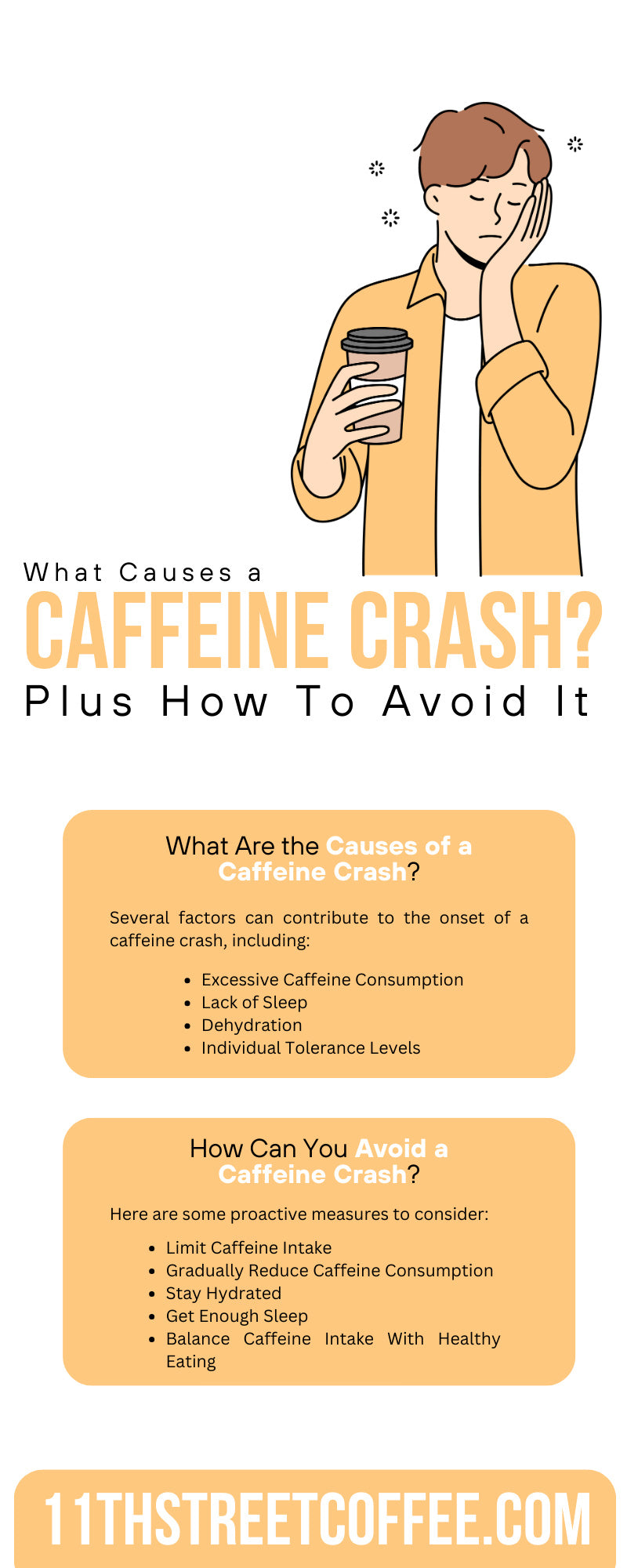
What does a coffee crash feel like?
A coffee crash is a short period of tiredness or reduced focus after the effects of caffeine fade. Some people also feel weak, moody, restless, or headachy.
Common signs include:
- Sleepiness
- Brain fog
- Trouble focusing
- Low motivation
- Headache
- Irritability
- Feeling shaky or anxious
- A strong desire for more caffeine
The timing varies. A person may notice a crash two to six hours after coffee. Others may not feel one at all.
A crash does not always mean coffee caused harm. It may simply reveal that you were already tired. Caffeine can make you feel more alert for a while, but it cannot replace sleep.
Coffee crash vs. caffeine withdrawal
These terms overlap, but they are not the same.
A coffee crash usually means tiredness after the noticeable effects of caffeine fade. Caffeine withdrawal occurs when a regular caffeine user suddenly drinks less or stops. Withdrawal may cause headache, fatigue, low mood, and poor focus.
The U.S. Food and Drug Administration says that most healthy adults can consume up to 400 milligrams of caffeine per day without dangerous negative effects. That amount is a general limit, not a personal target. Sensitivity differs widely.

Why does coffee make some people crash?
Coffee can make you feel tired later because caffeine blocks a sleep signal, wears off over time, and may affect sleep or eating habits.
Caffeine blocks adenosine
Your brain builds up a chemical called adenosine during the day. Adenosine helps create sleep pressure. The longer you stay awake, the more adenosine tends to build up.
Caffeine blocks some adenosine receptors. This can make you feel more awake without removing the adenosine itself. When caffeine leaves your system, the sleep pressure may become more noticeable.
This is one reason a person may feel as if tiredness arrives all at once. The tiredness was often present before the coffee. Caffeine simply hid part of it for a time.
Caffeine wears off slowly
Caffeine does not leave the body at once. The average half-life is often about four to six hours, though it can be shorter or longer depending on the person.
Half-life means the time needed for your body to remove about half of the caffeine. If a drink contains 200 mg of caffeine, about 100 mg may remain after four to six hours under average conditions.
The National Library of Medicine notes that factors such as pregnancy, liver function, smoking, age, and some medicines can change caffeine metabolism.
Coffee may reduce sleep quality
Coffee can create a next-day crash if it delays sleep or makes sleep less restful. You may fall asleep but still get less deep or continuous sleep.
A controlled study published in the Journal of Clinical Sleep Medicine found that caffeine taken six hours before bedtime reduced sleep time in participants, even when they did not always notice the effect.
This creates a cycle:
- Coffee helps you push through tiredness.
- Later caffeine disrupts sleep.
- Poor sleep increases next-day fatigue.
- You use more coffee to compensate.
Sugar and meal timing can add to the feeling
Sweet coffee drinks, pastries, and energy drinks may affect how you feel later. A large sugary drink can provide quick energy, followed by hunger or low energy when that effect fades.
This does not mean every “sugar crash” is caused by a dangerous blood sugar drop. The effect depends on the drink, the meal, your activity, and your health.
Skipping food can also make coffee feel harsher. An empty stomach may increase nausea, shakiness, or anxious feelings in some people.

How long does a coffee crash last?
A coffee crash often lasts from 30 minutes to several hours. There is no fixed time because the cause may differ.
| Possible cause | When symptoms may appear | Common clues |
|---|---|---|
| Caffeine wearing off | About 2–6 hours later | Sleepiness after alertness fades |
| Poor sleep | Later that day or the next morning | Heavy eyes, low focus |
| Too much caffeine | Within hours | Jitters, anxiety, fast heartbeat |
| Caffeine withdrawal | 12–24 hours after less caffeine | Headache, fatigue, irritability |
| Long gap between meals | Before or after a meal | Hunger, weakness, shakiness |
| Natural afternoon dip | Early to mid-afternoon | Sleepiness despite normal coffee use |
These time ranges are rough. A person who clears caffeine slowly may feel its effects much later. Genetics, pregnancy, medicines, smoking status, and liver health can all matter.
Coffee can also overlap with your natural circadian rhythm. Many people feel less alert in the afternoon, even after adequate sleep. That normal dip may feel like a crash when it happens after caffeine fades.

How much caffeine is in common U.S. drinks?
Caffeine levels vary by bean, roast, serving size, and brewing method. The same label, such as “a cup of coffee,” can describe very different amounts.
| Drink | Approximate caffeine |
|---|---|
| 8-ounce brewed coffee | About 80–100 mg |
| 1-ounce espresso | About 60–75 mg |
| 8-ounce black tea | About 40–70 mg |
| 12-ounce cola | About 30–40 mg |
| 8-ounce energy drink | Often 70–150 mg |
| 12-ounce energy drink | Often 100–200 mg or more |
These are estimates. Check the product label when available. Restaurant and coffee-shop servings may contain far more caffeine than a standard 8-ounce cup.
A large cold brew or flavored coffee may contain several servings of caffeine. Add tea, soda, chocolate, pre-workout products, and caffeine pills, and the daily total can rise quickly.
The FDA’s 400 mg daily figure applies to most healthy adults. It does not mean that 400 mg is suitable for everyone. People who are sensitive to caffeine may feel poor effects at much lower amounts.

How can you prevent a coffee crash?
The best way to prevent a crash is to use less caffeine, use it earlier, and fix the fatigue that coffee is masking.
1. Track your total caffeine
For three days, record:
- The time of each caffeinated drink
- The serving size
- The estimated caffeine amount
- Your sleep time
- When fatigue or jitters appear
Look for patterns. A crash after a large afternoon cold brew suggests a different issue than a headache after skipping your usual morning coffee.
2. Move caffeine earlier
Try to avoid caffeine at least six hours before bed. If you are sensitive, you may need a longer gap.
For many U.S. adults, morning coffee is less likely to affect sleep than coffee in the late afternoon or evening. Your own bedtime and sensitivity matter more than a universal clock time.
3. Reduce caffeine slowly
If you drink coffee every day, stopping all at once may cause withdrawal. Reduce the amount over several days or weeks.
Useful options include:
- Mixing regular coffee with decaf
- Replacing one serving with tea
- Choosing a smaller size
- Removing one drink at a time
- Switching to half-caf coffee
A gradual change may reduce headaches and fatigue.
4. Eat and drink water
Coffee is not a meal. Have a balanced meal or snack if you often drink coffee on an empty stomach.
A simple meal with protein, fiber, and carbohydrates may help support steadier energy. Water also helps if you are mildly dehydrated, though dehydration is not the explanation for every coffee crash.
5. Address sleep first
Most adults need at least seven hours of sleep each night, according to the Centers for Disease Control and Prevention. Your need may be higher.
If coffee is the only reason you can function, treat that as a sign to examine your sleep schedule, sleep quality, stress, and health. More caffeine may hide the problem while making the next night worse.
6. Try a short nap or light activity
A short nap of about 10 to 20 minutes may improve alertness without causing as much grogginess as a longer nap. A brisk walk, daylight exposure, or light movement may also help during an afternoon dip.
Do not use coffee to stay awake while driving if you feel dangerously sleepy. Stop in a safe place and rest. Caffeine is not a reliable substitute for sleep.

Does coffee cause an adrenaline crash?
Coffee can increase alertness and may cause temporary physical effects such as a faster heartbeat, jitters, or anxiety. When those effects fade, the contrast can feel like an “adrenaline crash.”
However, the popular idea that coffee causes “adrenal fatigue” is not supported by good medical evidence. The tired feeling is more likely linked to caffeine wearing off, sleep debt, stress, withdrawal, or another cause.
If coffee repeatedly causes trembling, panic, chest discomfort, or a racing heartbeat, reduce your intake and speak with a health professional. Do not assume these symptoms are harmless.

Can decaf coffee prevent a crash?
Decaf coffee may help if caffeine is the main cause of your crash. It still contains a small amount of caffeine, so it is not always caffeine-free.
Decaf can be useful when you enjoy the taste or routine of coffee but want less stimulation. It may not solve fatigue caused by poor sleep, missed meals, stress, illness, or an underlying health condition.
You can also try half-caf coffee. This lowers the caffeine dose while preserving some of the usual taste and effect.

When should you talk with a doctor?
Occasional tiredness after coffee is usually not an emergency. Make an appointment if fatigue is frequent, severe, or unrelated to caffeine.
Seek medical advice if you also have:
- Unexplained weight change
- Shortness of breath
- Fainting
- Persistent weakness
- Depression or major mood changes
- Loud snoring or gasping during sleep
- Ongoing headaches
- Repeated heart palpitations
- Chest pain
- Fatigue that lasts for weeks
Call 911 for severe chest pain, trouble breathing, fainting, or symptoms that may signal a heart problem.
Pregnant people should ask their prenatal clinician about caffeine. The American College of Obstetricians and Gynecologists has stated that moderate caffeine intake of less than 200 mg per day does not appear to be a major contributor to miscarriage or preterm birth, but individual guidance still matters.
Children and teenagers should avoid energy drinks. Parents can ask a pediatric clinician about caffeine if a child has sleep, anxiety, heart, or attention concerns.

Key takeaways
- Yes, coffee can make you feel like you crash, especially when caffeine wears off.
- The crash may reflect hidden sleepiness, caffeine withdrawal, poor sleep, too much caffeine, or skipped food.
- Caffeine blocks adenosine but does not remove the body’s need for sleep.
- Late-day coffee can reduce sleep quality, even if you fall asleep normally.
- Track your caffeine, move it earlier, reduce it slowly, and protect your sleep.
- Most healthy adults should stay at or below 400 mg of caffeine per day, but personal limits may be lower.
- Severe fatigue, chest pain, fainting, or repeated heart symptoms need medical attention.
FAQs
Is it normal to feel tired after drinking coffee?
Yes. Coffee can briefly mask tiredness, and you may feel that tiredness more clearly when caffeine fades. Feeling tired after coffee may also point to poor sleep, caffeine sensitivity, withdrawal, or another health issue.
Why do I crash after one cup of coffee?
One cup may still contain a large caffeine dose, especially if it is a large brewed coffee or cold brew. You may also be tired, dehydrated, hungry, or experiencing a normal afternoon dip. Track the drink size and timing before assuming caffeine is the only cause.
Does adding sugar make a coffee crash worse?
It can for some people. A sweet coffee drink may provide quick calories and then leave you hungry or low in energy later. The effect depends on the drink, portion, meal pattern, and your individual health.
Should I quit coffee if it makes me crash?
Not always. Try a smaller serving, earlier timing, half-caf, or decaf first. If coffee causes strong anxiety, heart symptoms, poor sleep, or repeated fatigue, discuss your intake with a health professional.
Does coffee give you energy or only block tiredness?
Caffeine mainly increases alertness by blocking adenosine signals in the brain. It can help you feel more awake, but it does not replace sleep, food, rest, or treatment for a medical problem.
Conclusion
Coffee can make you feel as if you crash, but the cause is often more complex than caffeine suddenly draining your energy. The most useful first steps are to measure your total caffeine, avoid it near bedtime, eat regular meals, and protect your sleep.
If the problem continues after these changes, or if fatigue is severe, look beyond coffee. Persistent tiredness deserves a proper health review rather than another cup.

Liora Pennings is a seasoned chef and kitchen enthusiast with a passion for turning everyday cooking into an effortless experience. With years of hands-on culinary expertise, she specializes in practical techniques, ingredient know-how, and smart kitchen solutions that help home cooks elevate their meals. At KitchFlair.com, Liora shares her best tips, time-saving tricks, and honest product reviews to guide readers toward a more efficient, enjoyable, and inspired cooking routine. Whether you’re a beginner or a seasoned home chef, Liora’s friendly, knowledge-packed insights make every visit to the kitchen a little easier—and a lot more delicious.