Does A Wet And Dry Vacuum Cleaner Wash Carpets: What To Know
A wet and dry vacuum cleaner can remove water from carpets, but it usually does not wash them.
The answer depends on the machine and its attachments. A standard wet and dry vacuum cleaner can lift spills, dirty water, and loose soil from carpet fibers. However, true carpet washing needs a spray, scrub, and extraction system that applies cleaning solution and then removes it. This guide explains what a wet and dry vacuum cleaner can do, where it falls short, and how to use one safely.

Does a wet and dry vacuum cleaner wash carpets?
A wet and dry vacuum cleaner does not usually wash carpets in the same way as a carpet cleaner. It mainly removes liquid and loose dirt through suction. Most models do not spray water, scrub carpet fibers, or rinse away deep stains.
A carpet washer, also called a carpet extractor, works in three steps:
• It sprays water and cleaning solution into the carpet.
• It agitates the fibers with brushes or strong water pressure.
• It extracts the dirty solution and moisture into a tank.
A wet and dry vacuum cleaner usually handles only the last step: extraction. That makes it useful for spills and wet messes, but it does not provide a complete carpet-washing cycle.
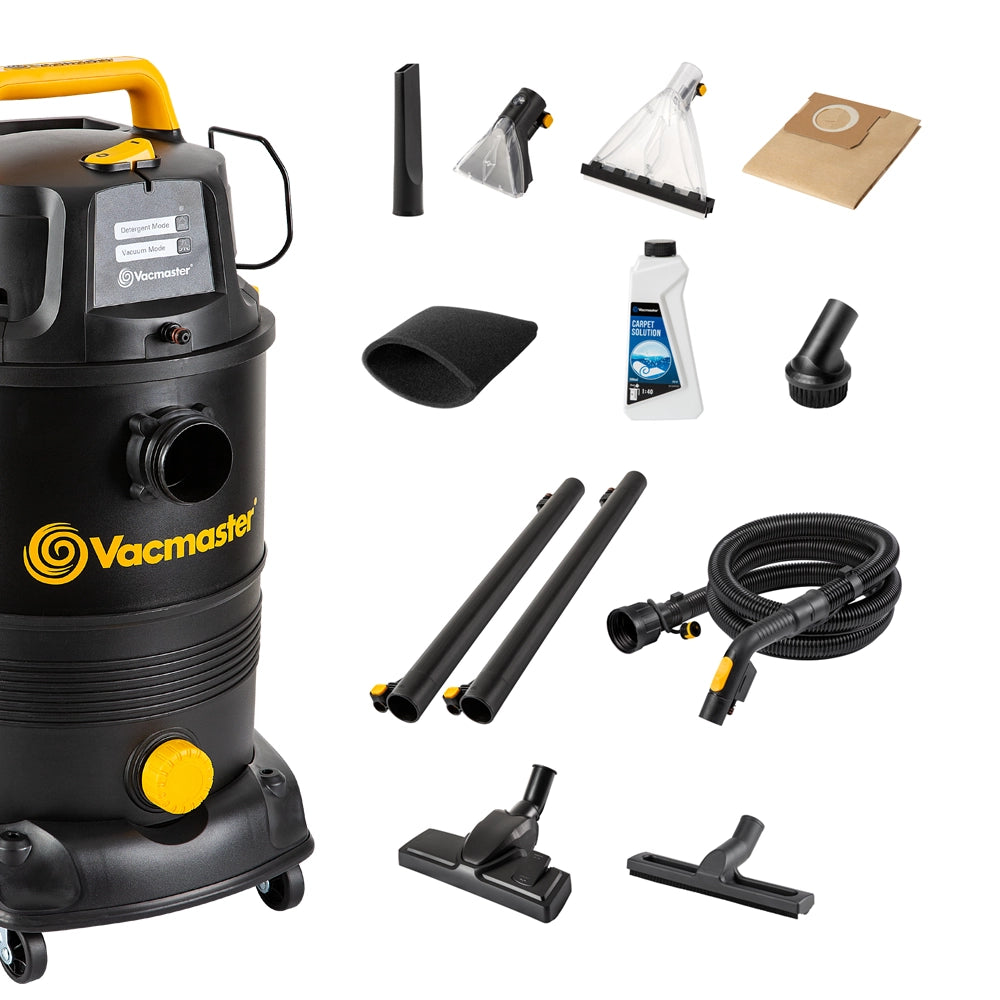
Some wet and dry vacuum cleaners include carpet-cleaning attachments. These models may spray a small amount of solution and recover it with suction. If the manual confirms this feature, the machine may perform light carpet extraction. Still, it may not clean as deeply as a dedicated carpet cleaner.
How a wet and dry vacuum cleaner works on carpet
A wet and dry vacuum cleaner uses a motor and airflow to pull water, dust, and debris into a collection tank. A float valve often stops suction when the tank reaches its liquid limit. This protects the motor from taking in too much water.
When used on carpet, the machine can remove:
• Fresh spills
• Pet accidents
• Water from a small leak
• Mud and wet soil
• Moisture left after spot cleaning
• Loose dirt mixed with surface water
The machine does not dissolve oily soil by suction alone. Carpet fibers can hold body oils, food grease, dust, and old stains. These soils often need a suitable detergent and agitation before extraction.
Think of a wet and dry vacuum cleaner as a strong towel with a motor. It can pull out moisture, but it cannot always loosen every mark. This is why a carpet may look better after extraction but still need proper washing.
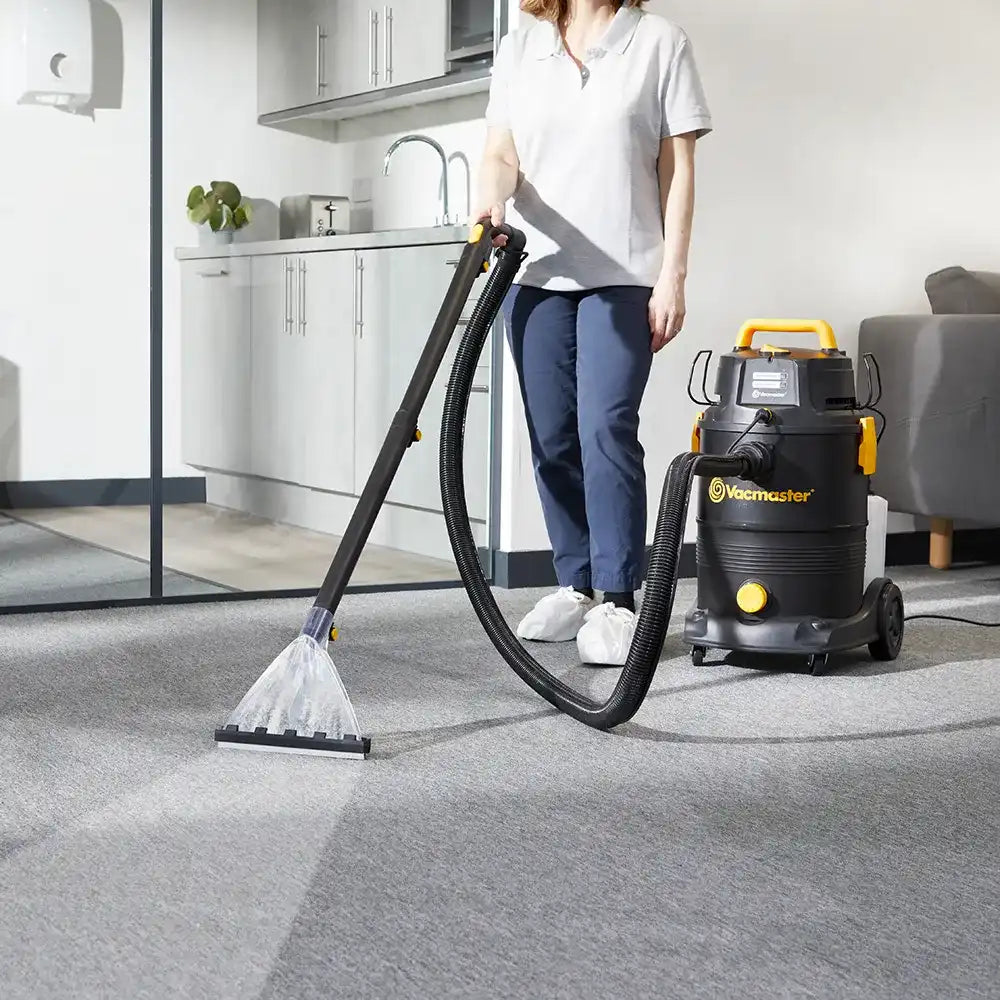
Wet and dry vacuum cleaner versus carpet cleaner
The two machines may look similar, but they serve different purposes.
| Feature | Wet and dry vacuum cleaner | Carpet cleaner |
|---|---|---|
| Dry vacuuming | Yes | Sometimes |
| Liquid pickup | Yes | Yes |
| Sprays cleaning solution | Usually no | Yes |
| Scrubs carpet fibers | Usually no | Yes |
| Removes deep soil | Limited | Better |
| Handles large spills | Very well | Fairly well |
| Dries carpet | Often faster with strong suction | Depends on the model |
| Best use | Spills, floods, workshops, garages | Routine carpet washing |
A wet and dry vacuum cleaner is often more powerful for picking up large amounts of water. A carpet cleaner is designed to clean the carpet itself.
For example, if a glass of juice spills, a wet and dry vacuum cleaner can remove the liquid quickly. You can then treat the remaining stain. If the entire carpet needs a deep clean, a carpet extractor is the better tool.
The right choice also depends on carpet type. Low-pile synthetic carpet often tolerates light moisture well. Wool, silk, jute, and delicate rugs may need professional care.
Can you use a wet and dry vacuum cleaner to clean carpet stains?
Yes, you can use a wet and dry vacuum cleaner as part of a stain-cleaning process. It works best when you first absorb or loosen the stain, then use the machine to remove the liquid.
Follow these steps:
-
Remove solid material with a spoon or blunt scraper.
-
Blot the area with a clean white cloth.
-
Test your cleaning solution on a hidden spot.
-
Apply a small amount of carpet-safe solution.
-
Gently work from the outside of the stain toward the center.
-
Use the wet and dry vacuum cleaner to extract the moisture.
-
Rinse with a small amount of clean water if the product instructions allow it.
-
Extract again until the area feels only slightly damp.
-
Place a fan nearby and allow the carpet to dry fully.
Do not flood the carpet. Too much water can move the stain deeper, damage the backing, or create a damp smell. It can also increase the risk of mold if the carpet stays wet for too long.
A clean white cloth is useful because it shows whether color is bleeding from the carpet. If dye transfers to the cloth, stop and seek professional advice.

How to use a wet and dry vacuum cleaner on carpets
Always read the owner’s manual first. Wet and dry vacuum cleaners differ in tank design, filters, hoses, and attachments.
Prepare the machine
Set up the vacuum in a dry area near the carpet. Remove the dry dust bag if the manual says it should not be used for liquid pickup. Some models require a foam filter for wet work.
Check these items:
• The tank is empty and clean.
• The hose has no blockage.
• The floor tool is suitable for liquid pickup.
• The power cord and plug are dry.
• The filter setup matches wet vacuuming instructions.
Never assume that every shop vacuum can collect water in the same way. Using the wrong filter can damage the machine or release dirty air.
Remove the liquid
Move the floor head slowly over the wet area. Use several passes instead of rushing. Slow movement gives the vacuum more time to lift moisture from the carpet.
Keep the nozzle flat when possible. Pressing too hard can restrict airflow. If the tank fills, turn off the machine and empty it before continuing.
Improve drying
After extracting the visible water, increase air movement. Open windows when outdoor humidity is low. Use fans or a dehumidifier to help the carpet dry.
Lift small furniture legs if possible. Avoid walking over the damp area because pressure can push moisture into the backing. Check the carpet again after several hours.
If the padding underneath is soaked, surface extraction may not be enough. Water can remain below the carpet even when the top feels dry.
Does a wet and dry vacuum cleaner remove carpet odors?
A wet and dry vacuum cleaner can reduce odors when the smell comes from removable liquid or surface dirt. It cannot always remove odors trapped in the padding, backing, or subfloor.
Pet urine is a common example. Urine can travel below the carpet surface. A vacuum may remove some moisture, but odor can remain if the padding is affected. Enzyme-based products made for carpet may help, but they must be used according to the label.
Avoid covering odors with large amounts of fragrance. This often mixes two smells instead of solving the problem. The key steps are:
• Find the full affected area.
• Use a suitable treatment.
• Extract excess liquid.
• Dry the carpet and padding quickly.
• Inspect the subfloor if the odor returns.
If a musty smell continues after drying, moisture may still be trapped below the carpet. In that case, a water-damage professional may need to inspect the area.
What a wet and dry vacuum cleaner can and cannot do
Understanding the limits of the machine helps prevent carpet damage.
What it can do
A wet and dry vacuum cleaner is useful for:
• Picking up fresh water
• Removing liquid after a small spill
• Extracting rinse water after spot treatment
• Cleaning hard floors and workshop areas
• Removing wet mud from durable carpets
• Supporting water removal after minor leaks
• Reducing drying time after careful cleaning
What it cannot do well
A standard wet and dry vacuum cleaner may not:
• Deep-clean the whole carpet
• Scrub heavily embedded soil