Can You Use A Vacuum Cleaner On Artificial Grass: Guide
Yes, you can use a vacuum cleaner on artificial grass if you choose the right settings and use gentle suction.
Artificial turf is easy to maintain, but it is not the same as indoor carpet. The best cleaning method depends on the turf pile, infill, backing, and the type of vacuum you own. In this guide, you will learn when vacuuming is safe, which machines to avoid, and how to clean artificial grass without damaging its blades or removing its infill.
Can you use a vacuum cleaner on artificial grass?
Yes, you can use a vacuum cleaner on artificial grass for light debris such as leaves, dry grass, dust, and small twigs. However, a standard household vacuum is not always the best choice.
Artificial grass has flexible plastic blades attached to a backing. Many lawns also contain infill made from sand, rubber, or a mixture of both. Strong suction can pull out this infill, flatten the blades, or stress the turf backing.
The safest approach is to use a vacuum only when:
- The grass is dry.
- The suction is low or adjustable.
- The brush roll is turned off.
- The vacuum head does not press hard on the turf.
- The manufacturer does not prohibit vacuum use.
A vacuum can help with routine upkeep, but it should not replace brushing, rinsing, and spot cleaning. Think of it as a soft broom with suction, not a deep carpet-cleaning tool.
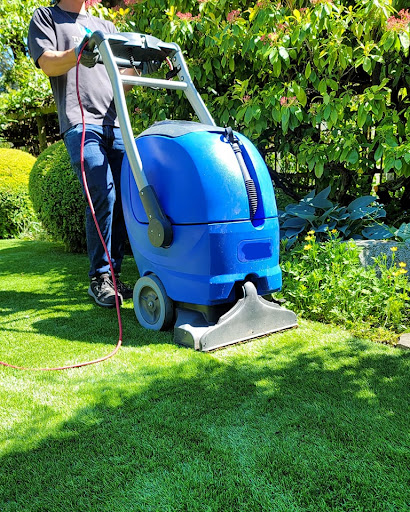
Which vacuum cleaners are safe for artificial turf?
The type of vacuum matters more than the brand. A gentle machine with controlled suction is usually safer than a powerful vacuum designed to clean thick indoor carpet.
Handheld vacuums
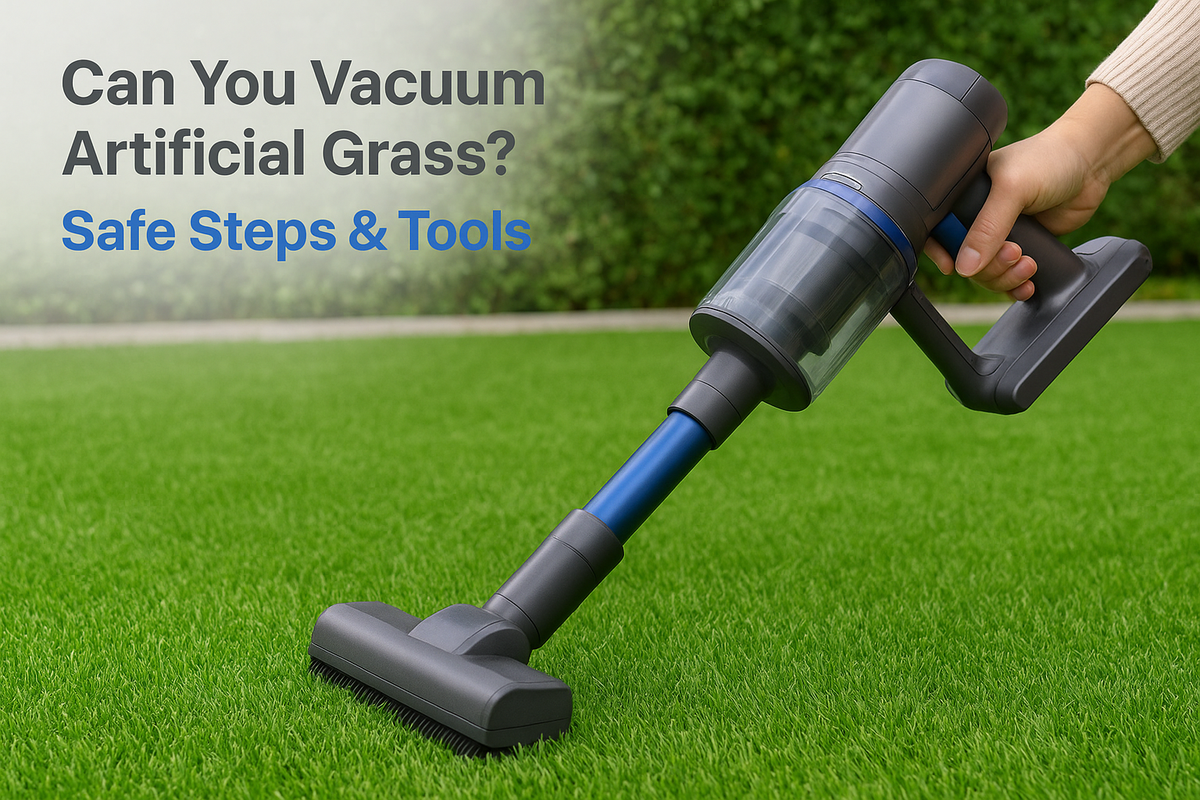
A handheld vacuum can work well for small artificial grass areas, balconies, patios, and pet-turf trays. It gives you good control and makes it easier to avoid seams and edges.
Use the lowest practical suction setting. Keep the nozzle slightly above the grass instead of pressing it into the fibers.
Outdoor wet and dry vacuums
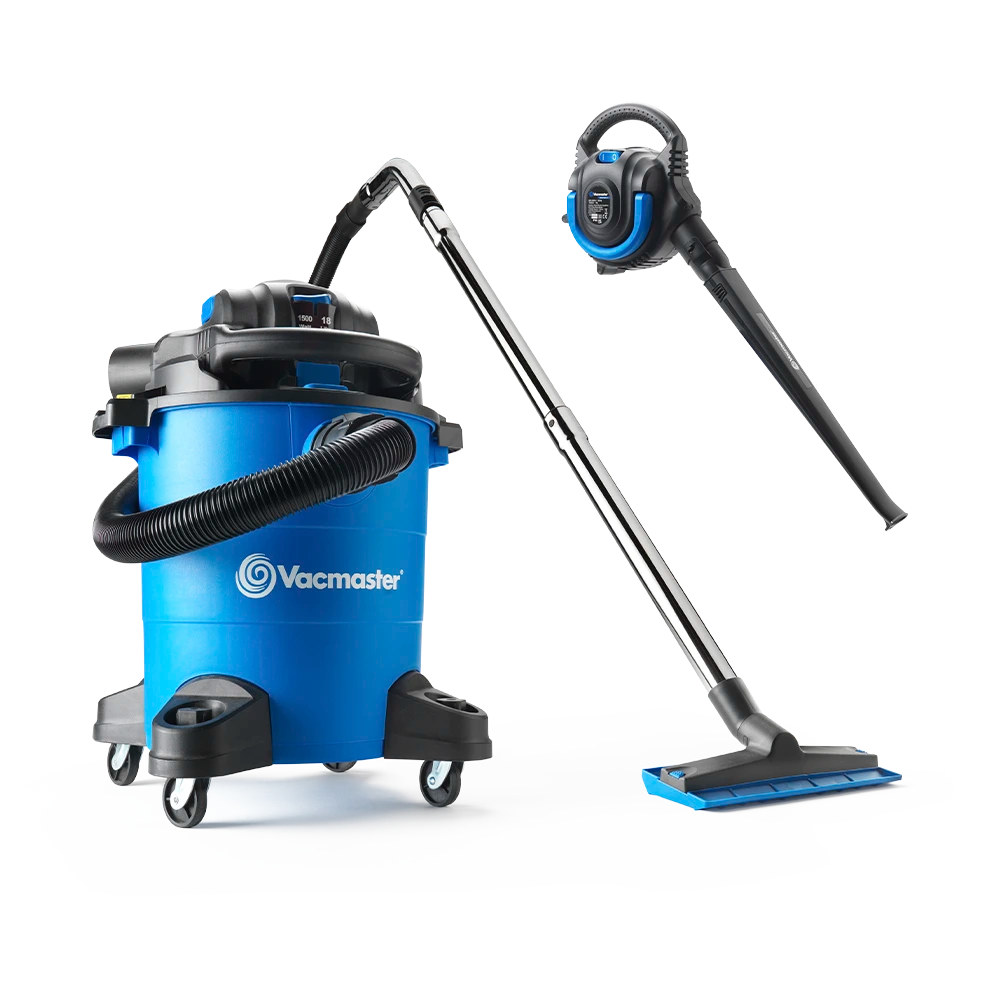
A wet and dry vacuum may be useful for artificial grass, but only when used carefully. Choose a model with adjustable suction and avoid using the wet function unless the manufacturer allows it.
Most wet and dry vacuums are powerful. High suction may remove infill or pull at loose turf fibers. They can also spread dirty water across the lawn if the area has pet waste or muddy residue.
Leaf vacuums and garden vacuums
A garden vacuum can remove leaves and loose debris quickly. Some models also have a blower setting, which is often safer for artificial grass.
If you use the vacuum setting, keep the nozzle several inches above the surface. Avoid models with aggressive metal impellers or shredding systems, as these can catch plastic blades and damage the turf.
Upright household vacuums
A regular upright vacuum is often the riskiest option. Its rotating brush bar is designed to agitate carpet fibers, not synthetic grass blades.
If you must use one, turn off the brush roll, select low suction, raise the cleaning head if possible, and test it in a hidden area first. Even then, follow the turf maker’s care instructions.

Why strong suction can damage artificial grass
Artificial turf looks tough, but its construction has several parts that need care. Strong suction can affect more than the visible blades.
It can remove infill
Infill sits between the grass blades. It helps support the blades, improve drainage, add weight, and make the turf feel more natural.
A powerful vacuum may collect this material along with leaves and dust. Over time, lost infill can leave thin spots, expose the backing, and cause blades to lie flat.
It can pull loose fibers
A vacuum with a rotating brush can catch individual fibers. This is more likely when the turf is old, poorly installed, or already loose around an edge.
Plastic blades can stretch, bend, or tear. Once damaged, they may not return to their original shape.
It can stress seams and edges
The edges of artificial grass are more vulnerable than the center. Vacuum wheels and nozzles can catch a seam, lift an edge, or worsen a small installation fault.
Always vacuum away from seams when possible. Do not run the machine over an exposed or loose edge.
It can flatten the pile
Artificial grass blades need regular brushing to stand upright. A heavy vacuum head can press them down, especially when the pile is wet or warm.
Flattened grass is not always permanently damaged, but it may need brushing with a stiff, synthetic-bristle turf rake.
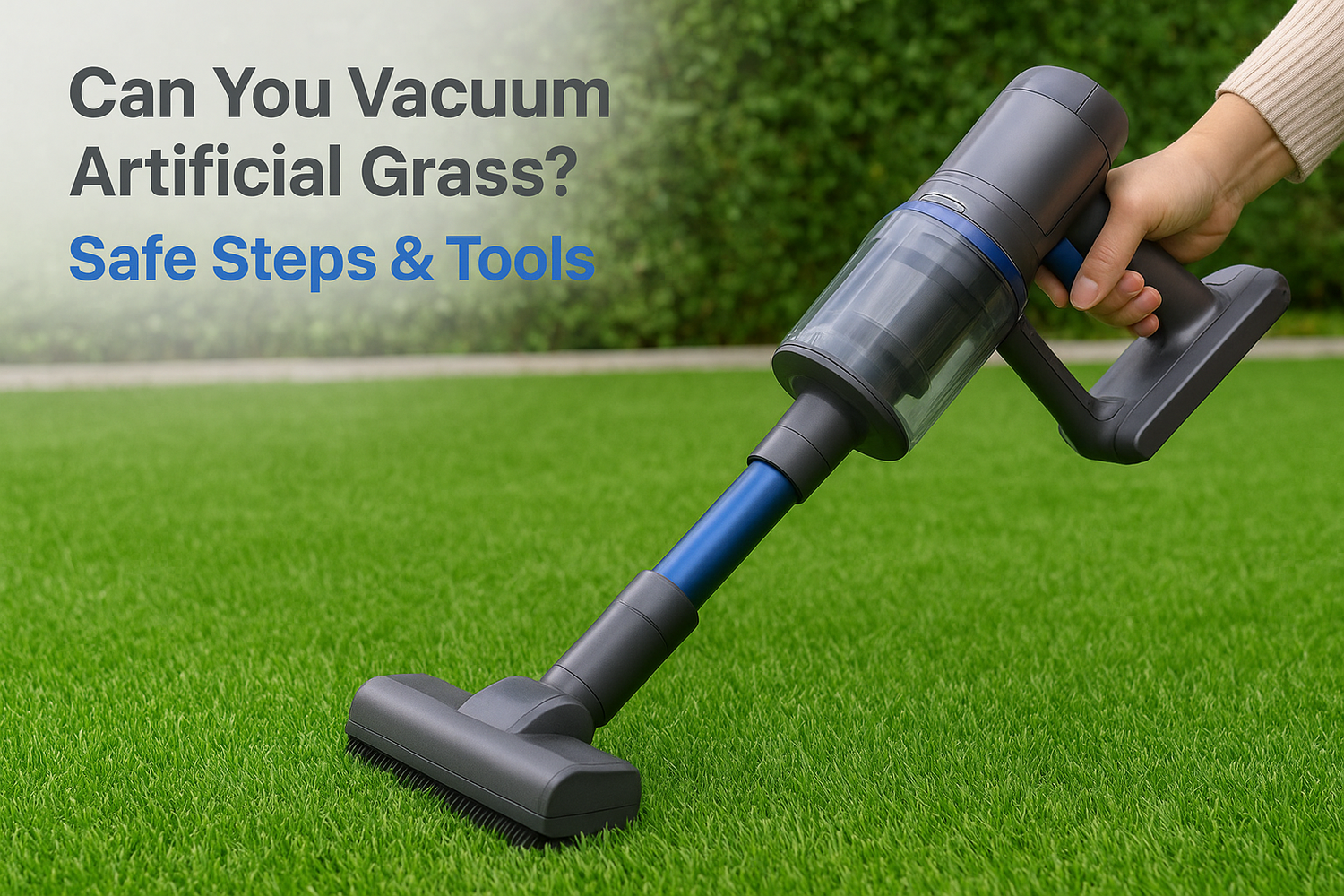
How to vacuum artificial grass safely
If you decide to vacuum artificial grass, use a gentle process. Do not rush across the lawn as you might with an indoor rug.
-
Remove large debris by hand. Pick up branches, stones, toys, and other hard objects first.
-
Let the surface dry. Vacuuming wet turf can smear dirt and make the machine work harder. It can also move damp infill.
-
Check the vacuum head. Remove the rotating brush, or switch the brush roll off. Make sure there are no sharp edges.
-
Start with low suction. Increase it only if the vacuum cannot collect light debris. If you see infill entering the hose, stop at once.
-
Test a hidden area. Vacuum a small corner for a few seconds. Check for pulled fibers, flattened blades, or missing infill.
-
Hold the nozzle slightly above the turf. Light debris often sits on top of the grass and does not require direct contact.
-
Work in short passes. Move slowly and avoid repeated passes over the same area.
-
Stay away from seams and borders. Clean these areas with a soft hand brush instead.
-
Brush the grass afterward. Use a plastic or synthetic-bristle brush to lift the blades and spread the infill evenly.
-
Empty the vacuum and inspect the contents. If you find sand, rubber granules, or green fibers, the suction is too strong.
This method answers the question “can you use a vacuum cleaner on artificial grass?” with a practical yes, but only when the machine is controlled and the turf remains undisturbed.
When you should not vacuum artificial grass
Vacuuming is not suitable for every situation. In some cases, another cleaning method is safer and more effective.
Avoid vacuuming when:
- The turf is saturated after heavy rain.
- The grass has loose edges or damaged seams.
- The backing is visible.
- Large amounts of sand or rubber infill are present.
- The area contains wet pet waste.
- The surface has sticky spills.
- The turf manufacturer warns against vacuuming.
- The vacuum has a powerful, nonadjustable motor.
- The vacuum has a rotating brush that cannot be switched off.
- The lawn is newly installed and the infill has not settled.
Wet pet waste should be removed with disposable gloves and paper towels first. Then rinse the area with water and use a turf-safe cleaner if needed. A vacuum is not a replacement for sanitation.
Fresh leaves are also easier to remove with a soft plastic rake, leaf blower, or broom. These tools disturb less infill than a strong vacuum.
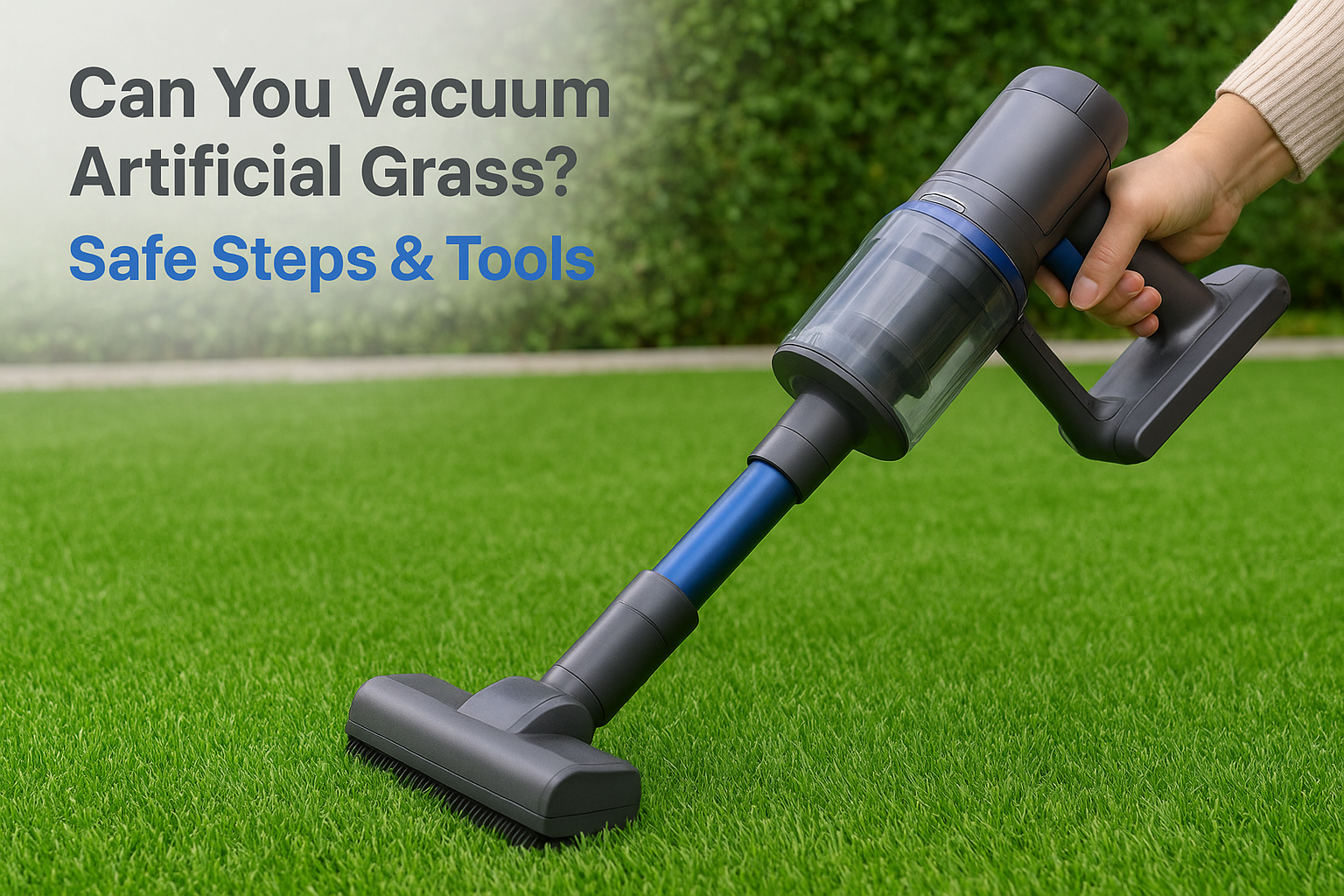
Vacuuming versus brushing artificial grass
Brushing and vacuuming perform different jobs. Understanding the difference helps you care for the lawn without overcleaning it.
Vacuuming is useful for:
- Fine dust.
- Dry leaves.
- Small crumbs.
- Loose hair.
- Light surface debris.
Brushing is better for:
- Standing the blades upright.
- Removing debris trapped deep in the pile.
- Spreading infill.
- Restoring flattened areas.
- Cleaning around edges and seams.
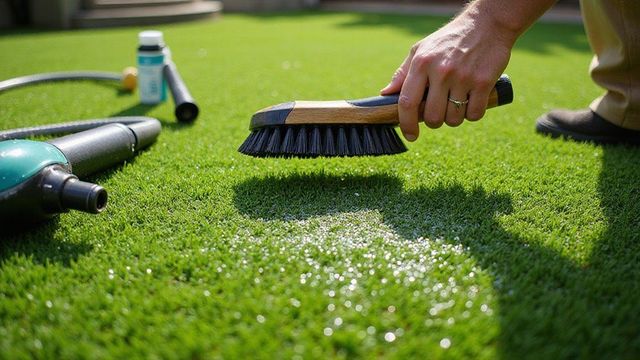
For most lawns, brushing should be the main maintenance method. Use a stiff plastic rake or synthetic-bristle brush. Do not use a metal rake because its teeth can cut the fibers and scratch the backing.
A simple maintenance plan works well:
- Remove leaves and twigs once or twice each week.
- Brush busy areas every few weeks.
- Rinse dusty areas when needed.
- Clean pet spots as soon as possible.
- Vacuum only when light debris cannot be removed easily by brushing or blowing.
In my experience, people often overuse the vacuum because it feels fast. The better habit is to remove large debris first, brush the pile, and vacuum only the fine material left on top.
How to clean artificial grass with pets
Pet owners often ask, “can you use a vacuum cleaner on artificial grass?” because hair and dry dirt can build up quickly. The answer is still yes, but pet areas need a wider cleaning routine.
First, remove solid waste promptly. Rinse the area with a hose and allow it to drain. For odor, use an enzyme-based cleaner labeled safe for synthetic turf and follow the product directions.
A vacuum can remove dry pet hair from the surface. Use a handheld model with low suction, and avoid forcing the nozzle into the pile. Strong suction may collect infill and can spread hair into the drainage holes.
Never vacuum liquid waste, vomit, or wet mud with a standard dry vacuum. Moisture can damage the machine and spread bacteria. Use a wet and dry vacuum only if it is suitable for the waste and can be cleaned safely afterward.
For busy pet areas, consider:
- A washable turf mat near the door.
- Regular rinsing.
- Enzyme cleaner for odor control.
- A soft brush for trapped hair.
- A small scoop for solid waste.
- Extra attention to drainage.
Artificial grass does not remove the need for hygiene. It simply makes daily cleanup easier when the right routine is used.
Common mistakes to avoid
Knowing what not to do can prevent expensive turf repairs. Most vacuum-related damage comes from too much pressure, too much suction, or poor timing.
Using a carpet beater brush
A rotating beater brush can pull and bend synthetic fibers. It may also collect infill and create bare-looking spots.
Vacuuming too often
Artificial grass does not need daily vacuuming. Frequent passes can slowly remove infill and wear down busy areas.
Ignoring the vacuum contents
If the collection bin contains green fibers, sand, or rubber granules, stop immediately. This is a clear sign that the machine is removing part of the turf system.
Dragging the vacuum across the lawn
Heavy wheels can flatten the pile. They can also catch on seams and borders. Lift the machine over vulnerable areas.
Vacuuming stones and branches
Hard debris can block the hose or damage the vacuum. Pick up anything larger than a small leaf before cleaning.
Using household cleaners without checking
Some cleaners contain bleach, solvents, or strong chemicals that can fade plastic blades or harm the backing. Choose a product made for synthetic turf or use mild soap and water when appropriate.
Forgetting to brush afterward
Vacuuming removes debris but does not restore the grass shape. A quick brush can help the blades stand up again.

A simple artificial grass maintenance schedule
A regular schedule keeps artificial turf clean without excessive wear. Adjust it for weather, pets, foot traffic, and nearby trees.
Weekly care
Walk over the area and remove leaves, twigs, and litter. Use a leaf blower, soft rake, or gentle broom before reaching for a vacuum.
Monthly care
Brush high-traffic zones in different directions. Check for flattened blades, loose edges, drainage problems, and areas where infill looks thin.
Seasonal care
After fall leaf drop, remove debris often so it does not break down into the pile. In spring, rinse away pollen and dust. Before winter, inspect seams and drainage paths.
After storms
Remove branches and heavy debris by hand. Check for displaced infill or lifted edges. Do not use a vacuum on wet mud or standing water unless the machine is designed for that purpose.
After parties or gatherings
Pick up cups, food, stones, and decorations first. Vacuum only dry crumbs or fine debris after the area is clear.
This schedule reduces the need to ask “can you use a vacuum cleaner on artificial grass?” every time a mess appears. You will know which tool fits the job.