Can I Use A Vacuum Cleaner For Dust Extraction: Safe Tips
Yes, you can use a vacuum cleaner for dust extraction, but only with the right filter, airflow, and dust type.
The answer depends on the vacuum, the material you are cutting, and the level of dust control you need. A household vacuum may collect light debris, but a proper shop vacuum or certified dust extractor is safer and more effective for power tools, fine particles, and long work sessions. This guide explains how to choose the right system, avoid common mistakes, and protect your health and equipment.

Can I use a vacuum cleaner for dust extraction?
Yes, you can use a vacuum cleaner for dust extraction in some situations. The key is matching the vacuum to the dust and the tool that creates it.
A standard household vacuum works well for small amounts of everyday dust. It may also collect chips from light sanding or drilling. However, it is not usually designed for large wood chips, fine mineral dust, plaster dust, or continuous use with power tools.
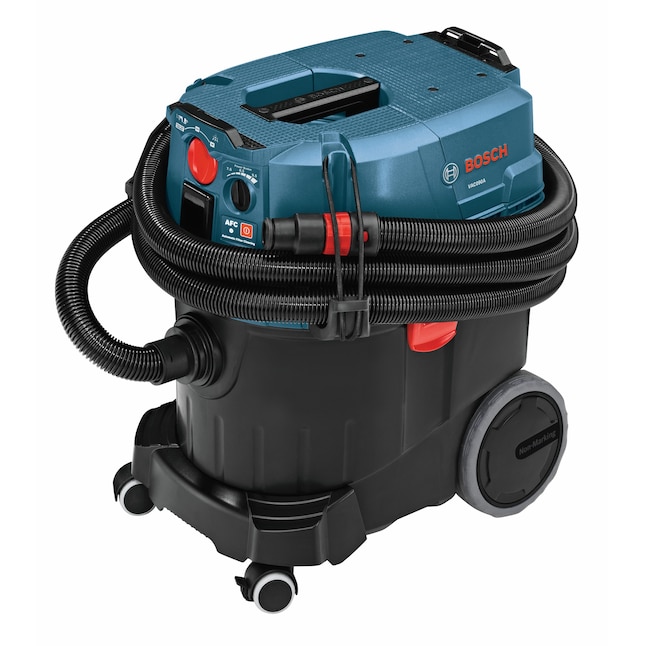
A shop vacuum is a better choice for most home workshops. It has stronger suction, a larger container, and better support for hoses and tool adapters. Some models also include fine dust filters or HEPA filters.
A true dust extractor is built for this exact job. It often provides:
• Strong and steady airflow
• High suction at the tool
• Fine dust filtration
• Automatic filter cleaning
• Tool power control
• Grounding or anti-static features
• Certified protection for hazardous dust
The simple rule is this: a vacuum removes dust after it enters the air, while a good dust extractor captures much of it at the source. That difference matters. Fine dust can stay airborne long after visible dust settles on your workbench.
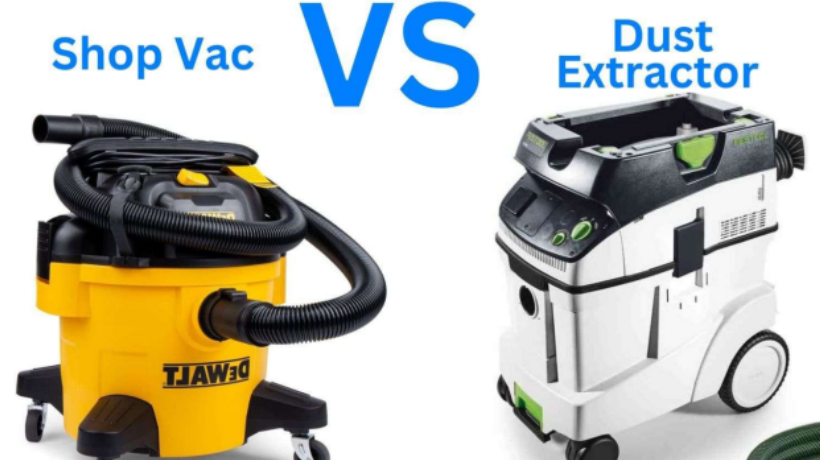
What is the difference between a vacuum cleaner and a dust extractor?
A vacuum cleaner creates negative pressure. This pressure pulls air, dust, and debris through a hose and into a bag or container. A dust extractor does the same basic job but is designed around workshop dust collection and tool use.
A household vacuum often has a narrow hose and a filter made for dirt from floors. The hose may clog when it collects sawdust. Its motor may also overheat when fine dust blocks the filter.
A shop vacuum normally has a wider hose. This allows it to move larger chips without clogging. It can also handle wet materials if it is designed as a wet and dry vacuum.
A dust extractor usually offers better control of fine particles. Many models use a pleated filter, a sealed dust bag, and a filter cleaning system. Some professional models are tested and rated for specific dust classes.
Main differences at a glance
| Feature | Household vacuum | Shop vacuum | Dust extractor |
|---|---|---|---|
| Best use | Floors and light dirt | Chips, debris, and general workshop cleanup | Fine dust at power tools |
| Hose size | Usually narrow | Medium to wide | Designed for tool ports |
| Fine dust control | Often limited | Varies by model | Usually strong |
| Filter cleaning | Often manual or basic | Manual or automatic | Often automatic |
| Tool connection | Rare | Common with adapters | Purpose-built |
| Hazardous dust rating | Usually none | Usually none | Some models have certified ratings |
| Continuous tool use | Poor to moderate | Moderate to good | Good to excellent |
A vacuum cleaner for dust extraction is only suitable when its airflow, filter, and container can handle the material. Suction alone does not make a vacuum safe for every type of dust.

When is a vacuum cleaner suitable for dust extraction?
A vacuum cleaner can be suitable for light dust extraction in a home workshop. It works best when the dust is not highly hazardous and the tool produces a small amount of debris.
Good uses may include:
• Collecting coarse sawdust from a drill
• Removing dust from a small sander
• Capturing chips from a hand router
• Cleaning a workbench after cutting wood
• Collecting dust from occasional home repairs
Use the vacuum with a proper tool adapter. A loose hose connection allows dust to escape and reduces suction at the cutting point.
The filter must also match the dust. A basic cartridge filter may trap larger particles but allow very fine dust to pass through. A HEPA filter can capture very small particles, but only when the vacuum has a sealed design and the filter fits correctly.
I have seen many home users focus only on motor power. In practice, the hose size and filter condition often matter more. A powerful vacuum with a blocked filter can collect less dust than a smaller vacuum with a clean filter and a good tool connection.
A household vacuum is usually not suitable for:
• Daily sanding or routing
• Large table saws
• Planers and thicknessers
• Concrete grinding
• Cutting fiber cement board
• Drywall sanding over long periods
• Dust that may contain asbestos or lead
• Combustible metal or chemical dust
For these jobs, use a purpose-built extractor and follow the tool maker’s safety instructions.
What type of vacuum is best for workshop dust?
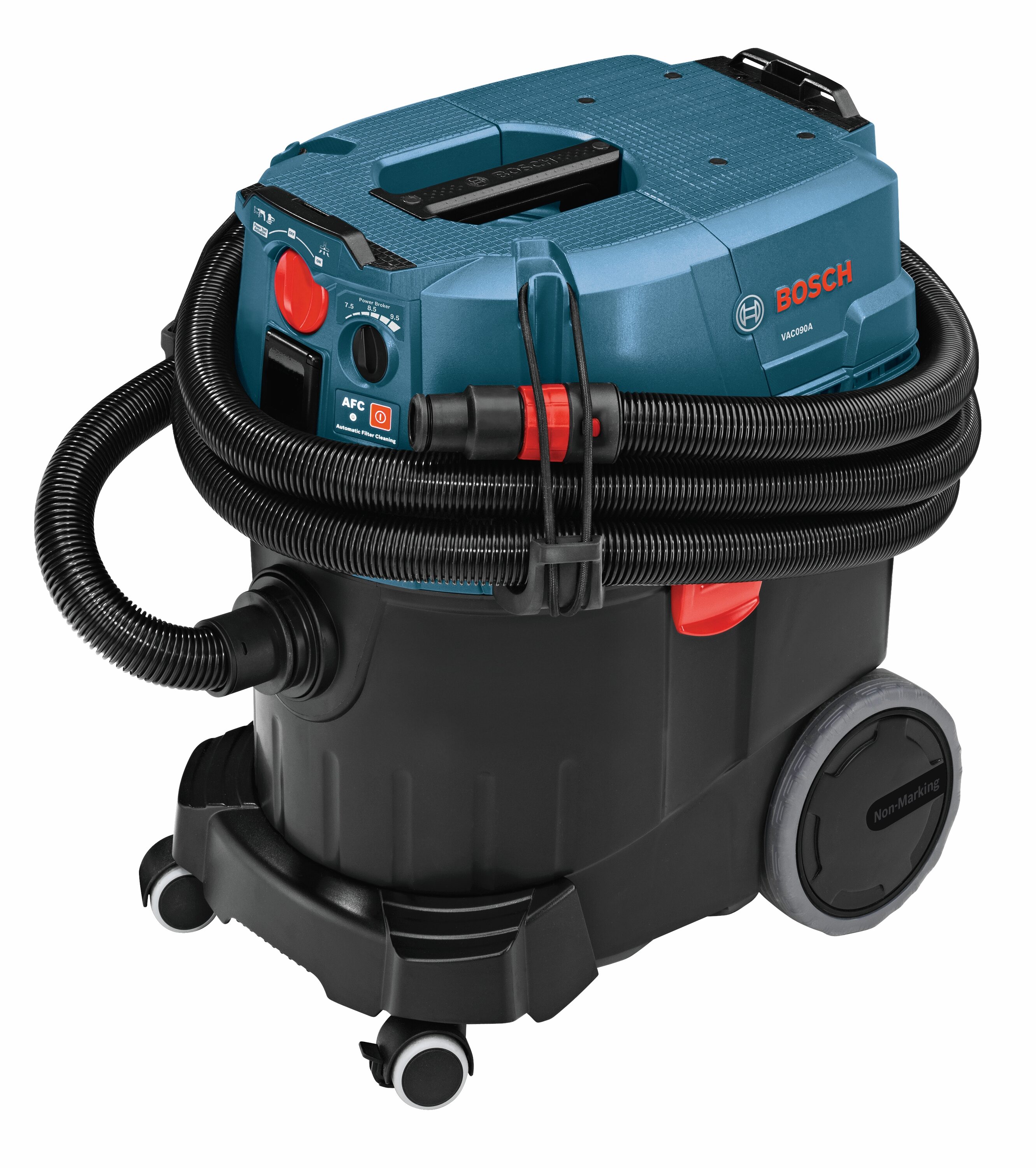
For basic workshop use, choose a wet and dry shop vacuum with a fine dust filter, a large container, and a tool outlet. A model with a 1 1/4-inch or 1 1/2-inch hose is common for small power tools. Larger tools may need a 2 1/2-inch hose or a dedicated dust collector.
Look for these features:
Fine dust filter
The filter should be rated for fine dust. A cloth filter alone is not enough for very small particles. Pleated cartridge filters offer more surface area and usually maintain airflow better.
HEPA filtration
HEPA means high-efficiency particulate air filtration. A true HEPA filter is designed to capture at least 99.97% of particles around 0.3 microns under test conditions.
That does not mean every vacuum labeled “HEPA” is fully sealed. Dust can escape through poor seals, gaps, or the exhaust. The whole machine must be designed to control leaks.
Automatic filter cleaning
Fine dust quickly coats a filter. Automatic cleaning systems shake, pulse, or reverse air through the filter to restore airflow.
This feature is helpful when sanding drywall, cutting masonry, or working with very fine wood dust. It may not be needed for short cleanup tasks.
Tool activation
A tool activated outlet turns the vacuum on when you start the connected power tool. This keeps the system easy to use and reduces the chance of forgetting to start the vacuum.
Check the outlet’s maximum electrical rating. Never connect a tool that exceeds the stated limit.
Proper hose diameter
A narrow hose may improve suction at small ports but can clog with chips. A wide hose moves more material but may reduce airflow speed at a small tool port.
Use the hose size recommended by the tool maker. Avoid unnecessary reducers and sharp bends.
Sealed construction
A sealed vacuum keeps captured dust inside the machine. Check the lid gasket, filter seal, bag connection, and hose fittings. Small leaks can release fine dust into the room.
Can I use a vacuum cleaner with power tools?
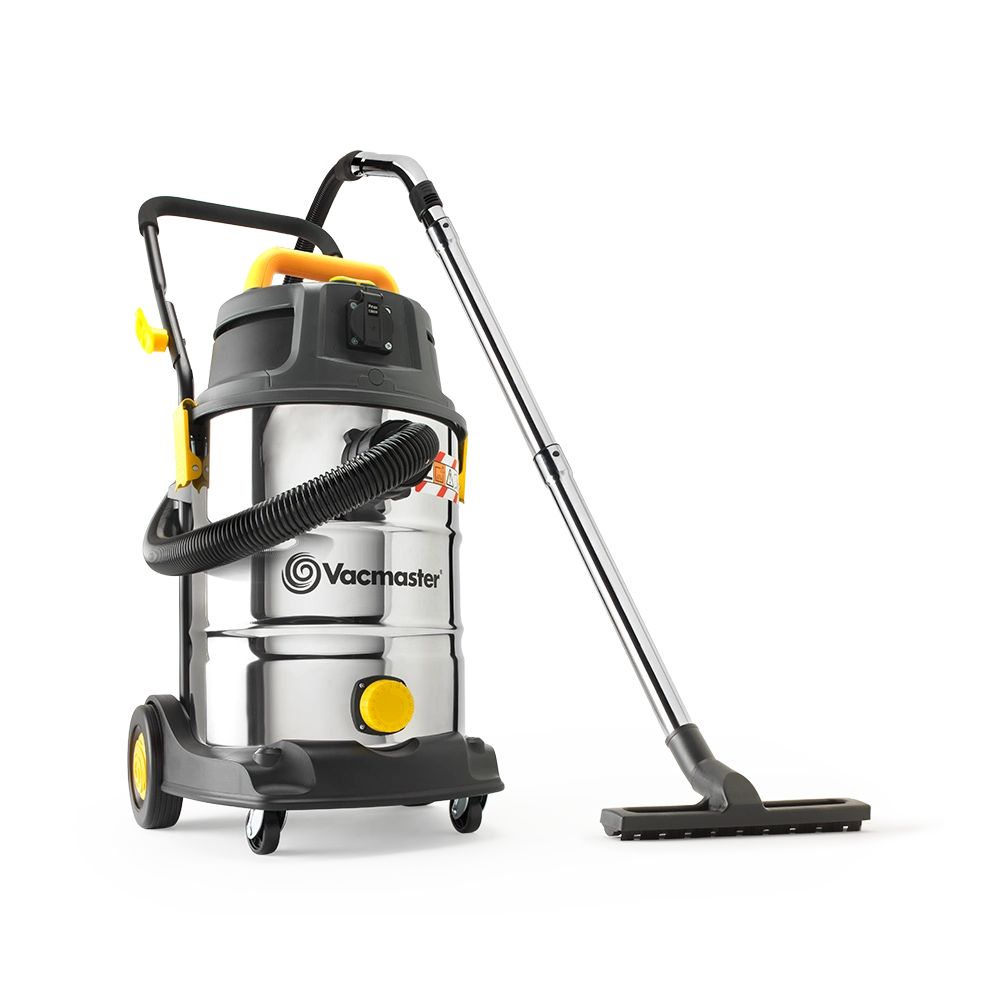
You can use a vacuum cleaner with some power tools, but the connection must be secure and the airflow must suit the tool.
The best tools for vacuum extraction include:
• Random orbital sanders
• Track saws
• Circular saws
• Jigsaws
• Routers
• Miter saws with dust ports
• Drywall sanders
• Drills with dust shrouds
Before connecting the vacuum, check the tool’s dust port size. A universal rubber adapter can help, but it should not collapse under suction.
For a sander, keep the hose light and flexible. A heavy hose can pull against the tool and make it harder to control. For a saw, make sure the hose does not interfere with the blade guard or your stance.
A common mistake is using a tiny vacuum hose on a tool that produces large chips. The hose may plug within minutes. Another mistake is connecting a large hose to a small port without checking the airflow. The system may sound powerful while capturing very little dust.
I once tested a small shop vacuum with a random orbital sander and found that the dust collection looked excellent at first. After several minutes, the filter began to load with powder, and suction dropped sharply. A dust bag and a better filter fixed the problem. The lesson was simple: dust extraction depends on the complete system, not just the motor.
How to set up a vacuum for dust extraction
A careful setup improves capture and reduces airborne dust. Follow these steps before starting work.
-
Choose the correct filter for the material. Use a fine dust or HEPA filter when the work creates fine particles.
-
Install a dust bag if the vacuum supports one. The bag catches much of the debris before it reaches the main filter.
-
Check every seal. Inspect the lid, filter, bag collar, hose, and tool adapter.
-
Use the shortest practical hose. Long hoses and sharp bends reduce airflow.
-
Connect the hose firmly to the tool. Tape or a proper adapter may help, but do not create a weak connection that can fall off.
-
Turn on the vacuum before starting the tool. Use automatic tool activation if available.
-
Keep the filter clean. Stop work when suction drops instead of forcing the motor to run under strain.
-
Empty the container outdoors when possible. Wear suitable respiratory protection during emptying.
-
Clean the area with the vacuum, not compressed air. Compressed air sends fine dust back into the room.
Place the vacuum near the tool, but keep it away from sparks, sharp edges, water, and walkways. Secure the power cable and hose so they cannot become a trip hazard.
Is a HEPA vacuum necessary for sawdust?
A HEPA vacuum is not always necessary for coarse sawdust, but it is useful for fine wood dust and indoor work. Sanding creates much smaller particles than sawing, and these particles can remain suspended in the air.
Wood dust can irritate the eyes, skin, nose, and lungs. Some types of wood can cause allergic reactions. Long-term exposure to certain wood dusts is associated with serious health risks, so good control is important.
A HEPA filter helps, but it is only one part of safe dust control. You also need:
• Source capture at the tool
• A sealed vacuum body
• A suitable dust bag
• Good room ventilation