
How To Make South Indian Coffee: Easy Recipe
South Indian coffee is made by brewing strong coffee decoction, then mixing it with hot milk and sugar.
Learning how to make South Indian coffee is less about expensive equipment and more about balance. The right coffee blend, a slow drip, hot milk, and a good froth create the bold, smooth taste found in homes and cafés across South India. This guide explains each step, common mistakes, serving tips, and easy ways to adjust the recipe at home.
What Is South Indian Coffee?
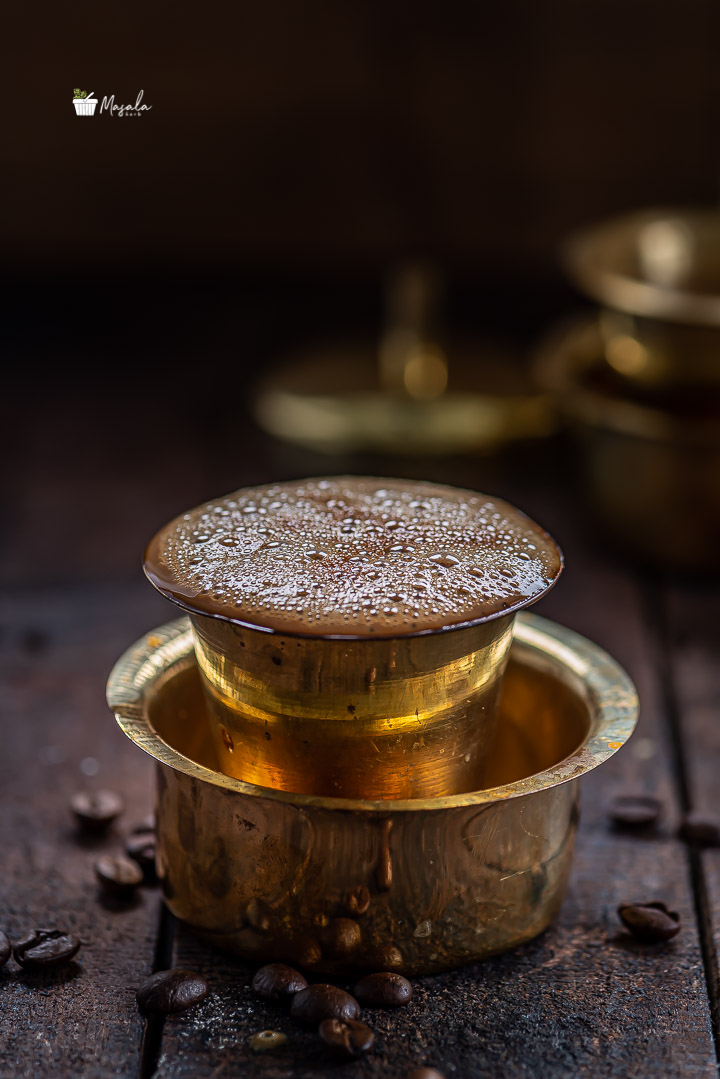
South Indian coffee, often called filter coffee or kaapi, is a strong milk coffee made with a traditional metal coffee filter. The filter slowly extracts a concentrated brew called decoction. This decoction is mixed with hot, often boiled milk and sugar.
The classic flavor comes from roasted coffee blended with chicory. Chicory adds body, a mild earthy note, and a thicker feel. Many traditional blends use Arabica and Robusta coffee with a small amount of chicory, though the exact ratio differs by region and family.
Unlike instant coffee, South Indian coffee is not mixed from powder and hot water. It is brewed slowly. That slow process gives the drink its deep aroma and rich taste.

Ingredients for South Indian Coffee
You only need a few ingredients to make South Indian coffee. Still, each one affects the final cup.
Basic ingredients
For two small servings, use:
• 2 tablespoons finely ground coffee made for a South Indian filter
• 1 cup hot water
• 1 to 1½ cups whole milk
• 2 to 4 teaspoons sugar, based on taste
• A pinch of cardamom, optional
A traditional coffee blend often contains about 70% to 80% coffee and 20% to 30% chicory. If you prefer a cleaner coffee taste, choose a blend with less chicory. If you enjoy a heavier body and stronger aroma, a little more chicory can work well.
Whole milk gives the most classic result because it adds creaminess. Low-fat milk can still work, but the coffee may feel lighter. Plant-based milk is possible, though soy or oat milk usually performs better than thin almond milk.
Equipment You Need
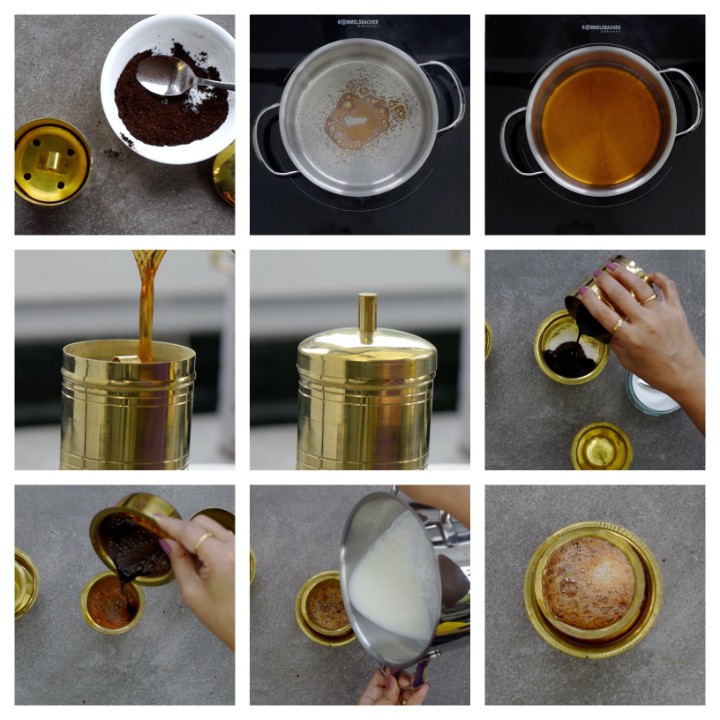
The traditional tool is a stainless steel South Indian coffee filter. It has two main sections:
• The upper chamber holds the coffee grounds and has small holes.
• The lower chamber collects the brewed decoction.
Most filters also include a lid and a pressing disc. The disc helps spread water across the grounds, but it should not be pushed down with force.
You will also need:
• A small saucepan for heating milk
• A teaspoon for measuring coffee and sugar
• A cup, tumbler, or serving glass
• A small bowl or second cup for mixing
A coffee filter is the best choice for an authentic result. However, you can make a similar drink with a French press or pour-over brewer. The flavor may be different because those tools do not produce the same slow, concentrated extraction.
How to Make South Indian Coffee Step by Step
The key to how to make South Indian coffee is controlling the coffee-to-water ratio and allowing enough brewing time. Follow these steps for a strong, balanced cup.
1. Prepare the coffee filter
Wash the filter if needed, then dry it fully. Place the upper chamber over the lower chamber.
Add 2 tablespoons of finely ground coffee to the upper chamber. Spread it gently. Do not press the grounds down hard, as compact coffee can block the small holes.
2. Add hot water
Boil 1 cup of water. Let it sit for about 30 seconds, then pour it over the coffee grounds.
The water should be very hot but not aggressively boiling. Pour slowly and evenly so the grounds become wet across the whole surface.
Place the pressing disc on top, followed by the lid. Leave the filter undisturbed for 10 to 15 minutes.
3. Let the decoction drip
The water will move slowly through the grounds and collect in the lower chamber. This concentrated liquid is the decoction.
Good decoction should look dark and smell fragrant. It should taste strong, but not sharply burnt. If the coffee drips very fast, the grounds may be too coarse. If it barely drips, the grounds may be too fine or packed too tightly.
4. Heat the milk
Pour 1 to 1½ cups of milk into a saucepan. Heat it until it is hot and lightly steaming.
Many South Indian homes bring the milk close to a boil. This creates a familiar cooked-milk flavor. Watch the pan carefully, because milk can rise and spill within seconds.
5. Mix coffee, milk, and sugar
For each serving, add 2 to 3 tablespoons of decoction to a cup. Add hot milk and sugar.
A common starting ratio is:
• 1 part decoction
• 2 to 3 parts hot milk
• Sugar to taste
For stronger coffee, add more decoction. For a milder drink, use more milk.
6. Froth the coffee
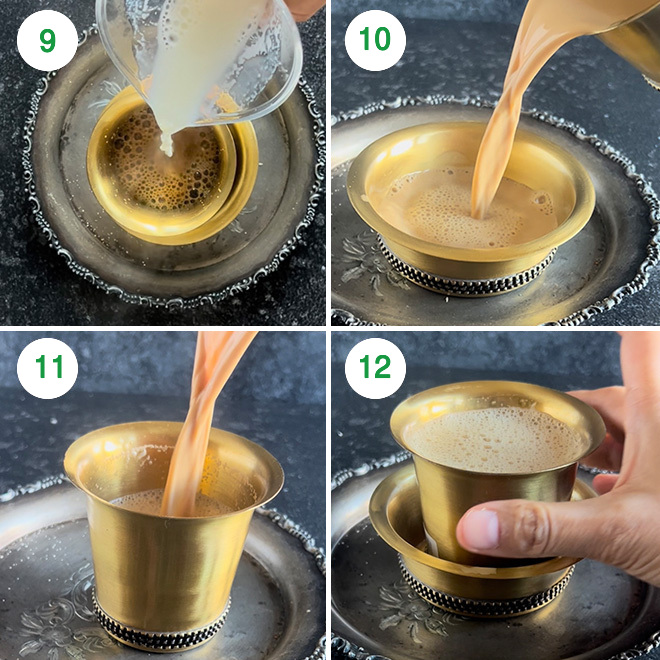
Pour the coffee from one cup or tumbler into another from a short height. Repeat this two or three times.
This action mixes the sugar and milk while creating a light foam. Do not pour from too high, since hot coffee can splash and burn your hands.
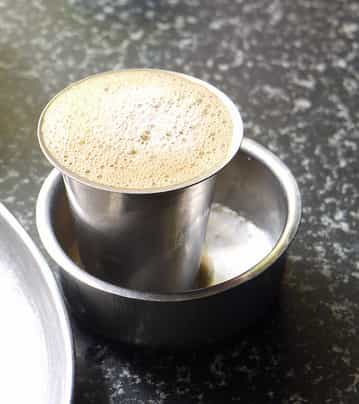
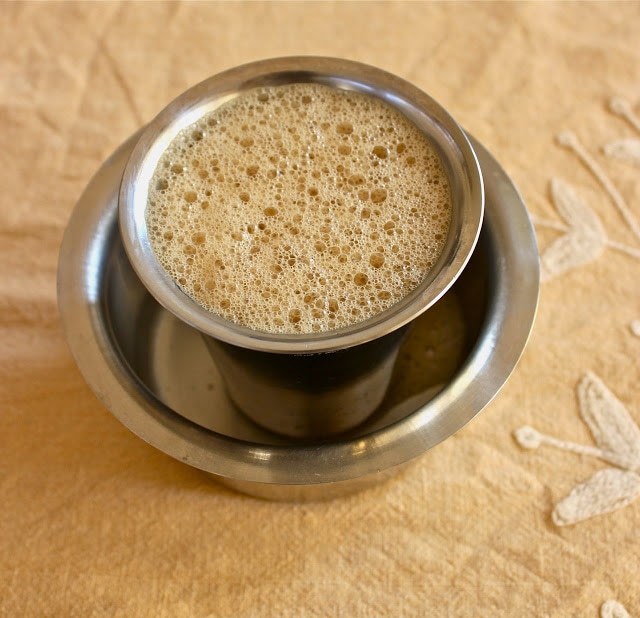
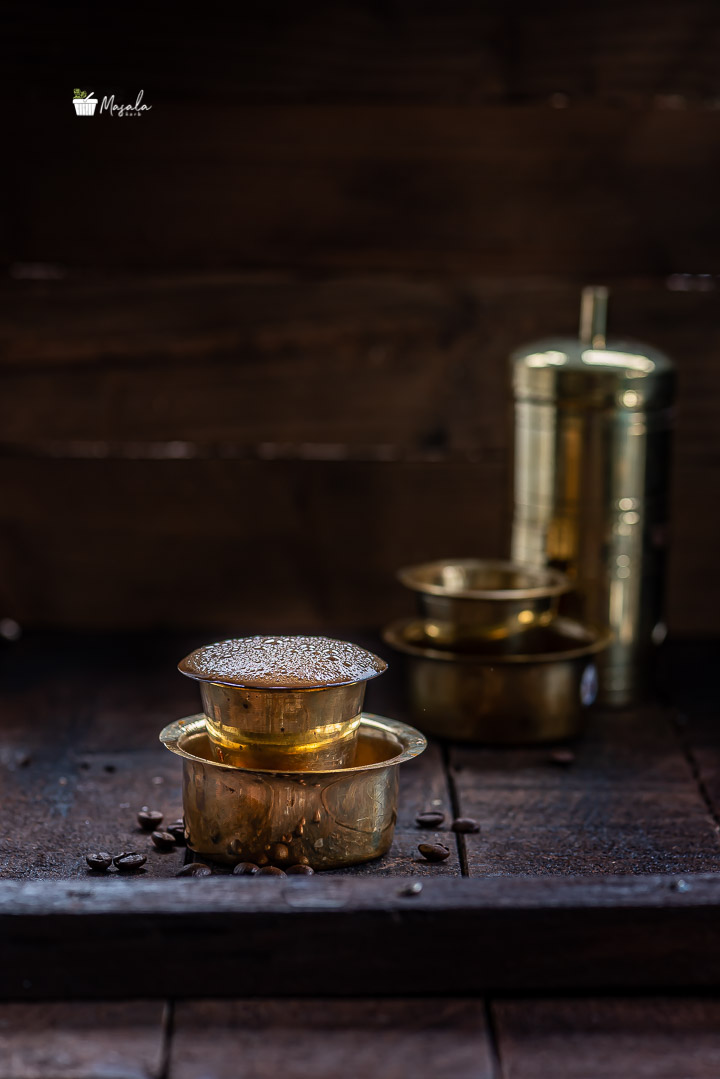
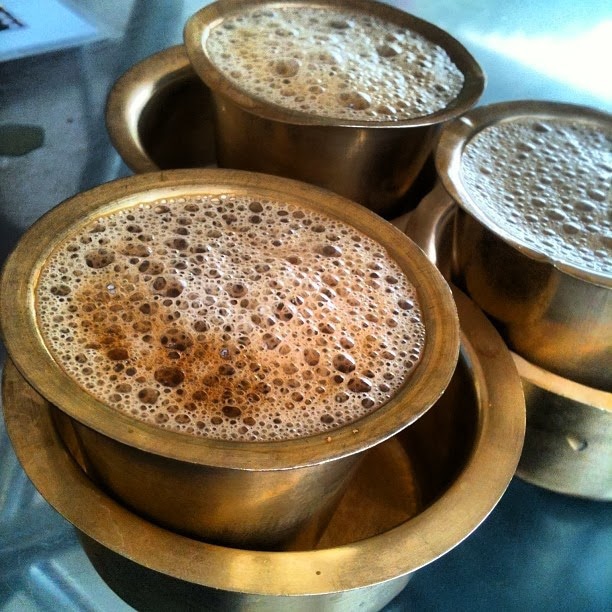
Serve the coffee hot in a stainless steel tumbler and davara if you have them. The davara is the small bowl used to cool, mix, and sip the coffee.
How to Get the Best Flavor
Small changes can make a big difference when learning how to make South Indian coffee. Focus on freshness, heat, and timing.
Choose fresh coffee grounds
Coffee loses aroma after grinding. Buy freshly roasted beans when possible and grind them just before brewing. Use a fine grind that is slightly coarser than espresso powder.
Coffee labeled for filter coffee is usually a safe choice. Check the roast date rather than relying only on an expiration date. A fresh medium-dark roast often gives a better balance than very dark, oily coffee.
Use the right water
Water makes up most of the drink, so its quality matters. Use clean, fresh water with a neutral taste. Very hard or strongly chlorinated water can make coffee taste flat or harsh.
Filtered water is helpful if your tap water has a strong smell or mineral taste.
Keep the decoction warm
Fresh decoction has the best aroma. If it sits for many hours, it can become dull or bitter.
For the best results, brew only what you plan to use. If you must store it, keep the decoction in a covered container in the refrigerator and use it within one day.
Balance chicory carefully
Chicory is traditional, but too much can overpower the coffee. It may create a woody or bitter taste.
If you are new to South Indian coffee, start with a blend containing a modest amount of chicory. You can adjust the blend after tasting a few cups.
Common Mistakes to Avoid
Many disappointing cups come from simple preparation errors. These are the problems I would check first when a batch tastes weak, bitter, or watery.
• Using instant coffee instead of filter coffee: Instant coffee cannot create the same slow-brewed decoction.
• Packing the grounds too tightly: Water may stop moving through the filter.
• Using coarse grounds: Water passes too quickly, producing weak coffee.
• Using boiling milk for too long: Scorched milk can hide the coffee’s aroma.
• Adding too much decoction at once: The drink may become bitter and overly sharp.
• Letting the decoction sit uncovered: Heat and aroma escape quickly.
• Skipping the frothing step: The coffee may taste fine but feel flat and less traditional.
One lesson is especially useful: strong coffee does not always mean better coffee. A balanced cup should have coffee aroma, creamy milk, and enough sweetness to soften the bitterness.
Variations You Can Try
Once you know how to make South Indian coffee, you can adjust it to suit your taste without losing its character.
Jaggery South Indian coffee
Replace white sugar with finely grated jaggery. Add the jaggery after removing the milk from the heat, then stir until it dissolves.
Jaggery gives the coffee a deeper, caramel-like flavor. Its taste can vary by brand, so add a small amount first.
Cardamom coffee
Add a small pinch of ground cardamom to the milk while heating it. Cardamom adds a sweet, floral aroma that works well with dark coffee.
Use it lightly. Too much cardamom can cover the coffee flavor.
Iced filter coffee
Prepare a slightly stronger decoction, then mix it with chilled milk and sugar. Pour it over ice.
Cold coffee needs extra strength because ice and cold milk soften the flavor. Do not pour very hot coffee over a full glass of ice, as the drink can become watery.
Vegan South Indian coffee
Use unsweetened oat or soy milk. Heat it gently and avoid boiling, since some plant-based milks can separate.
The result will not taste exactly like dairy-based filter coffee, but a creamy oat milk can make a pleasant alternative.
How to Store Coffee and Decoction
Ground coffee should be stored in an airtight container away from heat, light, and moisture. A cool cabinet is usually better than a warm shelf near the stove.
Avoid storing coffee grounds in the refrigerator unless the container is fully sealed. Coffee can absorb odors from nearby foods.
Fresh decoction is best, but you can refrigerate extra decoction in a clean, covered container. Use it within 24 hours and reheat it gently with fresh milk.
Do not repeatedly boil the finished coffee. Reheating can make the milk taste cooked and can increase bitterness.
South Indian Coffee Ratio Guide
There is no single correct ratio because coffee strength is personal. These starting points can help.
• Mild coffee: 1 tablespoon decoction with ¾ cup hot milk
• Balanced coffee: 2 tablespoons decoction with ¾ cup hot milk
• Strong coffee: 3 to 4 tablespoons decoction with ¾ cup hot milk
For a traditional small serving, use less milk and serve the drink in a tumbler and davara. For a larger American-style mug, increase both milk and decoction while keeping the same basic balance.
When testing a new coffee blend, change only one thing at a time. Adjust the grind, coffee amount, brewing time, or milk ratio separately. This makes it easier to find what works.

Frequently Asked Questions About How to Make South Indian Coffee
What coffee powder is best for South Indian coffee?
Use finely ground coffee labeled for South Indian filter coffee. A blend of Arabica, Robusta, and a small amount of chicory gives the classic bold taste and thick body.
How long should South Indian coffee decoction brew?
The decoction usually takes 10 to 15 minutes to collect. Let the filter drip naturally, and avoid pressing the grounds because this can create a muddy or bitter brew.
Why is my South Indian coffee watery?
Watery coffee may come from coarse grounds, too little coffee, fast brewing, or too much milk. Use a finer grind, add more coffee, or reduce the milk in the final mixture.
Can I make South Indian coffee without a filter?
Yes, you can use a French press or pour-over brewer as a substitute. The drink will still be enjoyable, but the texture and strength may differ from coffee made with a traditional metal filter.
Should I boil the milk for South Indian coffee?
Heat the milk until it is steaming and very hot. You may bring it close to a boil for a traditional taste, but avoid scorching it or allowing it to spill.
How much chicory should South Indian coffee contain?
A blend with about 20% to 30% chicory is a common starting point. Use less chicory for a brighter coffee taste and more for extra body and a deeper earthy flavor.
Conclusion
The best way to make South Indian coffee is to brew fresh, finely ground coffee slowly, mix the decoction with hot milk and sugar, and finish with a little froth. Use a traditional filter when possible, but do not worry if your first cup is not perfect.
Start with a balanced coffee blend, test the milk-to-decoction ratio, and adjust one detail at a time. With a few attempts, you can create a rich cup that feels just as comforting as a morning coffee served in a South Indian home. Try the recipe today, then share your favorite coffee blend or preparation tip in the comments.

Liora Pennings is a seasoned chef and kitchen enthusiast with a passion for turning everyday cooking into an effortless experience. With years of hands-on culinary expertise, she specializes in practical techniques, ingredient know-how, and smart kitchen solutions that help home cooks elevate their meals. At KitchFlair.com, Liora shares her best tips, time-saving tricks, and honest product reviews to guide readers toward a more efficient, enjoyable, and inspired cooking routine. Whether you’re a beginner or a seasoned home chef, Liora’s friendly, knowledge-packed insights make every visit to the kitchen a little easier—and a lot more delicious.