How To Clean Coffee Maker After Mold Buildup Inside: Guide
Use white vinegar, hot water, and a scrub brush; rinse thoroughly to remove all mold.
I’ve cleaned dozens of machines and helped friends recover foul-smelling, moldy coffee makers. This guide explains exactly how to clean coffee maker after mold buildup inside, step by step, with safe methods, tools, prevention tips, and times to replace the machine. Read on and you’ll learn simple, tested routines that remove mold, protect your health, and keep coffee tasting great.
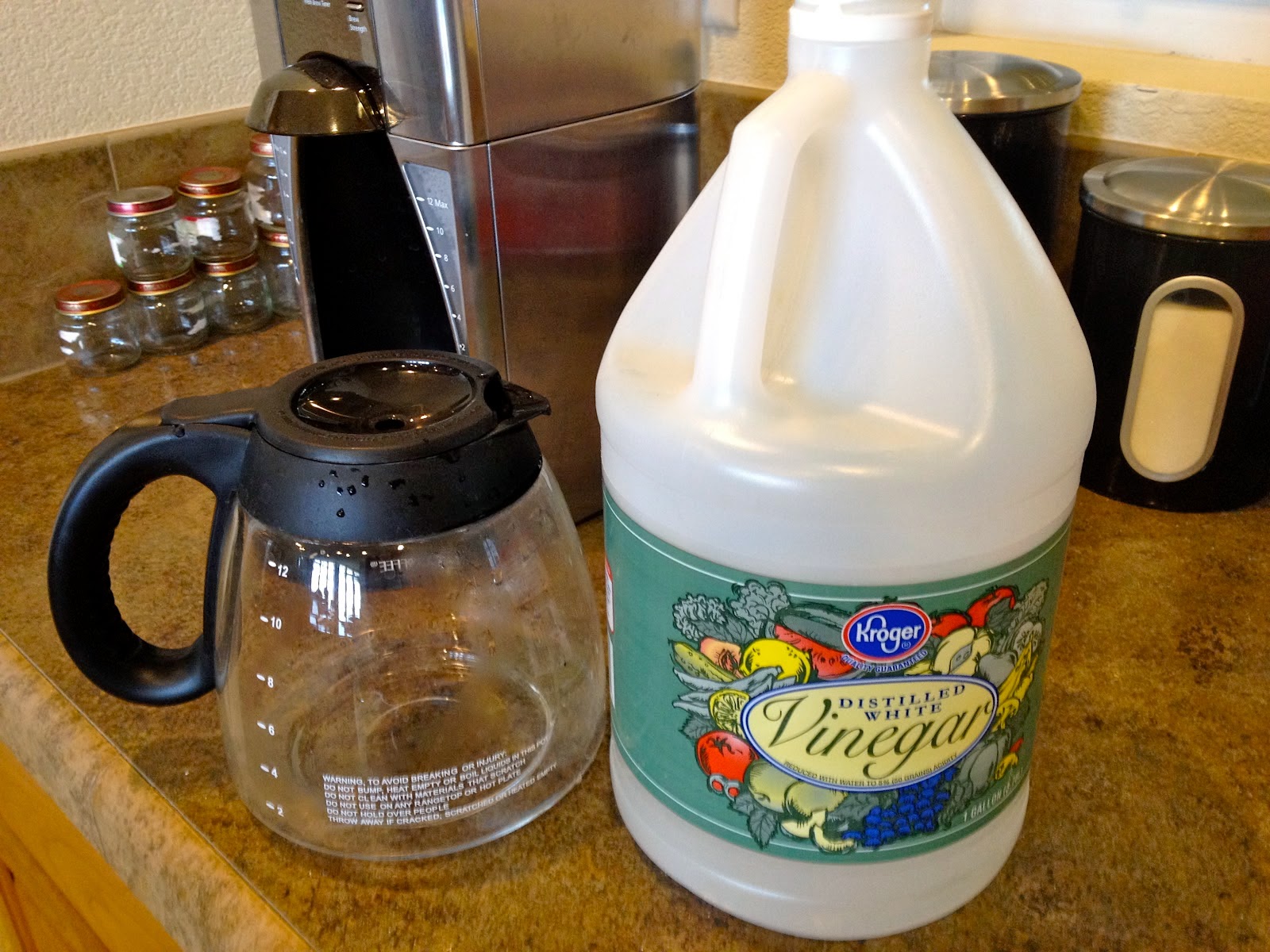
Why mold builds up inside coffee makers
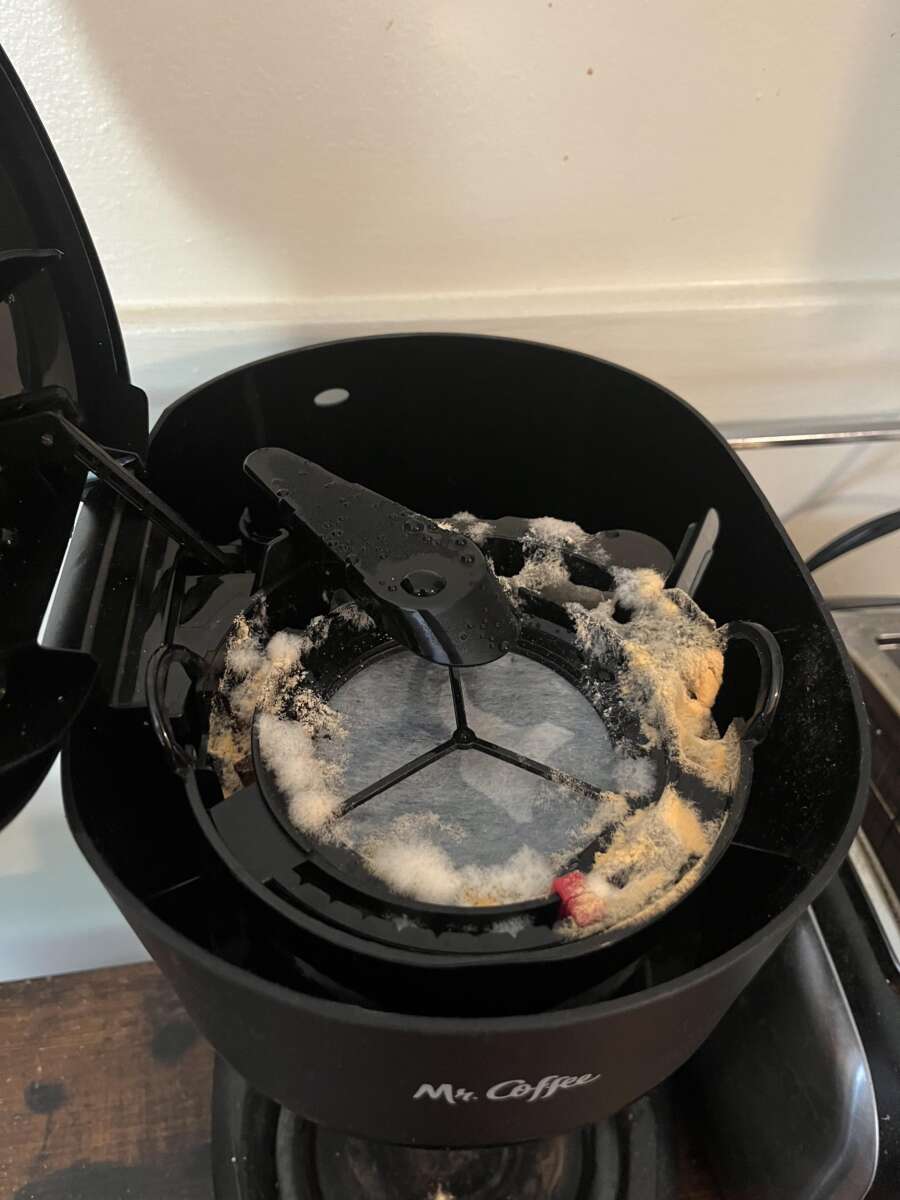
Mold grows where it’s warm, wet, and dark. Coffee makers and their reservoirs meet all three conditions. Leftover water, ground coffee oils, and mineral deposits feed microbes and let mold take hold.
Common causes include:
- Standing water in the reservoir after use.
- Infrequent deep cleaning.
- Using soft or unfiltered water that leaves residue.
- Cracked or porous parts that trap dampness.
Knowing why mold forms helps you stop it fast and keep your machine clean. I’ll show exact steps for cleaning and prevention next.
:max_bytes(150000):strip_icc()/6-coffee-maker-components-washed-separately-045ca3f7a9b14ec29aa07f32b3c9555f.jpg)
Health risks of mold in your coffee maker
Mold in a coffee maker can release spores into brewed coffee. For most people, exposure causes mild symptoms like throat irritation or allergies. For people with asthma, mold exposure can be more serious.
You should treat visible mold as a hygienic problem. Cleaning removes spores and reduces risk. When in doubt, stop using the machine until it’s cleaned or replaced.

Tools and supplies you’ll need
Keep these items on hand before you start cleaning:
- White distilled vinegar for natural disinfection.
- Baking soda for scrubbing and odor removal.
- Liquid dish soap for greasy parts.
- Soft scrub brush or toothbrush for small crevices.
- Microfiber cloths or paper towels.
- A funnel and measuring cup.
- Rubber gloves and a mask if mold is heavy.
- Replacement filters (paper or permanent) if needed.
Using the right tools makes the job faster and safer when you tackle how to clean coffee maker after mold buildup inside.
Quick daily and weekly cleaning routine
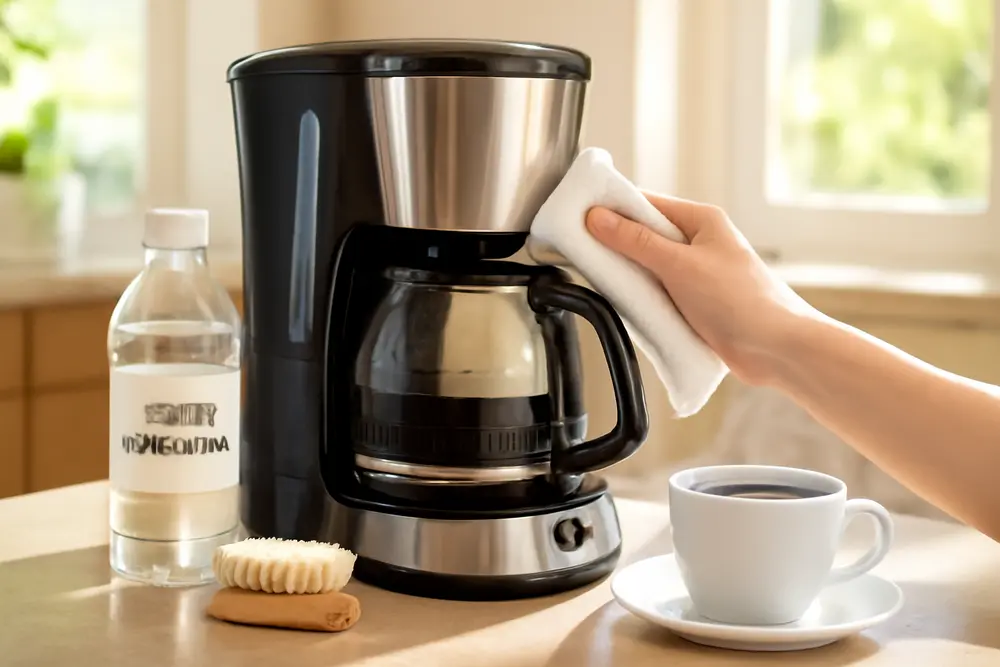
A simple routine prevents most mold problems. Follow these steps daily and weekly:
- Empty and dry the reservoir after each use.
- Rinse the carafe and filter basket with hot, soapy water after use.
- Wipe the exterior and the warming plate weekly.
- Run a rinse cycle with plain water every few days.
These small habits reduce the chance you’ll need a deep mold cleanup later.

Step-by-step deep cleaning for visible mold
If you see mold inside the water reservoir, tubing, or carafe, follow this deep-clean plan. This method explains how to clean coffee maker after mold buildup inside using safe, effective steps.
Safety first:
- Unplug the machine and let it cool.
- Wear gloves and a mask if mold is heavy.
- Work in a ventilated area.
Deep-clean steps:
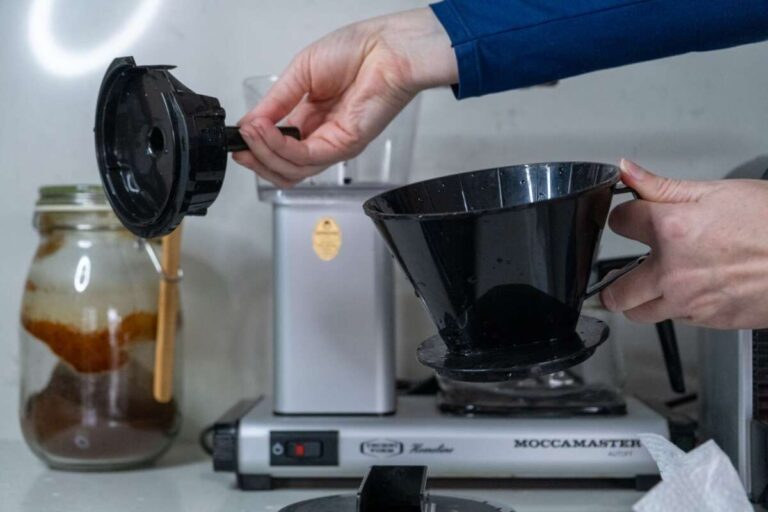
- Empty the machine and remove all detachable parts.
- Dispose of old water and coffee grounds.
- Mix 1 part white vinegar with 1 part hot water in the reservoir.
- Run a brew cycle halfway, then pause and let the vinegar solution sit for 30 minutes.
- Finish the cycle to flush the vinegar through internal lines.
- Rinse by running two to three full cycles with fresh water.
- Wash removable parts with hot water, dish soap, and a brush. For stubborn residue, make a paste of baking soda and water, scrub, then rinse.
- Dry all parts fully before reassembling.
If you follow these steps, you’ll fully address how to clean coffee maker after mold buildup inside and safely remove most growth.

Dealing with stubborn mold and internal tubing
Some machines, especially single-serve or espresso models, have internal tubing that traps mold. Here’s what to do:
- Use the vinegar brew method several times if mold persists.
- Run a specialized cleaning cartridge or descaler if your model supports it.
- For removable tubing, soak parts in a vinegar solution for 30–60 minutes and brush gently.
- If mold remains after repeated cleanings, consider professional servicing or replacement.
Internal parts can hide mold. Be patient and persistent when learning how to clean coffee maker after mold buildup inside.

Cleaning specific parts
H3 Carafe and lid
Wash with hot soapy water and scrub. For stains or odors, soak in warm water and two tablespoons of baking soda for 15 minutes, then rinse.
H3 Filter basket and shower screen
Remove and scrub with a toothbrush. If the screen is clogged, soak in vinegar for 15–30 minutes before rinsing.
H3 Water reservoir
Use the vinegar brew method or fill with vinegar solution and let sit. Scrub corners with a bottle brush, then rinse well.
H3 K-Cup or pod machines
Run a vinegar cycle through a brew, then rinse with several water-only cycles. Clean the pod holder and any removable tray.
These focused steps show how to clean coffee maker after mold buildup inside different designs.
When you should replace a coffee maker
Sometimes cleaning isn’t enough. Replace the machine if:
- Mold returns immediately after cleaning.
- Internal parts are cracked or porous.
- There is a persistent musty odor even after several cleanings.
- The cost of repair or parts is high compared to replacement.
Older machines with sealed internal pumps or heavy biofilm in tubing may be unsafe to reuse. Choosing replacement is often the safer, cleaner option.
Prevention: maintenance schedule and tips
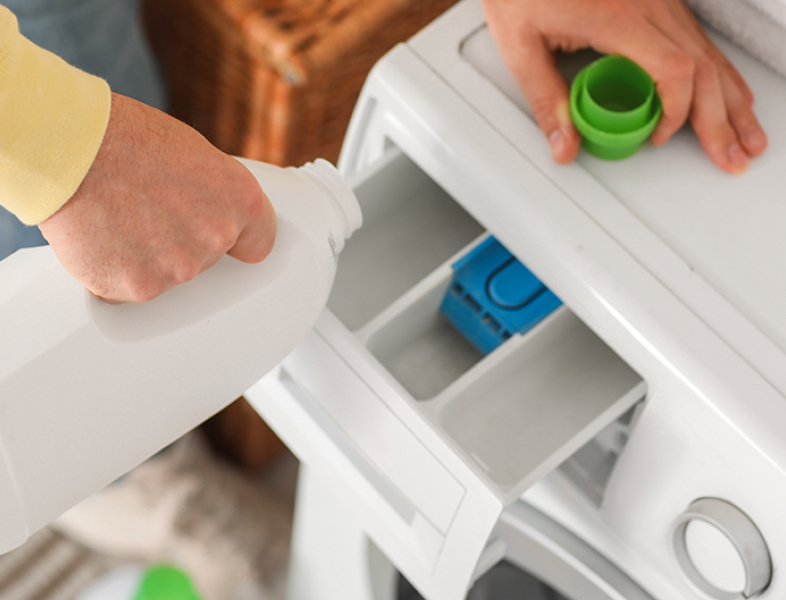
A simple plan prevents future mold:
- Daily: Empty and dry reservoir and carafe.
- Weekly: Wash removable parts and run a plain-water rinse cycle.
- Monthly: Run a vinegar cycle or manufacturer-recommended descaler.
- Store the lid and filter basket off the machine between uses to dry.
Extra tips:
- Use fresh water daily and change water if unused for 24+ hours.
- Use paper filters when possible; clean permanent filters regularly.
- Keep the area around the brewer dry and ventilated.
Follow these steps to avoid repeated battles with how to clean coffee maker after mold buildup inside.
My experience, mistakes, and practical tips
I once ignored a faint musty smell in a shared office brewer. After a weekend with no use, mold had spread inside the reservoir and tubing. I cleaned with multiple vinegar cycles and disassembled removable parts. It worked, but I learned to:
- Check machines after long downtime.
- Dry parts fully after cleaning.
- Label the last-cleaned date on the machine for team habits.
A key lesson: quick daily habits prevent messy deep cleans. If you teach others, make cleaning part of the routine.
Frequently Asked Questions of how to clean coffee maker after mold buildup inside
How long should I let vinegar sit in the machine to kill mold?
Let a 1:1 vinegar-water solution sit in the reservoir or mid-cycle for at least 30 minutes to loosen and kill mold. Finish with two to three water-only cycles to remove vinegar taste.
Can I use bleach to clean my coffee maker?
Bleach can disinfect but may damage parts and leave toxic residue. Vinegar is safer for most machines; use bleach only if the manufacturer approves it and rinse thoroughly.
Will mold affect the taste of my coffee immediately?
Yes, mold can give coffee a musty or off taste right away. If your coffee tastes odd, stop using the machine and clean it before brewing again.
How often should I deep-clean to prevent mold?
Monthly deep-cleaning with vinegar or descaler is a good rule. Increase frequency if you notice odors or if the machine sits unused for days.
Is it safe to drink coffee after I clean the machine?
Yes, after you run at least two to three clear water cycles post-cleaning and ensure there’s no vinegar or chemical smell, coffee is safe to drink.
Can I clean a single-serve machine the same way?
Yes, use the vinegar cycle method and clean removable parts. For internal tubing, repeat cycles and run multiple water-only cycles to rinse.
What if mold returns quickly after cleaning?
If mold returns quickly, inspect for cracks, porous parts, or areas that stay damp. Consider replacing the machine if mold keeps coming back.
Conclusion
You can remove mold and restore a coffee maker with clear, safe steps: unplug, use vinegar cycles, scrub removable parts, rinse well, and dry completely. Keep up with simple daily and monthly habits to prevent mold from returning. Act now—clean your machine, set a maintenance routine, and enjoy better, safer coffee. If this helped, try the deep-clean steps this weekend, subscribe for more kitchen care tips, or leave a comment with your machine model and problem.

Liora Pennings is a seasoned chef and kitchen enthusiast with a passion for turning everyday cooking into an effortless experience. With years of hands-on culinary expertise, she specializes in practical techniques, ingredient know-how, and smart kitchen solutions that help home cooks elevate their meals. At KitchFlair.com, Liora shares her best tips, time-saving tricks, and honest product reviews to guide readers toward a more efficient, enjoyable, and inspired cooking routine. Whether you’re a beginner or a seasoned home chef, Liora’s friendly, knowledge-packed insights make every visit to the kitchen a little easier—and a lot more delicious.