How Many Db Is A Vacuum Cleaner: Noise Guide
Most vacuum cleaners measure about 60 to 80 decibels, with quiet models near 60 and loud models above 75.
If you are asking how many dB is a vacuum cleaner, the answer depends on the motor, design, floor head, and test method. This guide explains typical vacuum noise levels, what the numbers mean, how to compare models, and how to protect your hearing at home.

How many dB is a vacuum cleaner?
Most household vacuum cleaners produce between 60 and 80 decibels, measured in dB or dBA. A quiet stick vacuum may run at about 60 to 65 dB, while a standard upright vacuum often reaches 70 to 75 dB.
Large canister vacuums, shop vacuums, and older machines can be louder. Some may reach 80 to 90 dB, especially when used with a blocked filter, full bag, or narrow attachment.
Here is a simple guide:
• 50 to 60 dB: Very quiet for a vacuum cleaner
• 60 to 65 dB: Quiet and comfortable for most homes
• 66 to 70 dB: Moderate vacuum noise
• 71 to 75 dB: Common for many upright vacuums
• 76 to 85 dB: Loud and less comfortable for long use
• Above 85 dB: Potentially harmful with repeated or extended exposure
The exact answer to how many dB is a vacuum cleaner cannot be one fixed number. Noise varies by brand, model, surface, suction setting, and distance from the machine.

What does dB mean on a vacuum cleaner?
The term dB means decibel. It measures sound intensity on a logarithmic scale rather than a simple linear scale.
That matters because a 70 dB vacuum is not just slightly louder than a 60 dB vacuum. A 10 dB increase represents about ten times more sound intensity. Most people hear that change as roughly twice as loud.
Manufacturers often use dBA instead of plain dB. The “A” weighting adjusts the reading to reflect how the human ear hears different frequencies. When you compare vacuum cleaner noise levels, dBA is usually the more useful number.
For example:
• A quiet room may measure around 30 dBA
• Normal conversation may reach about 60 dBA
• A quiet vacuum may produce 60 to 65 dBA
• A common upright vacuum may produce 70 to 75 dBA
• A gas lawn mower may reach around 90 dBA
These comparisons help explain how many dB is a vacuum cleaner in everyday terms. A vacuum at 70 dBA is usually easy to hear across a room and may interrupt a conversation.
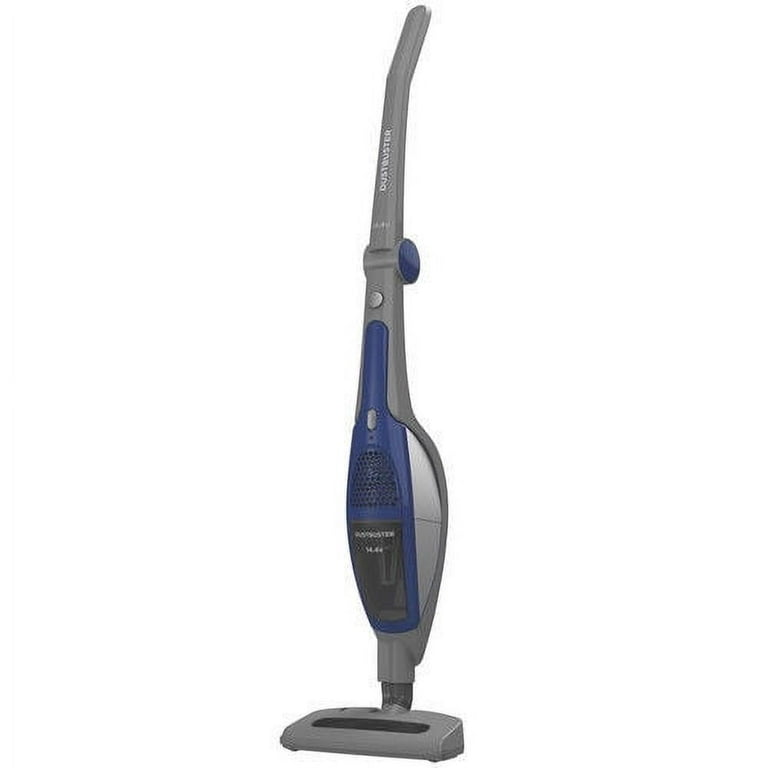
Typical vacuum cleaner noise levels by type
Different vacuum designs create different sound levels. The motor is important, but airflow, fan shape, seals, filters, and floor tools also affect noise.
Robot vacuums
Robot vacuums often measure between 55 and 70 dB. Their smaller motors and lower suction settings can make them quieter than full-size vacuums.
Many robot vacuums also run for long periods. A model that sounds quiet at close range may still become annoying if it operates for two hours while you work or sleep.
Cordless stick vacuums
Cordless stick vacuums commonly produce 60 to 75 dB. Eco mode is usually quieter, while boost mode creates more motor and airflow noise.
A cordless vacuum may sound mild in a large room but louder near your ears. This is common because the motor and exhaust are often close to your face.
Upright vacuums
Upright models often measure 70 to 80 dB. Their strong brush rolls, large motors, and direct airflow can create a deeper and more noticeable sound.
Older upright vacuums may be louder than newer models. Worn belts, dirty filters, loose panels, and damaged brush bearings can raise the noise level.
Canister vacuums
Canister vacuums may range from 60 to 75 dB. The motor sits farther from your head, so the machine may feel quieter even when its measured sound level is similar to an upright vacuum.
Many canister vacuums also offer long hoses. This lets you clean while keeping the motor farther away.
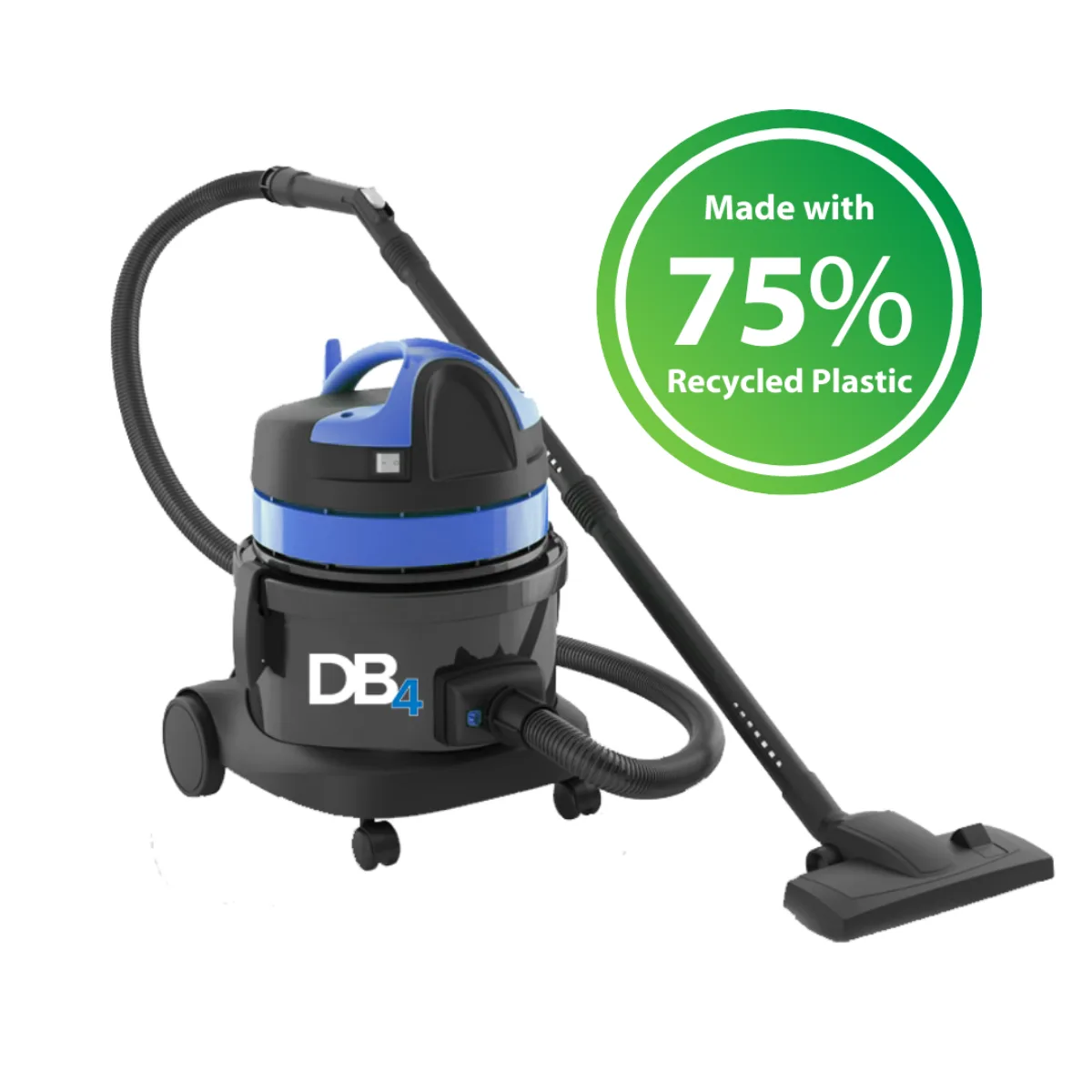
Shop vacuums
Shop vacuums are often among the loudest household cleaning machines. Many produce 75 to 90 dB, depending on motor power, hose size, and the material being collected.
A shop vacuum can be especially loud in a garage or workshop because hard walls reflect sound. Hearing protection is a smart choice during long cleaning jobs.

What makes a vacuum cleaner loud?
The answer to how many dB is a vacuum cleaner depends on more than its motor rating. Two vacuums with similar suction power can sound very different.
Motor and fan design
The motor creates vibration and airflow. A well-designed motor may deliver strong suction with less noise, while a cheaper or older motor may produce a rough, high-pitched sound.
Fan blades also matter. Smooth blades and careful airflow design can reduce turbulence. Turbulent air creates the sharp whine many people notice in vacuum cleaners.
Filters and bags
A clogged filter forces the motor to work harder. This may increase both heat and noise.
A full vacuum bag can have the same effect. If the airflow is restricted, the machine may sound strained. Cleaning or replacing the filter often makes a clear difference.
Floor type
Hard floors can make a vacuum seem louder because sound reflects off tile, wood, and stone. Carpet absorbs some sound and may make the same machine feel quieter.
A spinning brush roll may also become louder on hard floors. The brush can tap, scrape, or vibrate when it contacts a smooth surface.
Loose or damaged parts
A rattle does not always mean the vacuum has a powerful motor. It may point to a loose cover, cracked wheel, worn belt, or damaged brush bearing.
Turn off and unplug the machine before checking it. Never put your fingers near a moving brush roll.
Room size and distance
Sound decreases as you move away from the source. A measurement taken one foot from the motor will be higher than one taken several feet away.
This is one reason product comparisons can be imperfect. Brands may use different distances, rooms, surfaces, and sound meters.

Is a 70 dB vacuum cleaner loud?
A 70 dB vacuum cleaner is noticeable but usually normal for household cleaning. You can expect to hear it clearly, and normal conversation may become difficult while it runs nearby.
For a short cleaning session, 70 dBA is not usually considered extreme. However, comfort depends on distance, room acoustics, sensitivity to noise, and how long you use the vacuum.
A vacuum that measures 70 dBA in a product test may feel louder in a small bathroom. Hard surfaces reflect sound and can make the room feel like an echo chamber.
If you have a baby, pet, migraine condition, tinnitus, or strong sound sensitivity, a quieter model may be worth the extra cost. Noise is not only a technical number. It also affects stress and comfort.

How loud is too loud for vacuuming?
The answer to how many dB is a vacuum cleaner becomes important when you use the machine for long periods. Occupational health guidance commonly treats 85 dBA over an eight-hour workday as a recommended exposure limit, while higher levels require shorter exposure times.
Most people do not vacuum for eight hours. Still, repeated exposure to loud equipment can contribute to hearing fatigue or ringing in the ears.
Watch for these warning signs:
• Your ears ring after vacuuming
• Voices sound muffled afterward
• You need to raise your voice to speak
• The vacuum causes pain or strong discomfort
• You use a loud shop vacuum for long periods
Use hearing protection if the machine is loud, especially in an enclosed garage. Foam earplugs or earmuffs can lower exposure. Keep children and pets away from the vacuum when possible, since they may be more sensitive to sudden noise.
Do not assume that a low dB rating means a machine is completely silent. A vacuum can still produce a high-pitched tone that feels unpleasant even when its overall reading is moderate.
How to measure vacuum cleaner noise at home
You can measure how many dB is a vacuum cleaner with a handheld sound level meter. Smartphone apps can offer a rough estimate, but they are not as reliable as a calibrated meter.
Follow these steps:
- Place the vacuum on the floor in a quiet room.
- Set the meter to dBA if that option is available.
- Hold the meter about three feet from the vacuum.
- Keep the microphone at about the height of the motor.
- Run the vacuum on its normal power setting.
- Record the average reading for 30 to 60 seconds.
- Repeat the test on both carpet and hard flooring.
Keep doors and windows closed during the test. Turn off fans, televisions, air conditioners, and other sound sources.
Do not compare your home reading directly with a brand’s published number unless the test distance and method are similar. A reading at three feet may be much lower than a reading taken six inches from the exhaust.
In practical testing, the average sound level is more useful than a brief peak. A short burst can occur when the brush roll hits debris, but the average level better represents normal cleaning.

How to choose a quiet vacuum cleaner
If low noise matters, search for a published sound rating in dBA. A rating near 60 to 65 dBA is generally a good starting point for a quiet vacuum.
Do not judge a vacuum by suction power alone. Strong suction does not always require extreme noise. Look for a sealed design, insulated motor housing, smooth wheels, and adjustable power settings.
Useful features include:
• Eco or low-power mode
• A brush roll that can be switched off
• A sealed filtration system
• A washable or easy-to-replace filter
• Rubber wheels and soft floor tools
• Motor insulation
• A long hose that keeps the motor away from your head
• A published dBA rating based on a clear test method
Read customer reviews with care. One person may call a vacuum quiet, while another may find it loud. Look for repeated comments about sound, pitch, vibration, and use on hard floors.
The best quiet vacuum cleaner is not always the one with the lowest number. A soft, low-pitched motor may feel more pleasant than a higher-pitched machine with a similar dBA rating.
Ways to make a vacuum cleaner quieter
You may be able to lower vacuum noise without buying a new machine. Start with basic care.
Clean or replace clogged filters. Empty the dust bin before it becomes full. Check the hose for blockages and remove hair from the brush roll.
Place the vacuum on the correct floor setting. Some brush rolls become loud when they spin against bare flooring. If your vacuum has a suction control, lower it slightly when full power is not needed.
You can also reduce noise by:
• Closing doors to limit sound travel
• Vacuuming during reasonable daytime hours
• Keeping the motor farther from your body
• Using rugs or soft mats to reduce echoes
• Tightening loose panels and screws
• Replacing worn belts or bearings
• Using the correct attachment for each surface
Never cover the motor housing with a blanket or towel. The motor needs airflow to stay cool, and blocking ventilation can create a fire risk or damage the machine.
If the vacuum suddenly becomes louder, smells hot, loses suction, or vibrates, stop using it. A new noise may signal a blockage or mechanical fault.
Vacuum cleaner noise and pets
Many pets dislike vacuum cleaners because the machines combine loud sound, vibration, sudden movement, and unfamiliar smells. Dogs may bark, hide, or chase the vacuum. Cats may run away or freeze.
You can make cleaning less stressful by giving your pet a quiet room before starting. Let the pet approach the turned-off vacuum at its own pace. Avoid chasing an animal with the machine.
Start with short sessions. Use a lower power setting if it still cleans well. Reward calm behavior with treats, but never force a frightened pet to stay near the vacuum.
Young children can also react strongly to vacuum noise. Give them warning before turning on the machine, and never let them touch the cord, hose, or moving brush.
Common mistakes when comparing vacuum noise
A frequent mistake is treating the motor wattage as a noise rating. Watts describe electrical power use, not how loud the machine sounds.
Another mistake is comparing a manufacturer’s laboratory number with a personal smartphone reading. Testing conditions can change the result by several decibels.
People also focus only on average dB. Sound quality matters too. A high-pitched whine, harsh vibration, or rattling panel may feel louder than a smooth motor at the same measured level.
Before buying, check:
• The stated dBA rating
• The test distance
• The power mode used
• Reviews from people with hard floors
• Reports of rattling or high-pitched noise
• Filter and maintenance requirements
• Return policies
These checks give you a more realistic idea of how many dB is a vacuum cleaner in daily use.
Frequently Asked Questions About How Many dB Is a Vacuum Cleaner
How many dB is a quiet vacuum cleaner?
A quiet vacuum cleaner usually produces about 55 to 65 dBA. Robot and premium canister models often fall within this range, although the reading can change with the power setting and floor type.
How many dB is a standard upright vacuum?
A standard upright vacuum commonly measures about 70 to 80 dBA. Older machines, clogged filters, and worn brush parts may make the vacuum louder.
Is a 75 dB vacuum too loud?
A 75 dBA vacuum is loud but common for household equipment. Short use is generally manageable, but hearing protection can improve comfort during long cleaning sessions.
Can vacuum cleaner noise damage hearing?
A typical vacuum used briefly is unlikely to cause hearing damage for most adults. Repeated exposure to a very loud machine, especially above 85 dBA, may increase the risk of hearing problems.
Are cordless vacuums quieter than corded vacuums?
Some cordless vacuums are quieter, but not all of them are. Their sound level depends on motor design, suction mode, airflow, and brush roll construction rather than the power source alone.