Introduction
Yes, coffee shops can make money in the United States. But strong sales do not always mean strong profits. Rent, wages, food costs, equipment, taxes, card fees, repairs, and owner pay can quickly use up the cash a shop brings in.
A coffee shop works best when it has steady daily traffic, sound pricing, tight labor control, and enough cash to survive slow months. A busy location helps, but it does not fix poor cost control. The real question is not only, “How much can a coffee shop sell?” It is, “How much remains after every bill is paid?”
This guide explains coffee shop profit margins, startup costs, break-even sales, common risks, and the numbers you should check before opening or buying a shop in the U.S.

Do Coffee Shops Make Money?
Coffee shops can be profitable, but results vary widely by location, size, concept, and management. A small owner-operated shop may earn a modest living for its owner. A well-run shop with strong sales may produce a healthy business profit. A shop with high rent and weak traffic may lose money even when customers see a long line.
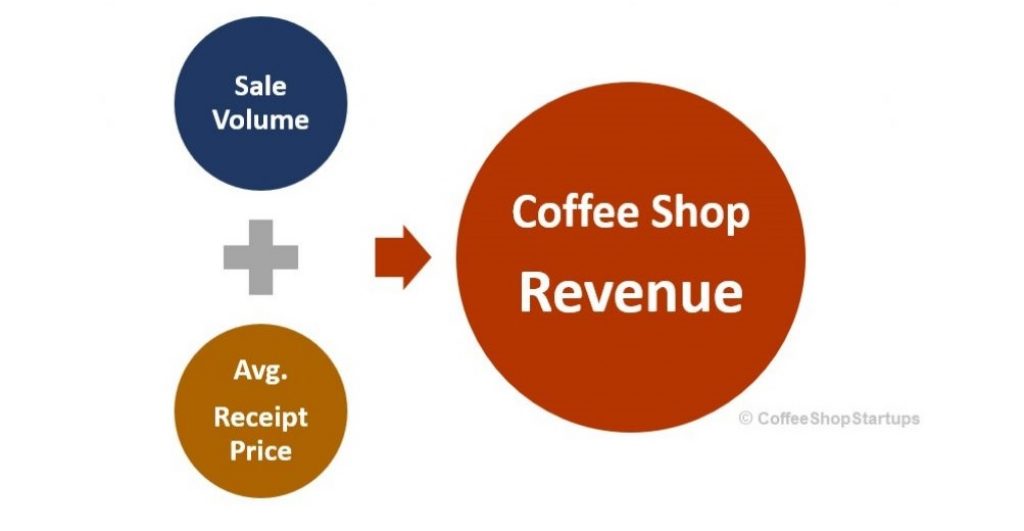
Profit comes from the gap between revenue and total costs:
Profit = Sales − Cost of goods sold − Labor − operating expenses − Taxes and other costs
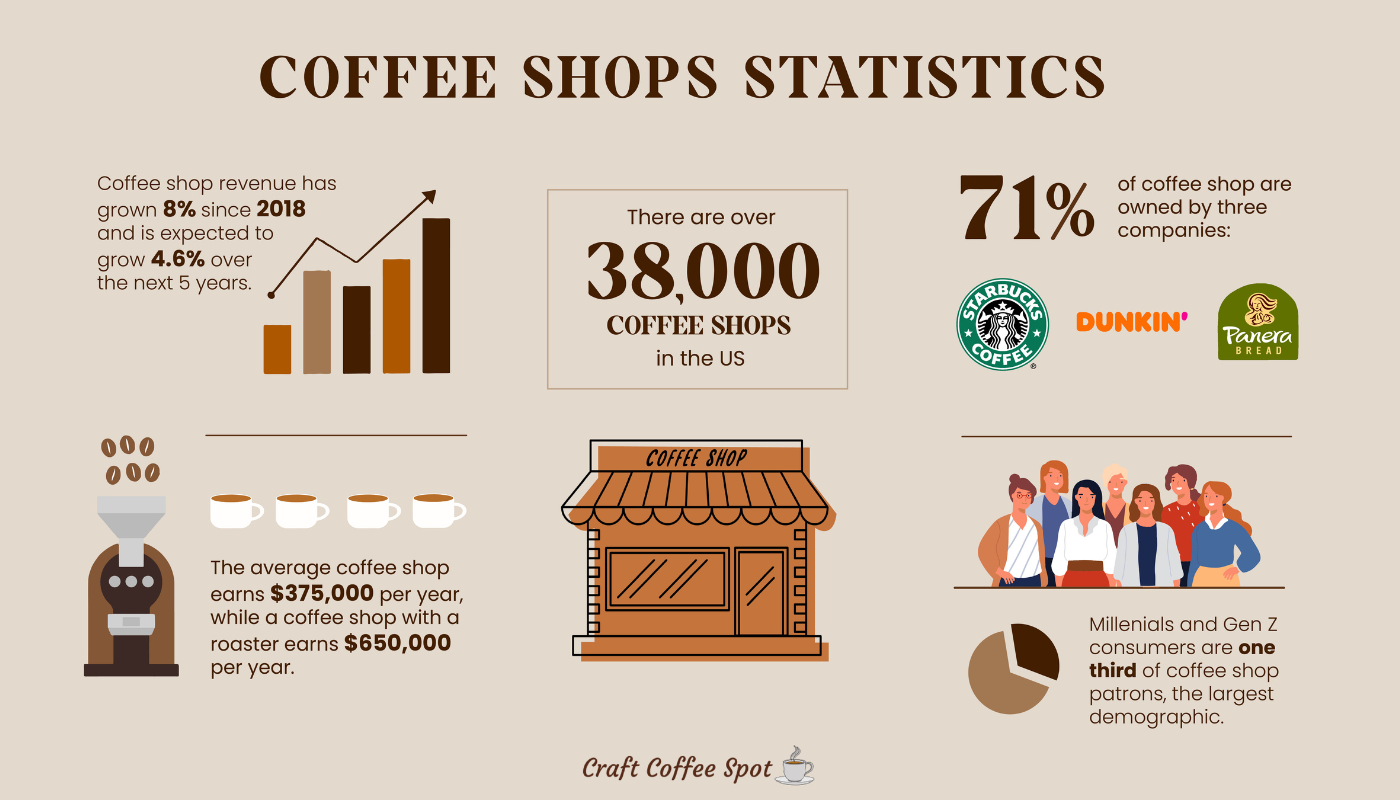
The National Restaurant Association reports that food and labor are among the largest expenses for food-service businesses. Coffee shops also face major costs for rent, utilities, payment processing, insurance, equipment repair, and waste.
Published coffee shop margin estimates often show net margins in the low single digits to low teens. These are broad industry estimates, not a promise. A shop’s true result depends on whether the calculation includes the owner’s wage, debt payments, taxes, depreciation, and one-time repairs.
A useful way to judge a shop is to ask:
- Does the owner’s pay count as an expense?
- Are loan payments included?
- Is rent reasonable for the sales level?
- Does the sales forecast use real local traffic?
- Can the business pay its bills during slow seasons?
- Is the profit cash flow or only an accounting figure?
A coffee shop may appear profitable because the owner works 60 hours each week without paying themselves a market wage. That is not the same as a business that can support a manager and still earn a profit.

How Much Profit Does a Coffee Shop Make?
A coffee shop’s profit can range from a loss to a strong six-figure annual result. There is no single normal number for every U.S. shop.
A simple way to view the range is:
| Business type | Typical financial pattern |
|---|---|
| Small owner-operated kiosk | Lower overhead, but often depends heavily on owner labor |
| Neighborhood café | Moderate sales with higher rent, labor, seating, and utility costs |
| Drive-through coffee stand | Faster service and smaller space, but sales depend on traffic and speed |
| Specialty café with food | Higher average ticket, but more labor, waste, and equipment needs |
| Multi-unit coffee business | Greater revenue potential, but higher management, payroll, and system costs |
A shop’s net profit margin is the amount left after operating costs, shown as a percentage of sales.
For example:
- Annual sales: $500,000
- Total costs: $460,000
- Net profit: $40,000
- Net profit margin: 8%
The margin is calculated as:
$40,000 ÷ $500,000 = 8%
That $40,000 may still need to cover income taxes, loan principal, owner distributions, or future equipment replacement. Always define “profit” before comparing one business with another.
Owner income is not always business profit
Many coffee shops rely on the owner to:
- Open and close the store
- Order supplies
- Train employees
- Cover missed shifts
- Manage payroll
- Handle repairs
- Work busy weekend hours
If the owner does this work without a wage, reported profit may look higher than it really is. A buyer should subtract a fair replacement wage before judging the business.
For example, a shop showing $90,000 in annual profit may need a full-time manager costing $55,000 to $75,000 after wages and payroll taxes. The buyer’s actual profit could be much lower.
Revenue does not equal take-home pay
A shop may collect $2,000 in sales on a busy day. That money must cover:
- Coffee, milk, syrups, cups, lids, and food
- Employee wages and payroll taxes
- Rent and common-area fees
- Utilities and internet
- Credit card fees
- Insurance
- Cleaning and pest control
- Repairs and maintenance
- Software and accounting
- Taxes
- Debt payments
- Owner compensation
The cash register tells you how much came in. It does not tell you how much the owner earned.

What Profit Margins Do Coffee Shops Have?
Coffee shops often have high gross margins on drinks, but gross margin is not the same as net profit.
A latte may have a low ingredient cost compared with its selling price. Yet the shop still has to pay staff, rent, equipment costs, and other overhead. High drink margins can help, but they cannot overcome weak sales or excessive fixed costs.
Gross margin
Gross margin measures sales after direct product costs:
Gross margin = Sales − Cost of goods sold
Cost of goods sold, or COGS, may include:
- Coffee beans
- Milk and dairy alternatives
- Tea
- Flavor syrups
- Cups and lids
- Pastries and prepared food
- Packaging
- Ingredients used in house-made items
If a shop sells $100,000 of products and spends $25,000 on those products, its gross margin is 75%.
Contribution margin
Contribution margin helps show how much each sale contributes toward fixed costs.
Contribution margin = Selling price − Variable cost
Suppose a drink sells for $5.50 and has a variable cost of $1.50.
- Selling price: $5.50
- Variable cost: $1.50
- Contribution per drink: $4.00
That $4.00 helps pay rent, wages, insurance, and other costs. It is not pure profit.
Net margin
Net margin comes after most business expenses:
Net margin = Net profit ÷ Total sales
A coffee shop with a 6% net margin keeps $6 for every $100 in sales before any costs not included in the calculation. This is why small changes in labor, waste, or rent can have a large effect.
The U.S. Small Business Administration recommends estimating startup and operating costs before launch. The IRS also explains that deductible business expenses have specific rules. Bookkeeping profit and cash available for personal use are not always identical.

What Are the Main Costs of Running a Coffee Shop?
The largest coffee shop expenses are usually labor, occupancy, product costs, and equipment. The exact mix depends on the shop model.
1. Labor
Labor may include:
- Barista wages
- Shift leads
- Managers
- Payroll taxes
- Workers’ compensation insurance
- Benefits
- Paid sick time
- Overtime
- Training time
Federal, state, and local wage rules apply. Some states also have higher minimum wages, predictive scheduling rules, paid leave laws, or restrictions on tip pooling. Check the rules where the shop operates.
A common mistake is staffing for the busiest hour all day. A better schedule matches labor to sales by hour. If sales fall sharply after the morning rush, the shop may need fewer workers during that period.
2. Rent and occupancy
Rent is one of the hardest costs to change after signing a lease. Occupancy costs may include:
- Base rent
- Common-area maintenance
- Property taxes
- Insurance pass-throughs
- Utilities
- Trash service
- Outdoor seating fees
- Parking or shared-site charges
A low-rent location with little traffic may be worse than a higher-rent site with strong visibility and repeat demand. Compare rent with realistic sales, not with sales from an ideal forecast.
3. Coffee and food supplies
Product costs rise through:
- Waste
- Over-pouring
- Spoilage
- Theft
- Poor ordering
- Menu items with low prices
- Large portions
- Frequent vendor price changes
Food can lift the average ticket, but food also adds prep time, storage needs, equipment, health-code duties, and waste. A café should measure each food item’s sales and margin rather than assume every item helps.
4. Equipment
Coffee equipment can cost thousands of dollars. Common equipment includes:
- Espresso machines
- Grinders
- Batch brewers
- Refrigerators
- Freezers
- Ice machines
- Ovens
- Blenders
- Water filters
- Point-of-sale systems
- Dishwashers
Maintenance is part of the business model. A failed espresso machine during a busy week can reduce sales and create an urgent repair bill.
5. Payment and technology fees
Many shops pay for:
- Credit and debit card processing
- Point-of-sale software
- Online ordering
- Loyalty programs
- Payroll software
- Accounting software
- Wi-Fi
- Security systems
- Delivery platforms
Delivery apps may expand reach, but commissions can reduce the amount the shop keeps from each order. Measure delivery sales after fees, packaging, refunds, and extra labor.
6. Insurance, licenses, and compliance
Costs may include:
- General liability insurance
- Property insurance
- Workers’ compensation
- Business licenses
- Food permits
- Health inspections
- Music licensing
- Fire inspections
- Sales tax administration
Requirements vary by state, county, and city. The U.S. Food and Drug Administration Food Code is a model used by many jurisdictions, but local health departments set the rules that apply to a specific site.

How Much Does It Cost to Open a Coffee Shop?
Opening a coffee shop can cost tens of thousands of dollars for a small kiosk and several hundred thousand dollars for a full café. A large build-out, premium equipment, major plumbing work, or a high-cost city can push the total higher.
Typical startup categories include:
| Startup cost | What it may cover |
|---|---|
| Lease deposit | Security deposit and advance rent |
| Design and permits | Plans, professional fees, and permits |
| Build-out | Plumbing, electrical, floors, walls, counters, and lighting |
| Coffee equipment | Espresso machine, grinders, brewers, and water systems |
| Kitchen equipment | Refrigeration, ovens, sinks, dishwashing, and storage |
| Furniture | Tables, chairs, counters, shelving, and outdoor items |
| POS and technology | Registers, printers, software, internet, and security |
| Initial inventory | Coffee, milk, food, cups, packaging, and cleaning supplies |
| Professional services | Legal, accounting, design, and consulting |
| Marketing | Signs, website, launch promotion, and local advertising |
| Working capital | Cash for early operating losses and unexpected bills |
The most overlooked item is working capital. A new shop may need months of cash before sales become stable. Opening day sales do not prove that the business can support itself.
Build-out risk
A former café location may reduce construction costs, but it does not guarantee savings. The site may still need:
- New electrical service
- Plumbing upgrades
- Ventilation
- Grease control
- Accessibility work
- Fire-code changes
- New permits
- Equipment replacement
Before signing a lease, have qualified contractors and local professionals review the site. A lease can become expensive if the tenant must pay for major building work.
Buying an existing coffee shop
Buying an existing shop may reduce startup time. It also creates risks. Ask for:
- Tax returns
- Profit-and-loss statements
- Bank statements
- Sales reports
- Payroll records
- Sales tax filings
- Lease terms
- Equipment records
- Vendor agreements
- Inspection records
- Customer concentration data
Verify sales through more than one record. A point-of-sale report alone may not show refunds, cash shortages, discounts, or owner transactions.

How Do You Calculate Coffee Shop Break-Even Sales?
Break-even sales are the revenue level at which total revenue equals total costs. At break-even, the business is not losing money, but it is not earning a profit either.
Use this formula:
Break-even sales = Fixed costs ÷ Contribution margin ratio
Fixed costs do not change much with each sale. They may include:
- Rent
- Base management pay
- Insurance
- Software
- Loan payments
- Some utilities
- Accounting
- Licenses
Variable costs rise with sales. They may include:
- Ingredients
- Packaging
- Credit card fees
- Sales commissions
- Some hourly labor
Hypothetical break-even example
Assume a coffee shop has:
- Fixed monthly costs: $35,000
- Average contribution margin ratio: 68%
The calculation is:
$35,000 ÷ 0.68 = $51,471 in monthly break-even sales
The shop would need about $51,471 in monthly sales to cover those costs under these assumptions.
If the average customer spends $8:
$51,471 ÷ $8 = 6,434 transactions per month
Over 30 days, that equals about:
6,434 ÷ 30 = 215 transactions per day
This is a planning example, not an industry average. A different average ticket, margin, schedule, or labor model changes the result.
Add a safety buffer
A shop should not plan to operate exactly at break-even. Sales can fall because of:
- Weather
- Road construction
- School breaks
- Seasonal changes
- Nearby competition
- Equipment failure
- Staff shortages
- Inflation
- Local economic changes
If the break-even point is 215 transactions per day, a safer plan may require more than 215 daily transactions. The right buffer depends on the owner’s cash reserves and risk tolerance.

What Makes a Coffee Shop Profitable?
The most profitable coffee shops usually combine strong demand with careful operations. No single feature guarantees success.
A strong location
A good location may have:
- Visible frontage
- Easy access
- Nearby offices, schools, homes, or transit
- Safe parking or convenient pickup
- Consistent morning traffic
- Limited direct competition
- Reasonable rent for the sales potential
Do not count cars and assume they are customers. Estimate how many people can safely stop, park, order, and return to the road.
Fast service
Coffee customers often buy during short time windows. Slow service can reduce repeat visits and limit the number of orders the shop can handle.
Track:
- Order-to-delivery time
- Orders per labor hour
- Peak-hour sales
- Queue length
- Mobile order delays
- Remakes and refunds
Speed should not mean unsafe work or poor quality. It should mean a well-designed workflow.
A useful average ticket
A shop can raise its average ticket through:
- Larger drink sizes
- Add-on flavors
- Pastries
- Breakfast items
- Retail beans
- Cold drinks
- Merchandise
- Subscription or loyalty offers
The goal is not to push every customer to spend more. The goal is to offer products that fit customer needs and still produce a reasonable margin.
Repeat customers
Repeat visits matter because they reduce the need to buy every sale through advertising. Loyalty programs can help, but discounts have a cost. Measure whether a promotion creates extra visits or simply gives away margin to people who would have purchased anyway.
Tight inventory control
Track waste by item and reason. Common waste sources include:
- Expired milk
- Unsold pastries
- Incorrect drinks
- Over-preparation
- Poor storage
- Weak demand forecasts
A waste log can reveal problems that a monthly income statement hides.
A clear concept
A shop should know what it does well. Possible concepts include:
- Quick commuter coffee
- Neighborhood gathering place
- Specialty coffee bar
- Drive-through stand
- Student café
- Bakery café
- Remote-work café
Trying to serve every customer can produce a costly menu, complex training, and slow service.

What Causes Coffee Shops to Lose Money?
Coffee shops often fail because owners underestimate fixed costs, overestimate demand, or confuse sales with profit.
1. Choosing a site by emotion
A charming building is not automatically a profitable site. Before signing, study:
- Foot and vehicle traffic
- Parking
- Visibility
- Nearby businesses
- Competitor prices
- Local income and population
- Morning and weekend patterns
- Lease restrictions
- Construction needs
Visit the site at several times on weekdays and weekends.
2. Underpricing the menu
A low price may attract customers but still lose money. Each menu item should account for ingredients, packaging, waste, labor time, payment fees, and overhead.
Pricing should also reflect the local market. A shop cannot always pass every cost increase to customers, so it needs a menu mix that supports the full business.
3. Overstaffing
Extra staff can improve service, but too much labor can erase the profit from a busy shift. Review sales and labor by hour. Adjust the schedule carefully, while following wage, break, overtime, and scheduling laws.
4. Ignoring the owner’s wage
A business that only works because the owner provides free labor may not be a good investment. Include a realistic wage for the owner’s work when testing the business model.
5. Adding food without measuring its cost
Food can increase sales but also creates waste and labor. Track each item’s:
- Sales volume
- Ingredient cost
- Preparation time
- Waste
- Storage needs
- Contribution to profit
Remove items that add complexity without enough return.
6. Running out of cash
Profit on paper does not always mean cash in the bank. A shop may need cash for:
- Equipment deposits
- Inventory purchases
- Payroll
- Taxes
- Loan payments
- Repairs
- Build-out overruns
The owner should prepare a monthly cash-flow forecast, not only an annual profit forecast.

Is a Coffee Shop a Good Investment?
A coffee shop can be a good investment for an owner who understands operations and has enough capital. It may be a poor investment for someone seeking passive income.
Coffee shops are labor-heavy businesses. They need daily oversight, consistent quality, staff training, inventory control, and customer service. A manager can handle much of this work, but management adds cost and requires strong systems.
Before investing, compare:
| Question | Why it matters |
|---|---|
| What are verified annual sales? | Sales forecasts may be too optimistic |
| What is the adjusted profit? | Owner labor and unusual expenses can distort results |
| How long is the lease? | A short lease may weaken the business value |
| Who pays for repairs? | Major repairs can change cash flow |
| Is equipment near replacement age? | Old equipment may create large costs |
| Is the business dependent on one employee? | Staff loss may disrupt operations |
| How seasonal are sales? | Strong months may hide weak months |
| Is debt included in the price? | Loan payments affect cash flow |
| Can a manager run the shop? | This tests whether the business is transferable |
A buyer should also understand the difference between seller’s discretionary earnings and true passive profit. Seller’s discretionary earnings may add back owner pay, personal expenses, interest, depreciation, and other items. Those add-backs must be tested. A buyer may not receive the same benefit from them.
For a purchase, use an accountant and business attorney to review the records, lease, tax issues, permits, and purchase agreement.
How Can You Improve Coffee Shop Profit?
Improving profit usually requires several small changes rather than one dramatic move.
Raise sales without adding major overhead
Possible options include:
- Better morning throughput
- Pre-order pickup
- Office coffee service
- Catering
- Retail coffee beans
- Seasonal drinks
- Higher-margin add-ons
- Local business partnerships
- More effective signage
Test one change at a time. Track sales, labor, waste, and customer response.
Reduce waste
Create simple controls:
- Count key inventory on a set schedule
- Record spills and remakes
- Set par levels
- Label prepared food
- Review slow-selling items
- Train staff on portions
- Compare expected and actual ingredient use
A small reduction in waste can matter because it improves margin without requiring more customers.
Improve labor productivity
Useful measures include:
- Sales per labor hour
- Transactions per labor hour
- Labor cost as a share of sales
- Average order time
- Remake rate
- Payroll cost by daypart
Do not cut labor so far that service slows, staff leave, or quality drops. The best schedule supports sales while avoiding idle hours.
Review the menu
A menu review should identify:
- High-selling, high-margin items
- High-selling, low-margin items
- Low-selling, high-margin items
- Low-selling, low-margin items
Keep items that support the concept and make money. Reprice, redesign, or remove items that create work without enough return.
Negotiate where possible
Owners may be able to review:
- Coffee supplier terms
- Credit card processing
- Insurance
- Trash service
- Cleaning contracts
- Internet service
- Equipment maintenance
- Lease renewal terms
Read contracts carefully. A lower price is not useful if it lowers quality or creates hidden fees.

What Numbers Should You Track Each Week?
Weekly reporting helps a coffee shop react before a small problem becomes a large loss.
Track these numbers:
- Total sales
- Sales by hour
- Transactions
- Average ticket
- Drink sales
- Food sales
- Delivery sales
- Labor hours
- Labor cost
- Product purchases
- Waste
- Refunds
- Discounts
- Cash overages and shortages
- Customer complaints
- Equipment downtime
A basic weekly review might ask:
- Did sales rise or fall?
- Which hours produced the most revenue?
- Did labor match the sales pattern?
- Did product purchases match sales?
- Did waste increase?
- Did discounts create extra visits?
- Did any repair or outage affect sales?
Use monthly financial statements for larger decisions. Weekly data is useful for operations, but it may not show every bill or accrual.
The U.S. Small Business Administration provides guidance on managing business finances. A qualified bookkeeper or accountant can help set up reports that match the shop’s legal structure and tax needs.

Coffee Shop Profitability Example
Consider this hypothetical monthly model:
| Item | Amount |
|---|---|
| Sales | $60,000 |
| Product costs | $15,000 |
| Labor and payroll costs | $21,000 |
| Rent and occupancy | $8,000 |
| Utilities and insurance | $2,500 |
| Technology and payment fees | $1,500 |
| Repairs, cleaning, and supplies | $2,000 |
| Marketing and other costs | $2,000 |
| Operating profit before taxes and debt principal | $8,000 |
The operating profit is:
$60,000 − $52,000 = $8,000
The operating margin is:
$8,000 ÷ $60,000 = 13.3%
This result may look strong, but it is not automatically the owner’s take-home pay. The owner may still need to pay:
- Income taxes
- Loan principal
- Equipment replacement
- Owner health insurance
- Capital improvements
- Unexpected repairs
If sales fall by 10% while fixed costs stay similar, profit may fall by more than 10%. This is operating leverage: fixed costs make profits rise faster when sales rise, but they also make losses grow faster when sales fall.
What Should You Do Before Opening a Coffee Shop?
Use this order to test the idea.
1. Define the business model
Choose the format:
- Full café
- Kiosk
- Drive-through
- Bakery café
- Mobile coffee trailer
- Specialty coffee bar
Each format has different sales, labor, equipment, and permit needs.
2. Research the local market
Study competitors, customer patterns, prices, parking, traffic, and nearby employers or schools. Speak with local commercial brokers, permitting offices, and business owners, but verify claims with records where possible.
3. Build a monthly forecast
Estimate:
- Transactions per day
- Average ticket
- Sales by month
- Product costs
- Labor by hour
- Rent
- Utilities
- Fees
- Taxes
- Repairs
- Debt payments
- Owner pay
Use conservative, expected, and strong sales cases.
4. Calculate break-even sales
Convert the break-even result into daily transactions. Then ask whether the site can realistically produce that number.
5. Price the menu
Calculate product cost for every important item. Include packaging and waste. Do not price from ingredient cost alone.
6. Secure enough cash
Plan for build-out delays, slow opening months, repairs, and unexpected bills. Do not use every available dollar on construction and equipment.
7. Check legal and permit requirements
Requirements differ by location. Check with the city, county, state, health department, fire department, tax agency, and labor agency as needed.
8. Test the operation
Before expanding the menu or opening a second location, prove that one shop can produce repeatable sales and profit with clear systems.
Frequently Asked Questions
How long does it take for a coffee shop to become profitable?
Some shops reach operating break-even within months. Others take much longer or never become profitable. The timeline depends on startup debt, construction costs, location, sales growth, seasonality, and management. Plan for a slow ramp rather than assuming full sales from the first week.
Is owning a coffee shop profitable?
It can be profitable, but ownership often involves long hours and active management. A shop that pays the owner a fair wage and produces additional profit is stronger than one that reports profit only because the owner works for free.
What is the most profitable item in a coffee shop?
Drinks often have attractive product margins, but the most profitable item depends on price, ingredients, labor time, waste, and sales volume. A high-margin item that sells rarely may contribute less than a lower-margin item that sells all day.
Are coffee shops profitable in small towns?
They can be. A small town may offer lower rent and loyal customers, but it may also have less traffic and a smaller customer base. The shop must match its size, hours, and costs to local demand.
Is a coffee shop a good first business?
It can be a demanding first business because it combines retail, food service, staffing, compliance, inventory, and equipment maintenance. A smaller format or partnership may reduce risk, but careful financial planning is still needed.
Conclusion
Coffee shops do make money in the United States, but profit is not guaranteed by high drink markups or steady customer traffic. The strongest businesses control labor, protect product margins, choose realistic locations, price for total costs, and keep enough cash for slow periods and repairs.
Before opening or buying a shop, calculate the break-even sales level and convert it into daily customer transactions. Then test whether the location, menu, staffing plan, and cash reserves can support that result. If the numbers work only under perfect conditions, the business is not ready yet.

Liora Pennings is a seasoned chef and kitchen enthusiast with a passion for turning everyday cooking into an effortless experience. With years of hands-on culinary expertise, she specializes in practical techniques, ingredient know-how, and smart kitchen solutions that help home cooks elevate their meals. At KitchFlair.com, Liora shares her best tips, time-saving tricks, and honest product reviews to guide readers toward a more efficient, enjoyable, and inspired cooking routine. Whether you’re a beginner or a seasoned home chef, Liora’s friendly, knowledge-packed insights make every visit to the kitchen a little easier—and a lot more delicious.