How To Make Frozen Coffee: Easy Creamy Recipe
Blend strong coffee, milk, ice, and a little sweetener until smooth, cold, and creamy.
Learning how to make frozen coffee is simple, but small choices shape the final drink. The coffee must be strong, the ice must be cold and clean, and the blender needs enough liquid to create a smooth texture. This guide explains the best method, common mistakes, flavor ideas, and easy ways to adjust your drink at home.
What Is Frozen Coffee?
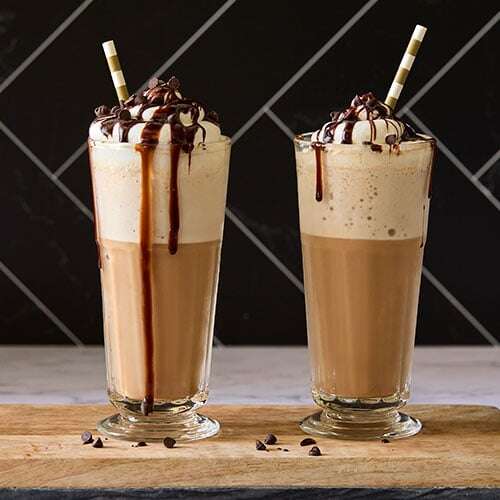
Frozen coffee is a cold, blended drink made with coffee, ice, milk, and optional sweeteners or flavor syrups. It is thicker than iced coffee because the ice is crushed into the drink instead of simply sitting in a glass.
Think of it as a meeting point between iced coffee and a coffee smoothie. It can be light and refreshing or rich and dessert-like, depending on the coffee, milk, sugar, and toppings you use.
When learning how to make frozen coffee, it helps to know that the drink needs balance. Too much ice makes it watery and bland. Too little ice makes it thin and warm. Strong coffee gives the blend enough flavor to stand up to the melting ice.
:max_bytes(150000):strip_icc()/4535012-98e68fe52e2e4d58bece209ec9003b88.jpg)
Ingredients for Frozen Coffee
A good frozen coffee needs only a few basic ingredients. The quality of each one matters, especially the coffee and ice.
Basic ingredients
For one large serving, use:
• ¾ cup strong brewed coffee, chilled
• 1½ cups ice cubes
• ½ cup milk or a dairy-free alternative
• 1 to 2 tablespoons sugar, maple syrup, or simple syrup
• ¼ teaspoon vanilla extract, optional
• Whipped cream, optional
• Chocolate syrup or cinnamon, optional
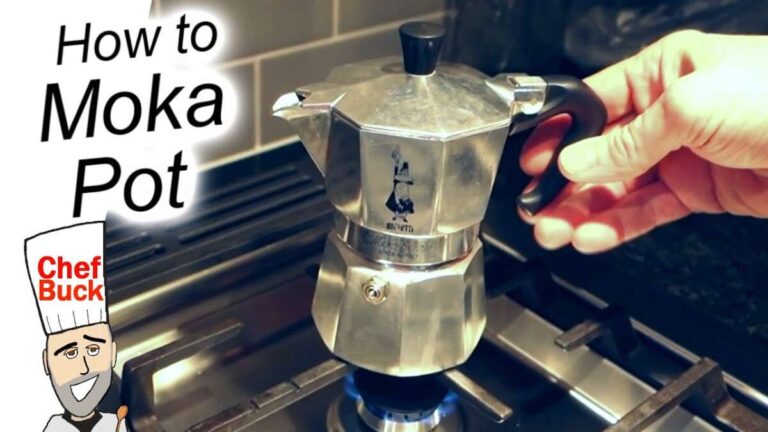
Brewed coffee works best when it is stronger than usual. You can use about 1½ tablespoons of ground coffee for every 6 ounces of water, depending on your beans and brewing method.
Cold brew concentrate also works well. It has a smooth taste and adds less heat to the blender. If you use ready-to-drink cold brew, choose an unsweetened variety so you can control the final sweetness.
Choosing the right ice
Use fresh, hard ice cubes. Old ice can absorb freezer smells, which may give your frozen coffee a dull or strange taste.
Small or medium ice cubes are often easier for a home blender to crush. If your blender is not very powerful, avoid large blocks of ice. They may strain the motor and leave rough chunks in the drink.

How to Make Frozen Coffee Step by Step
The best way to make frozen coffee is to chill the coffee first, then blend it with ice and milk. This keeps the drink thick and helps prevent fast melting.
1. Brew strong coffee
Make ¾ cup of coffee using your favorite roast. A medium or dark roast usually gives a bold flavor, while a light roast can add bright, fruity notes.
Let the coffee cool for a few minutes. Then place it in the refrigerator until cold. Hot coffee can melt the ice too quickly and create a thin drink.
2. Add the liquids to the blender
Pour the chilled coffee and milk into the blender first. Add the sweetener and vanilla next.
Putting the liquid in first helps the blades move. It also reduces the chance that ice will become stuck beneath the blade.
3. Add the ice
Add 1½ cups of ice. You can use a little less for a thinner drink or more for a thicker frozen coffee.
If you want a stronger coffee taste, replace some of the regular ice with coffee ice cubes. These cubes are made by freezing brewed coffee in an ice tray. They melt into coffee instead of water.
4. Blend until smooth
Start on a low speed. Slowly increase to high speed and blend for 30 to 60 seconds.
Stop once the drink looks smooth and thick. Do not blend far longer than needed, because the friction from the blades can warm the mixture.
5. Taste and adjust
Taste the drink before pouring it. Add more sweetener if it tastes bitter. Add a splash of milk if it is too thick. Add a few ice cubes if it is too thin.
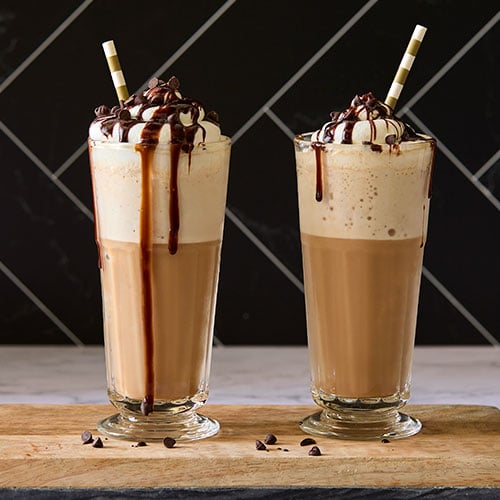
Pour the frozen coffee into a chilled glass. Add whipped cream, cocoa powder, cinnamon, or a light drizzle of syrup if desired.
The Best Coffee-to-Ice Ratio
The coffee-to-ice ratio controls both taste and texture. A useful starting point is ¾ cup chilled coffee to 1½ cups ice.
Use these simple adjustments:
• For a stronger drink, use 1 cup coffee and 1¼ cups ice.
• For a thicker drink, use ¾ cup coffee and 1¾ cups ice.
• For a lighter drink, use ¾ cup coffee and 1¼ cups ice.
• For a creamier drink, use ½ cup coffee, ½ cup milk, and 1½ cups ice.
• For a coffee-shop style drink, add 1 tablespoon cream or half-and-half.
Your blender also affects the result. A high-speed blender may create a silky texture with less liquid. A basic blender may need more milk and shorter blending periods.
In my own kitchen tests, the most common mistake was adding too much ice before checking the coffee strength. The drink looked thick, but the coffee flavor disappeared. Strong coffee and coffee ice cubes solved that problem better than adding extra sugar.

How to Make Frozen Coffee Without a Blender
You can make a cold coffee drink without a blender, but it will not have the same smooth, slushy texture. A shaker, food processor, or immersion blender can still help.
Try this method:
-
Brew strong coffee and chill it completely.
-
Pour the coffee, milk, sweetener, and vanilla into a jar with a tight lid.
-
Shake for 20 to 30 seconds.
-
Pour the mixture over crushed ice.
-
Stir well and serve at once.
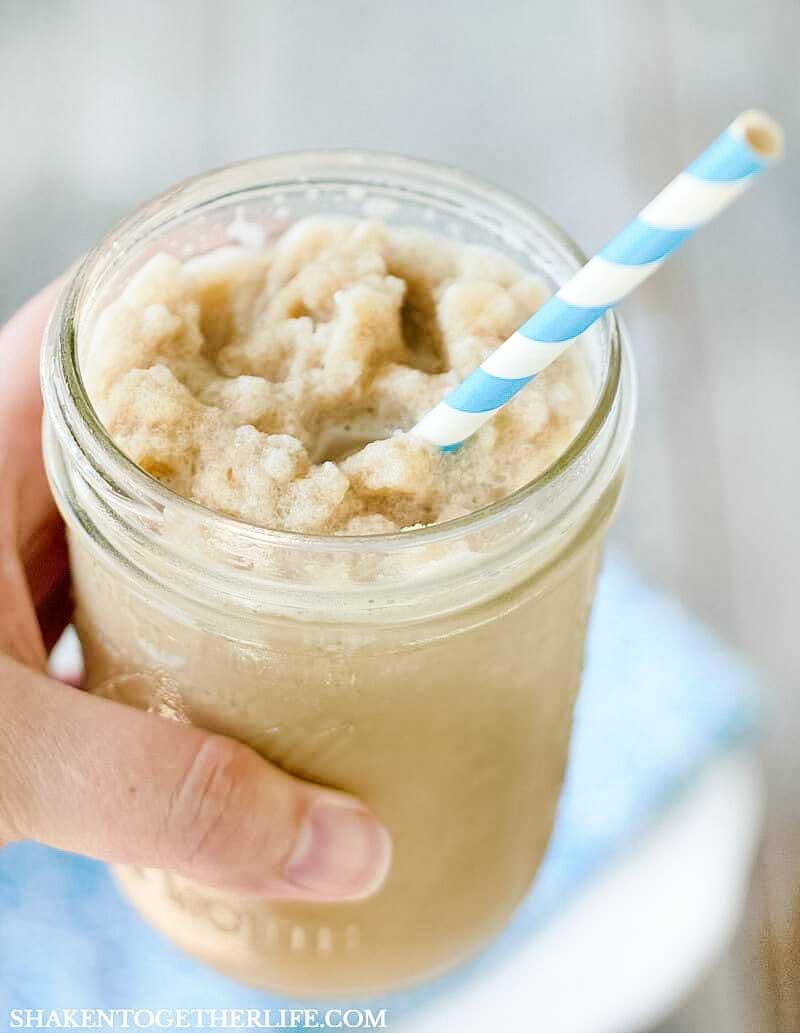
For a thicker texture, freeze the coffee in a shallow container. Scrape the frozen coffee with a fork every 30 minutes until it forms small crystals. Stir those crystals into chilled milk.
Never fill a sealed jar with hot coffee. Steam can build pressure and force the lid off. Always cool the coffee first.
:max_bytes(150000):strip_icc()/21667-easy-iced-coffee-ddmfs-4x3-0093-7becf3932bd64ed7b594d46c02d0889f.jpg)
How to Make Frozen Coffee With Instant Coffee
Instant coffee is useful when you want frozen coffee quickly. It dissolves easily and does not require a coffee maker.
For one serving, mix:
• 1½ teaspoons instant coffee
• 2 tablespoons hot water
• ½ cup cold milk
• 1½ cups ice
• 1 to 2 tablespoons sweetener
First, dissolve the instant coffee in the hot water. Let it cool for a few minutes, then blend it with the milk, ice, and sweetener.
Instant espresso powder gives a deeper taste than regular instant coffee. Use less at first because espresso powder can be very strong and bitter.
This method is convenient, but brewed coffee may taste smoother. The best option depends on your time, budget, and preferred flavor.
Flavor Variations to Try
Once you know how to make frozen coffee, you can create many flavors without changing the basic method.
Mocha frozen coffee
Add 1 tablespoon unsweetened cocoa powder or chocolate syrup. A small pinch of salt can make the chocolate taste richer.
Caramel frozen coffee
Add 1 tablespoon caramel sauce. Drizzle extra caramel inside the glass before pouring in the drink.
Vanilla frozen coffee
Add ½ teaspoon vanilla extract and use a creamy milk. Vanilla pairs well with medium-roast coffee.
Cinnamon frozen coffee
Add ¼ teaspoon ground cinnamon. You can also sprinkle cinnamon over the top for a warm, spicy note.
Peanut butter frozen coffee
Add 1 tablespoon creamy peanut butter. This creates a rich drink with a taste similar to a coffee milkshake.
Protein frozen coffee
Add a plain or vanilla protein powder. Check the label first because some powders thicken quickly and contain added sweeteners.
Dairy-free frozen coffee
Use oat milk, almond milk, soy milk, or coconut milk. Oat milk usually creates the creamiest texture, while almond milk gives a lighter drink.
How to Make Frozen Coffee Healthier
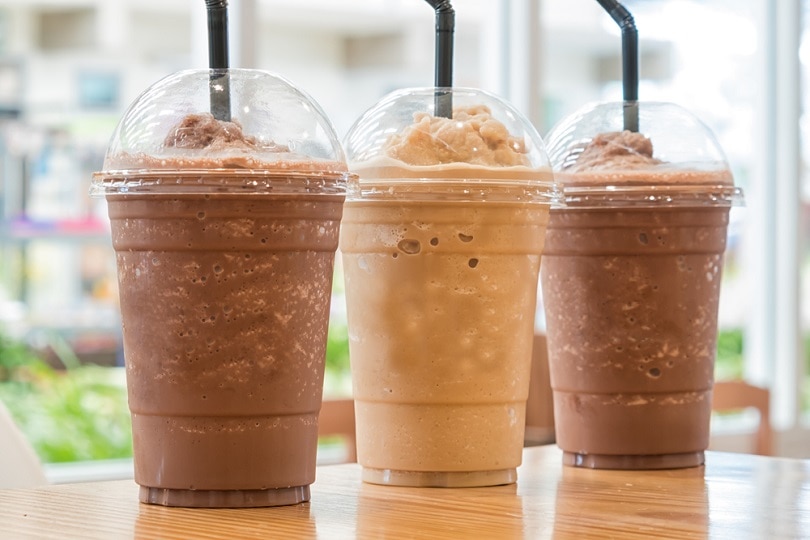
Frozen coffee can be a simple everyday drink, but many café versions contain a large amount of added sugar and cream. Making it at home gives you more control.
Try these changes:
• Use unsweetened milk and add sweetener slowly.
• Choose maple syrup or simple syrup in a measured amount.
• Use half a banana for natural sweetness and extra body.
• Replace some ice with frozen coffee cubes.
• Skip whipped cream and heavy toppings.
• Use low-fat milk if you prefer a lighter drink.
• Add cinnamon or vanilla for more flavor without much sugar.
The American Heart Association recommends limiting added sugar as part of a balanced diet. A homemade frozen coffee makes this easier because you can measure every ingredient.
Keep in mind that coffee contains caffeine. The amount varies by bean, roast, serving size, and brewing method. People who are pregnant, sensitive to caffeine, or taking certain medicines should follow advice from a qualified health professional.
Common Mistakes and How to Fix Them
Even a simple frozen coffee can fail if the texture or balance is off. These fixes can help.
The drink tastes weak
The coffee may not be strong enough. Use a stronger brew, cold brew concentrate, or coffee ice cubes.
The drink is too watery
The coffee may have been warm, or you may have blended for too long. Chill the coffee fully and blend only until smooth.
The drink is too thick
Add one tablespoon of milk at a time. Blend briefly after each addition.
The drink is too bitter
Add a small amount of sweetener, milk, or vanilla. Dark coffee can also become bitter when over-brewed.
The ice will not blend
Stop the blender and stir the mixture. Add a small splash of milk, then blend again. Do not force the blender to crush more ice than its manual allows.