
How To Fix Coffee Grinder Producing Too Much Fine Powder: Quick Fixes
Clean, adjust burrs, reduce dose, and switch to coarser settings to cut down fines fast.
I’ve spent years fixing grinders and dialing shots. I’ll show you why your grinder makes too much fine powder and exactly how to fix coffee grinder producing too much fine powder step by step. This guide mixes clear troubleshooting, easy fixes, and real tests so you can get consistent grinds. Read on for practical tips you can use today.

Why your grinder makes so much fine powder: common causes
Too many fines come from settings, burr wear, static, and technique. Each cause changes the way beans break. Knowing which one you face is half the fix. This section explains how to fix coffee grinder producing too much fine powder by identifying root causes.
- Worn or damaged burrs reduce cut size and make dust.
- Too fine a grind setting or too long a grind time creates extra fines.
- Dosing too much coffee forces the burrs to crush rather than cut.
- Static electricity pulls fines out of the chute and into your dose.
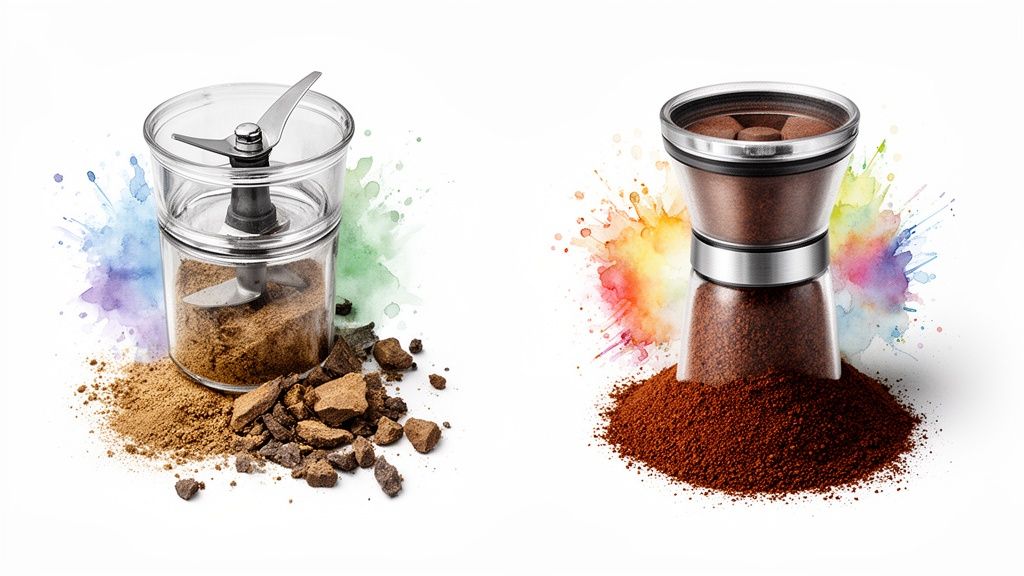
- Blade grinders and low-quality burrs naturally make more fines.

Burr type and wear
Conical and flat burrs cut differently. Flat burrs can produce more uniform particles, while cheap burrs wear faster. If your burrs are old or nicked, they will produce more fines and inconsistent particles. Replacing or servicing burrs is often the real solution to how to fix coffee grinder producing too much fine powder.
Grind setting and time
If you use a very fine setting, you will see more powder. Longer grind times also increase fines. Dial one step coarser and reduce the grind time. Small changes make a big difference.
Dose and overload
Overloading causes beans to jam and crack unevenly. Use smaller doses and grind in pulses. Proper dosing helps prevent crushing that creates dust.
Static and retention
Static lifts fines from the burrs and hides them in the chute. Cold, dry beans and plastic chutes make static worse. Anti-static measures reduce visible powder and improve consistency.

Quick fixes you can try right now
Start with simple steps. These fixes are fast and often solve the problem. They show practical ways to fix coffee grinder producing too much fine powder without disassembly.
- Adjust the grind one or two notches coarser and test again.
- Reduce dose by 10 to 20 percent and grind in two short pulses.
- Tap the hopper gently to level beans and avoid bridging.
- Run a few purge grams of beans between doses to clear fines.
- Clean the burrs and catch bin to remove trapped dust.
Step-by-step adjustment routine
- Empty the hopper and remove beans.
- Wipe the grind path and collect loose fines.
- Set grind coarser by one notch and test 10–15 g.
- Brew a test cup and assess extraction and taste.
- Repeat until grind produces fewer fines and cup tastes balanced.
Deep fixes and maintenance for lasting improvement
When quick fixes fail, you need deeper work. These steps address mechanical and design issues that cause persistent fines. Use them to permanently fix coffee grinder producing too much fine powder.
- Inspect burrs for wear or chips and replace if needed.
- Check burr alignment and spacing; calibrate where possible.
- Replace the grinder’s chute or use a metal adapter to reduce static.
- Install or use finer sieving screens to remove dust before brewing.
- Service the motor or drive if it stalls and causes crushing.
Burr replacement and calibration
Swap burrs with factory replacements or high-quality aftermarket sets. Properly seated burrs and correct clearance are vital. A small misalignment can turn uniform grinds into dust. After replacement, run break-in doses and retest.
Anti-static strategies
Use a metal catch cup or ground portafilter to reduce static buildup. Wiping beans lightly with a damp cloth (very minimal moisture) can help in dry climates. Some grinders respond well to a single rice or peppercorn purge, but use that method sparingly and follow manufacturer guidance.

How to test grind quality and measure fines
Good testing tells you if your fix worked. Use visual checks, simple sieves, and brew tests. These methods confirm whether you have solved how to fix coffee grinder producing too much fine powder.
- Visual check: spread a teaspoon on white paper to see dust.
- Sieve test: use a 400–600 micron sieve to separate fines.
- Brew test: taste for bitterness, over-extraction, or quick clogging.
- Extraction yield: measure brew strength if you have a refractometer.
Quick grind tests you can do at home
- Collect 10 g of ground coffee.
- Shake over white paper and observe particle mix.
- Sift using a small mesh if available.
- Brew with the coarsest setting that still extracts correctly.
- Note improvements and adjust again.

People also ask — short answers
Why does my grinder make dust instead of grounds?
Too-fine settings, worn burrs, static, and overload cause dust. Try a coarser setting, clean the burrs, and reduce dose.
Can I fix worn burrs myself?
Yes, if you order the right parts and follow guides. Read your manual and use proper tools for safe replacement.
Does bean freshness affect fines?
Yes. Very fresh or oily beans can clump or smear, creating fines. Let beans rest a few days after roast for more consistent grinding.
Personal experience, tips, and mistakes to avoid
I once chased settings for weeks before replacing worn burrs. After the swap, the fines dropped dramatically. I learned to test small changes and document results. Below are practical tips from hands-on work.
- Test one variable at a time so you know what helped.
- Keep a simple log: date, setting, dose, and brew notes.
- Avoid continuous high-volume grinding on domestic grinders; it speeds wear.
- Use a small brush and compressed air to clear fines regularly.
- Don’t overuse rice for cleaning; it can dull burrs if not recommended.
Frequently Asked Questions of how to fix coffee grinder producing too much fine powder
What is the quickest way to reduce fines?
Try coarsening the grind by one or two steps and reduce your dose. That often lowers fines immediately.
How often should I replace burrs?
Replace burrs after 500–1000 pounds of coffee or when you see uneven particles. Signs include more dust and a flavor shift.
Will cleaning the grinder help?
Yes. Cleaning removes trapped fines and oils that cause clumping and static. Clean monthly for best results.
Can I use a sieve to remove fines before brewing?
Yes, a small sieve can remove dust and improve extraction. Be gentle to avoid wasting too much coffee.
Do blade grinders always make more fines?
Yes, blade grinders chop inconsistently and produce more fines than burr grinders. For consistent results, switch to a burr grinder.
Final thoughts and next steps
You can fix coffee grinder producing too much fine powder by combining simple adjustments, proper maintenance, and thoughtful testing. Start with coarser settings, smaller doses, and cleaning. If problems persist, inspect or replace burrs and consider anti-static solutions. Take notes as you test and stay patient. Your next cup will taste better.
Try one change today and record the result. If you found this helpful, leave a comment or subscribe for more hands-on grinder tips.

Liora Pennings is a seasoned chef and kitchen enthusiast with a passion for turning everyday cooking into an effortless experience. With years of hands-on culinary expertise, she specializes in practical techniques, ingredient know-how, and smart kitchen solutions that help home cooks elevate their meals. At KitchFlair.com, Liora shares her best tips, time-saving tricks, and honest product reviews to guide readers toward a more efficient, enjoyable, and inspired cooking routine. Whether you’re a beginner or a seasoned home chef, Liora’s friendly, knowledge-packed insights make every visit to the kitchen a little easier—and a lot more delicious.