Can You Boil Water in a Dutch Oven: Discover How
Let me answer the big question right away. Yes, you can boil water in a Dutch oven. You can do it on a stove. You can do it over a fire. You can even do it on an induction cooktop. And the best part? It works better than most thin pots you may use every day.
You might wonder why this matters. It matters because boiling water is the base for so many things we cook. Pasta. Rice. Tea. Broth. Dumplings. Simple soups. Even quick veggies. When you learn how to use your Dutch oven for boiling water, you unlock more ways to use this one tool. You get more value from it. You get more ease in your kitchen.
I still remember the first time I tried boiling water in mine. I was making noodles late at night. My usual pot was not clean, so I grabbed my Dutch oven. I filled it with water. I set it on the burner. I kept the heat at medium. I waited. And I was surprised by how steady the boil was. No hot spots. No harsh bubbles. Just a calm, even boil that made the noodles turn out smooth and perfect.
That moment taught me something real. A Dutch oven is more than a stew pot. It can do the simple jobs too. And it can do them well.
In this guide, I will show you how boiling works in a Dutch oven. I will show you why cast iron helps. I will show you why enamel makes things easy. I will share tips that come from cooking in my own kitchen. I will show you how to stay safe. And I will help you get the best results with simple steps you can use today.
So let’s open the lid on this. Let’s talk heat. Let’s talk water. And let’s answer the question in full detail:
Can You Boil Water in a Dutch Oven?
Yes. You can. And once you see how easy it is, you may start doing it every week.

Credit: www.nytimes.com
What a Dutch Oven Really Is (And Why It Can Boil Water So Well)
A Dutch oven is simple at first glance. It is a heavy pot. It has thick walls. It has a tight lid. That is it. But these simple parts do big work. They hold heat. They spread heat. They keep heat steady. And that is why it can boil water so well.
Most Dutch ovens are made from cast iron. This is what gives them weight. That weight may feel like a workout when you lift it. But it also gives you steady cooking. Cast iron warms slow and smooth. It does not jump from cool to hot. It climbs in heat in a calm way, and that helps a lot when you boil water.
If you have a raw cast iron Dutch oven, you know how strong it feels. If you have an enameled one—like a Le Creuset, Lodge, or Staub—you know how smooth the inside feels. Both types work. Both types boil water well. But each does it in its own way. I will break that down more in the next sections.
Right now, what matters is this:
A Dutch oven is built for heat. And boiling water needs steady heat. So they match well.
Let me share a small moment from my own kitchen. When I first used a Dutch oven, I was not thinking about boiling at all. I bought it for bread and stews. One day, I needed hot water fast—for tea and quick pasta. My thin pot was busy with something else. So I grabbed the Dutch oven. And yes, it took a bit longer to heat up. But once the heat spread through the pot, the boil stayed smooth and even. No flare-ups. No jumping bubbles. The whole boil felt calm.
That is the charm of cast iron:
slow start, strong finish.
Another thing that makes a Dutch oven good for boiling is the lid. It traps steam. And steam builds heat. When you place the lid on top, the water boils faster. Not as fast as a kettle, but faster than an open pot. That tight seal is one of the best features of the Dutch oven. It was designed to keep moisture in. That helps with braises, but it also helps with boiling.
And you can use it on many heat sources. A Dutch oven works on gas stoves. It works on electric. It works on induction. It works on glass tops. It even works on open flame. This wide use is why many people call it the most versatile pot in the kitchen.
So when you ask, “Can You Boil Water in a Dutch Oven?”
The question makes sense. You want to know if it is safe. You want to know if it works.
And the answer is yes—it works for boiling because it was built for high heat and steady heat.
In the next section, I will explain what the pot is made of. The material matters. It changes how fast water heats. It also changes how you care for the pot after boiling.
Materials That Affect How Water Boils
The way your Dutch oven boils water depends on what it is made of. The material changes the heat. It changes the speed. It changes how easy it is to care for. Some Dutch ovens boil fast. Some boil slow. Some hold heat longer. Some need more care.
Here is what matters and why.
Raw Cast Iron: The Heat Beast for Strong, Steady Boils
Raw cast iron is the classic form. It is dark. It is heavy. It feels like it could last for a lifetime. And it can.
Raw cast iron heats slow, but holds heat very well. That makes it great for a steady boil.
You can boil water in raw cast iron with no problem. The wall thickness keeps the heat stable. You will not see the water bounce or boil unevenly.
One tip from my own use:
When I boil water in my raw Lodge Dutch oven, I notice the water stays hot longer even after I turn off the stove. The heat sits in the walls. It keeps things warm. It feels like the pot has its own heat memory.
Raw cast iron also works on every stove type.
Gas. Electric. Induction. Glass. Even campfire coals.
If you boil water often, you will see the seasoning soften a bit over time. This is normal. You can oil it again. The pot stays strong.
Enameled Cast Iron: Smooth, Simple, and Great for Everyday Boils
Yes. You can. In fact, enameled cast iron is the one many home cooks prefer for boiling water because it is smooth inside and easy to clean.
Popular brands like Le Creuset, Staub, and Lodge Enameled say boiling is safe. These brands make high-quality enamel that handles heat well. You can use them on any stovetop.
Enameled cast iron boils water steady and clean. You do not have to season it. The enamel protects the iron. The only thing you must avoid is empty high heat. Never heat an empty enameled pot. But once water is inside, the pot does fine.
A small moment from my kitchen:
I once boiled water in my red Le Creuset to make tea for guests. It boiled slow at first, but once hot, it held the boil without drops in temperature. It made the tea steep very smooth. That little moment made me reach for the enamel more often.
Aluminum and Ceramic Dutch Ovens: Light but Less Heat Control
Some Dutch ovens are made from aluminum or ceramic. These are lighter. They boil faster because they heat fast. But they do not hold heat like cast iron. The boil may feel sharp or quick.
Aluminum Dutch ovens are fine for quick tasks. But they are not the best for long boiling. The heat moves too fast. If you use them, keep the heat steady and low to medium.
Ceramic Dutch ovens look beautiful. They work well too. But most can crack if heat changes too fast. If you boil in a ceramic pot, warm it slow. Add water at room temperature. Let it rise in heat without rush.
What This Means for You
The material changes the way water boils:
-
Raw cast iron = slow heat, strong boil, long heat hold
-
Enameled cast iron = smooth, safe, easy clean, steady heat
-
Aluminum = fast heat, fast boil, less control
-
Ceramic = gentle boil, careful heat use
But all of them can boil water. They just do it in different ways.
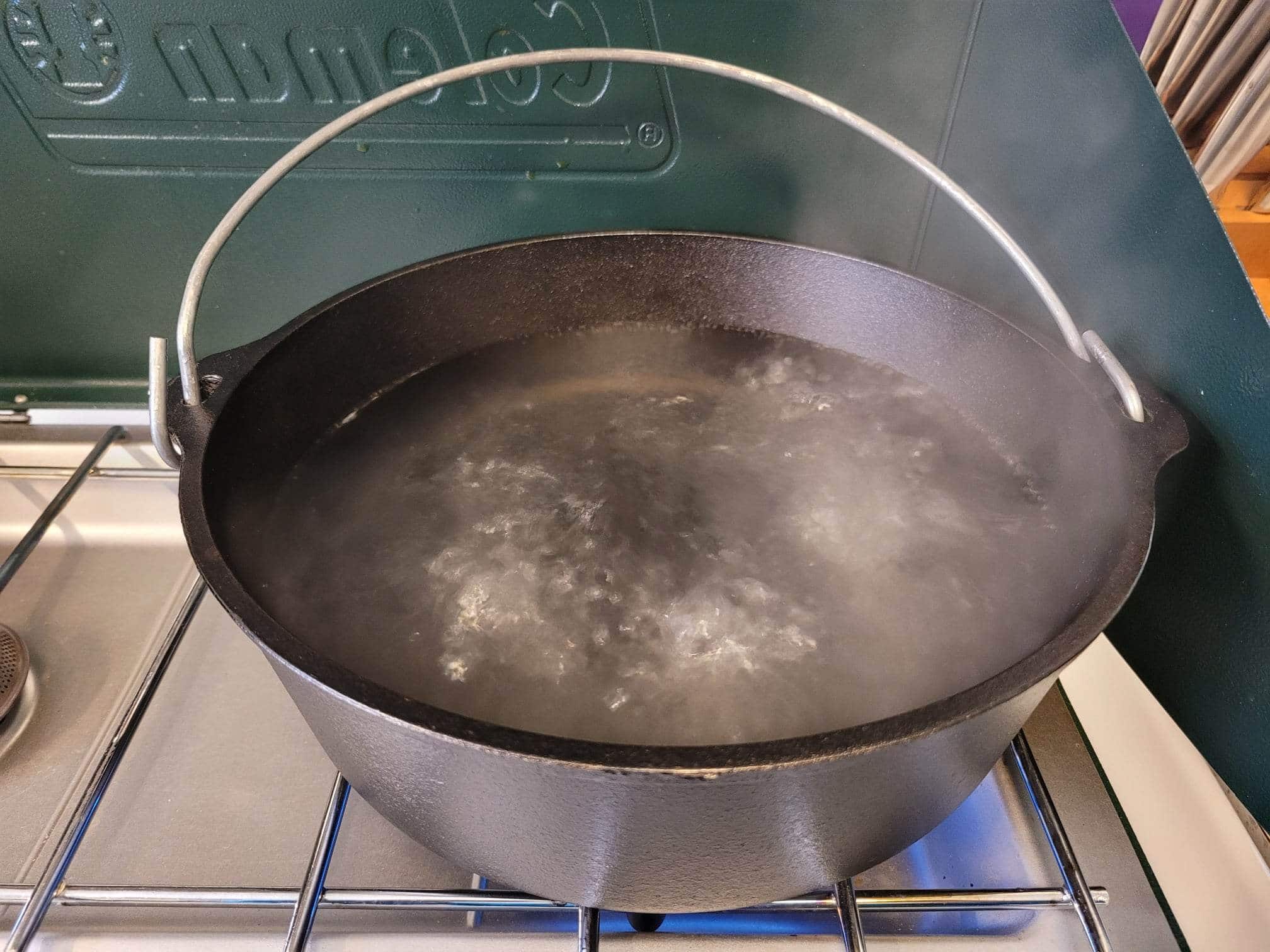
Credit: campfiresandcastiron.com
How Water Boils in a Dutch Oven (Heat Flow Made Simple)
Let’s keep this simple. When you set a Dutch oven on the stove, the heat moves slow, steady, and even. This makes it one of the most stable pots for boiling water, no matter what type of stove you use.
I want to walk you through what actually happens inside the pot when you boil water in a Dutch oven. Once you understand it, you’ll see why this pot is so good at the job — maybe even better than your regular stockpot.
Thick Walls = Slow, Even, Controlled Heat
A Dutch oven has thick iron walls. This is true whether it’s:
-
Lodge raw cast iron
-
Le Creuset enamel
-
Staub enamel
-
Generic cast iron camp Dutch oven
That thick iron wall does a simple thing:
It holds heat and spreads it out.
When you boil water, you want the whole pot to warm evenly. Thin pots heat fast but can create hot spots. Dutch ovens heat slow but smooth.
That means:
-
the boil is more stable
-
the bubbles rise more even
-
the water does not jump or hammer the pot
-
you get fewer splashes
When I first used my Staub Dutch oven to boil water for noodles, I noticed the boil was gentle and even. No sputter. No wild bubble bursts. It looked calm, like a controlled simmer that built into a strong boil.
That steady heat is one big answer to the question:
Can you boil water in a Dutch oven?
Yes — and it might boil better.
Cast Iron Holds Heat Longer — Even After You Turn Off the Stove
Once the water hits a boil, the iron keeps the temperature steady. Cast iron is like a heat battery. It doesn’t let go of warmth fast.
This helps when you:
-
need to keep water hot for a long tea session
-
want pasta to stay warm while the sauce finishes
-
boil water on a campsite
-
simmer broth without big heat drops
Sometimes I turn off the burner early and let the cast iron finish the job with stored heat. This saves gas and keeps food from burning.
Why Dutch Ovens Don’t Warp or Shake at High Heat
Thin pots can warp or rattle when heat climbs fast. Dutch ovens do not. They are heavy, dense, and stable.
Even if you use:
-
gas
-
induction
-
electric coil
-
glass top
The cast iron keeps its shape. It does not flex. This makes boiling safe and simple.
A stable pot also means:
-
the lid sits tight
-
steam stays in
-
the boil happens quicker
-
the boil stays even