How To Make Coffee With Coffee Grounds: Easy Guide
Use fresh ground coffee, hot water, and the right brew time to make a smooth cup at home.
Learning how to make coffee with coffee grounds is simple, but small details matter. The grind size, water temperature, coffee ratio, and brew time can change your cup from bright and sweet to bitter and flat. This guide explains reliable methods, common mistakes, and easy ways to improve your coffee without expensive equipment.
What You Need to Make Coffee With Coffee Grounds
Before learning how to make coffee with coffee grounds, gather a few basic items. You do not need a costly machine. A saucepan, jar, filter, or French press can work well.
You will need:
- Ground coffee, either store bought or freshly ground
- Clean water
- A heat safe cup or coffee pot
- A coffee filter, fine strainer, or French press
- A spoon
- A kitchen scale or measuring spoon, if available
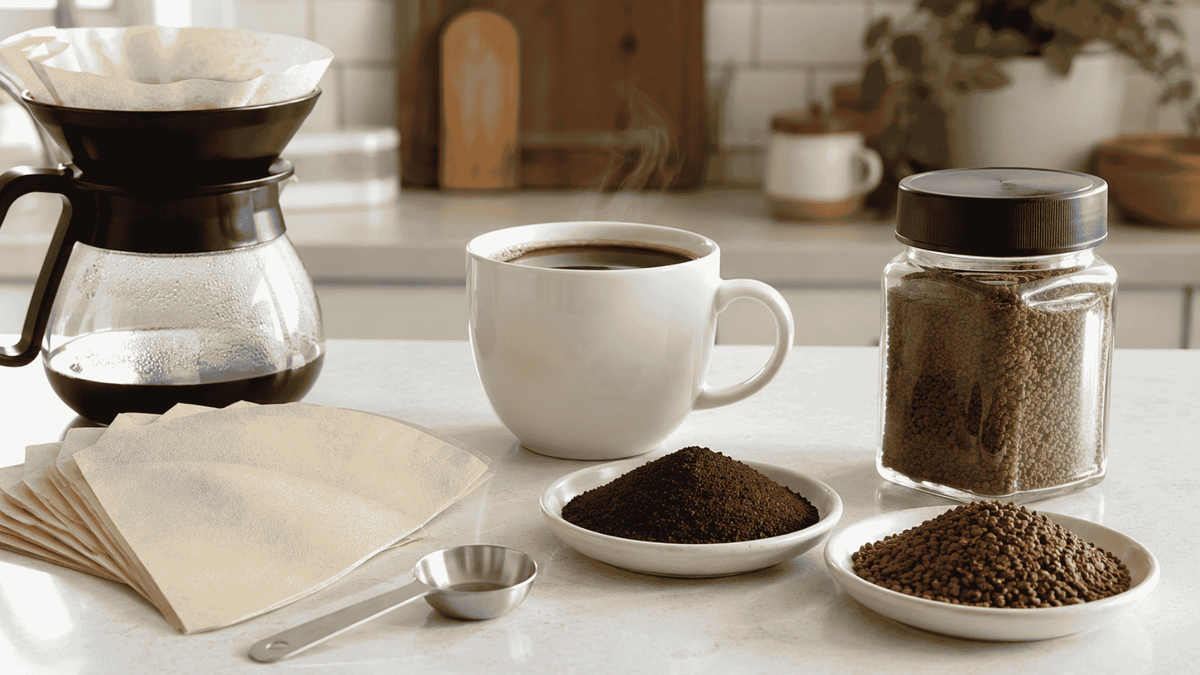
Fresh coffee grounds usually produce better flavor. Coffee starts to lose aroma after grinding because air slowly removes its flavor compounds. For the best taste, grind whole beans just before brewing. If you use pre ground coffee, keep it in an airtight container away from heat, light, and moisture.
Do not confuse fresh coffee grounds with used coffee grounds. Used grounds have already released most of their flavor. Brewing them again usually makes a weak, muddy, or bitter drink.
The Best Coffee to Water Ratio
A good coffee to water ratio gives your drink balance. Too little coffee creates a thin cup. Too much coffee can make it strong, harsh, or wasteful.
A useful starting point is:
- 1 gram of coffee for every 16 to 18 grams of water
- 2 level tablespoons of ground coffee for about 12 fluid ounces of water
- 1 tablespoon of ground coffee for about 6 fluid ounces of water
The Specialty Coffee Association commonly uses a ratio near 1:16 as a brewing reference. This means 1 gram of coffee for every 16 grams of water. You can adjust this ratio based on your taste.
For a stronger cup, use more coffee rather than boiling the grounds for a longer time. Longer brewing often pulls out bitter compounds. For a lighter cup, use slightly less coffee or add a little hot water after brewing.
A kitchen scale gives the most consistent result. Still, measuring spoons work well when you are making everyday coffee.
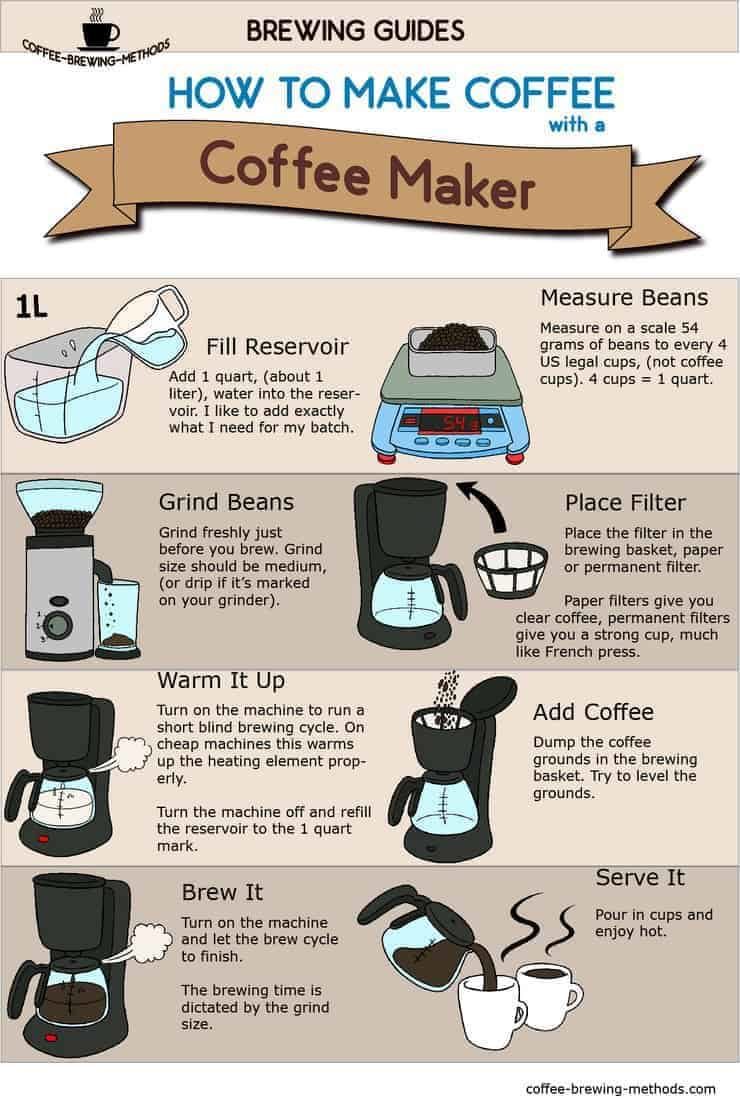
How to Make Coffee With Coffee Grounds Using a Drip Coffee Maker
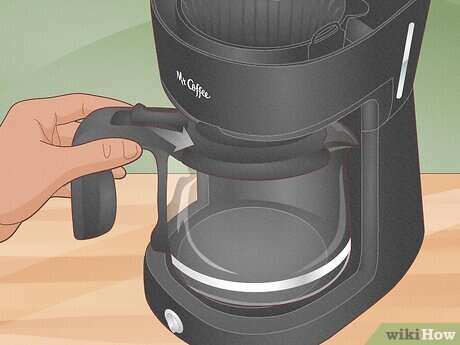
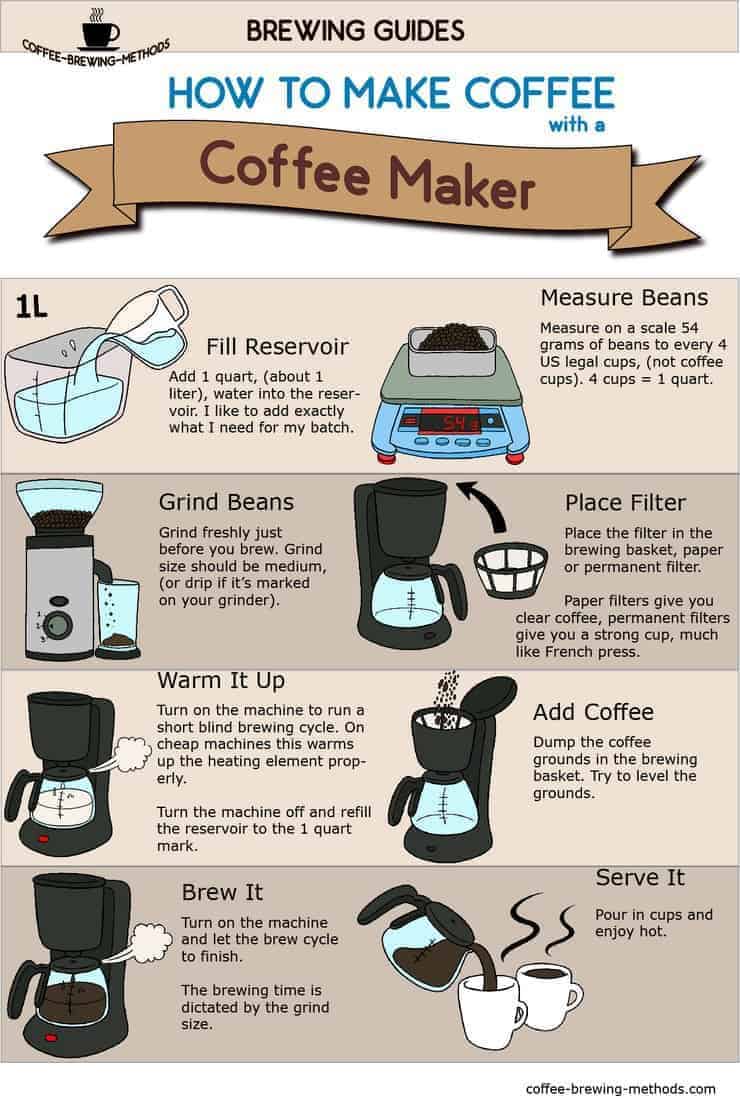
A drip coffee maker is one of the easiest ways to make coffee with coffee grounds. It controls the water flow and spreads water over the grounds for you.
Follow these steps:
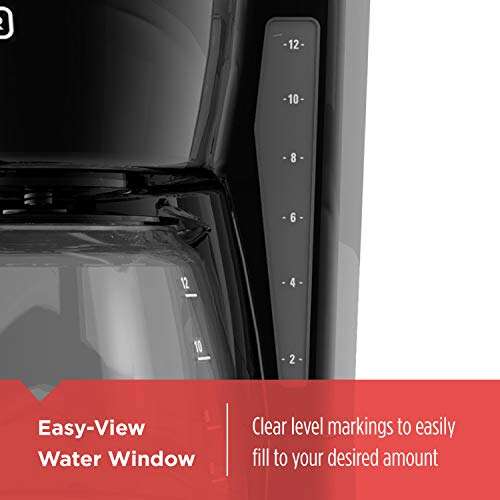
- Fill the machine with fresh, cold water.
- Place a paper filter in the filter basket.
- Add your coffee grounds.
- Use about 1 tablespoon of coffee for every 6 fluid ounces of water.
- Start the machine and let it finish the full brew cycle.
- Serve the coffee soon after brewing.
Use a medium grind for most drip machines. Very fine grounds can slow the water flow and create a bitter taste. Very coarse grounds may allow water to pass too quickly, leaving the coffee weak.
If your machine has a warming plate, avoid leaving coffee on it for more than about 30 minutes. Heat continues to change the flavor and can make the coffee taste burnt. Transfer extra coffee to a thermal carafe instead.
Clean the brew basket and carafe often. Old coffee oils can turn rancid and give fresh coffee a stale taste.
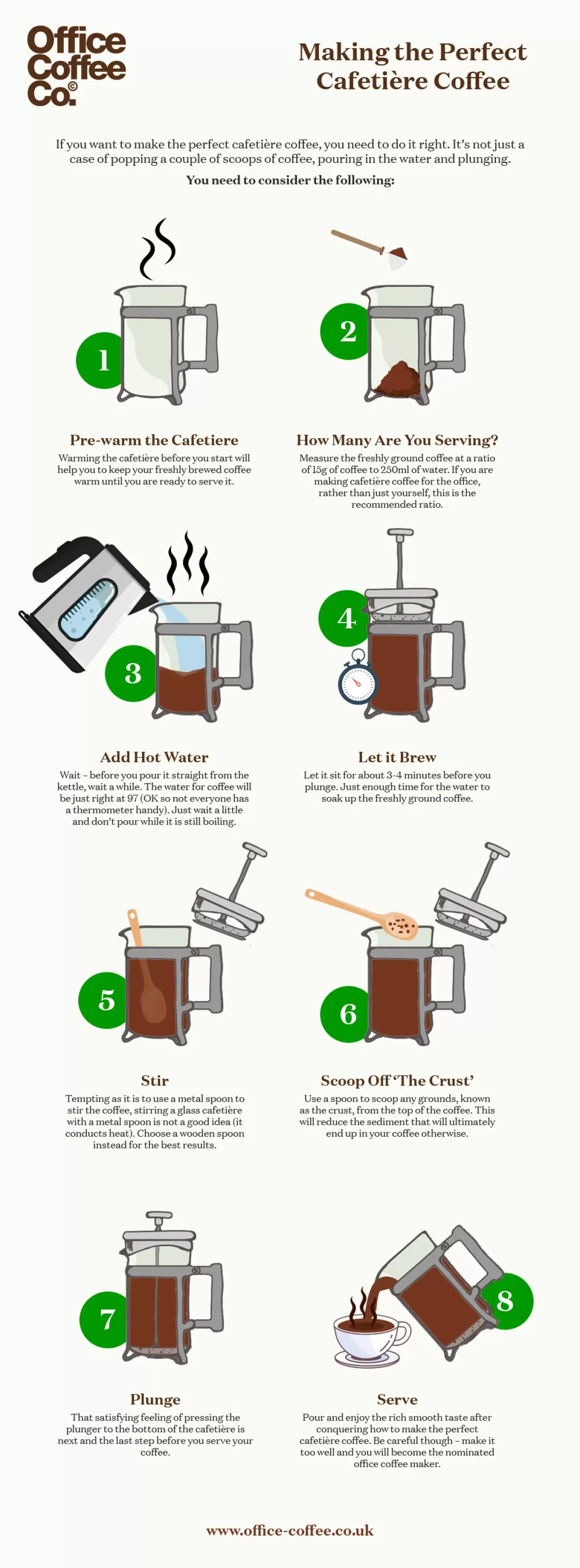
How to Make Coffee With Coffee Grounds in a French Press
A French press makes a rich, full bodied cup because the coffee stays in contact with the water. Its metal filter also lets more natural oils pass into the drink.
Use this method:
- Add 1 ounce, or about 28 grams, of coarse coffee grounds to the press.
- Pour in 16 ounces of water heated to about 195 to 205 degrees Fahrenheit.
- Stir gently to wet all the grounds.
- Place the lid on the press without pressing the plunger.
- Let the coffee steep for about 4 minutes.
- Press the plunger down slowly.
- Pour the coffee into a cup right away.
Coarse grounds are important. Fine coffee grounds can pass through the filter and create a gritty cup. They can also make the coffee over extract during the four minute steep.
A common mistake is pressing the plunger too fast. Slow pressure keeps the coffee grounds settled and reduces sediment. Another mistake is letting the coffee sit in the press. Even after pressing, the grounds remain in the bottom and can continue affecting the flavor.
How to Make Coffee With Coffee Grounds Without a Coffee Maker
You can make coffee with coffee grounds on a stove. This method is useful when you have no coffee machine, filter, or special tool.
Stovetop saucepan method
- Add 6 fluid ounces of cold water to a small saucepan.
- Stir in 1 tablespoon of medium or coarse coffee grounds.
- Heat the mixture until it becomes very hot.
- Let it gently simmer for about 2 to 3 minutes.
- Remove the pan from the heat.
- Wait about 30 seconds for the grounds to settle.
- Pour the coffee slowly through a fine strainer or paper filter.
Avoid a hard boil. Aggressive boiling can create a rough taste and may push more sediment into the cup. If you have no strainer, pour slowly and leave the last spoonful in the pan.
Cup and filter method
You can also place a paper coffee filter over a cup. Secure it with a clip or rest it inside a small funnel. Add medium ground coffee, then slowly pour hot water over the grounds in small circles.
This method is similar to pour over coffee. Pour enough water to wet the grounds first. Wait about 30 seconds, then continue pouring until you reach the amount you need.

How to Make Coffee With Coffee Grounds Using a Pour Over
Pour over brewing gives you control over the water speed and coffee strength. It can produce a clean and bright cup when you pour with care.
Here is a simple process:
- Place a paper filter in the dripper.
- Rinse the filter with hot water.
- Add medium ground coffee.
- Use about 20 grams of coffee for 320 grams of water.
- Pour a small amount of water over the grounds.
- Wait 30 to 45 seconds.
- Pour the rest of the water slowly and evenly.
- Let the water pass through before serving.
Rinsing the filter removes some paper flavor and warms the cup. The first small pour allows the grounds to release trapped gas. This step is called blooming.
Try to finish the pour over process in about 2.5 to 4 minutes. A very fast brew may taste weak. A very slow brew may taste bitter or dry.
Pouring in circles helps wet the grounds evenly. Do not pour directly onto the paper filter, because the water may run around the coffee instead of through it.
How to Make Cold Brew With Coffee Grounds
Cold brew uses cool water and a long steep. It tastes smooth and less sharp than many hot brewing methods, though it still contains caffeine.
To make cold brew:
- Combine 1 cup of coarse coffee grounds with 4 cups of cold water.
- Stir until all the grounds are wet.
- Cover the container.
- Refrigerate or leave it at room temperature for 12 to 18 hours.
- Strain the mixture through a paper filter or fine mesh strainer.
- Serve over ice and dilute with water or milk.
Use coarse grounds to make straining easier. Fine grounds can create a cloudy drink and may block a paper filter.
Cold brew concentrate is stronger. For a concentrate, use about 1 cup of coffee grounds with 4 cups of water, then dilute the finished liquid before drinking. Store cold brew in the refrigerator and use it within several days for the best flavor and freshness.
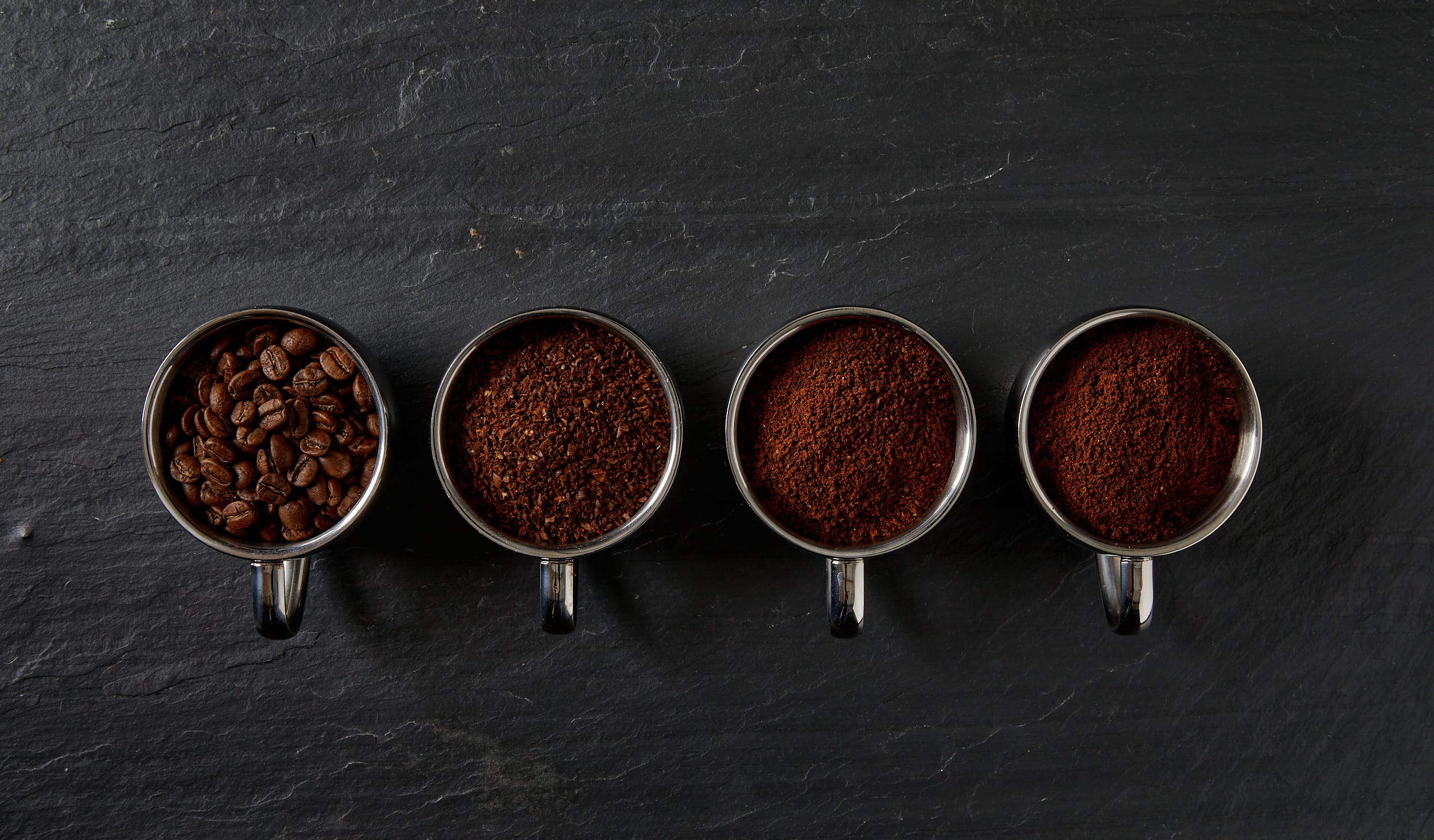
Choosing the Right Grind Size
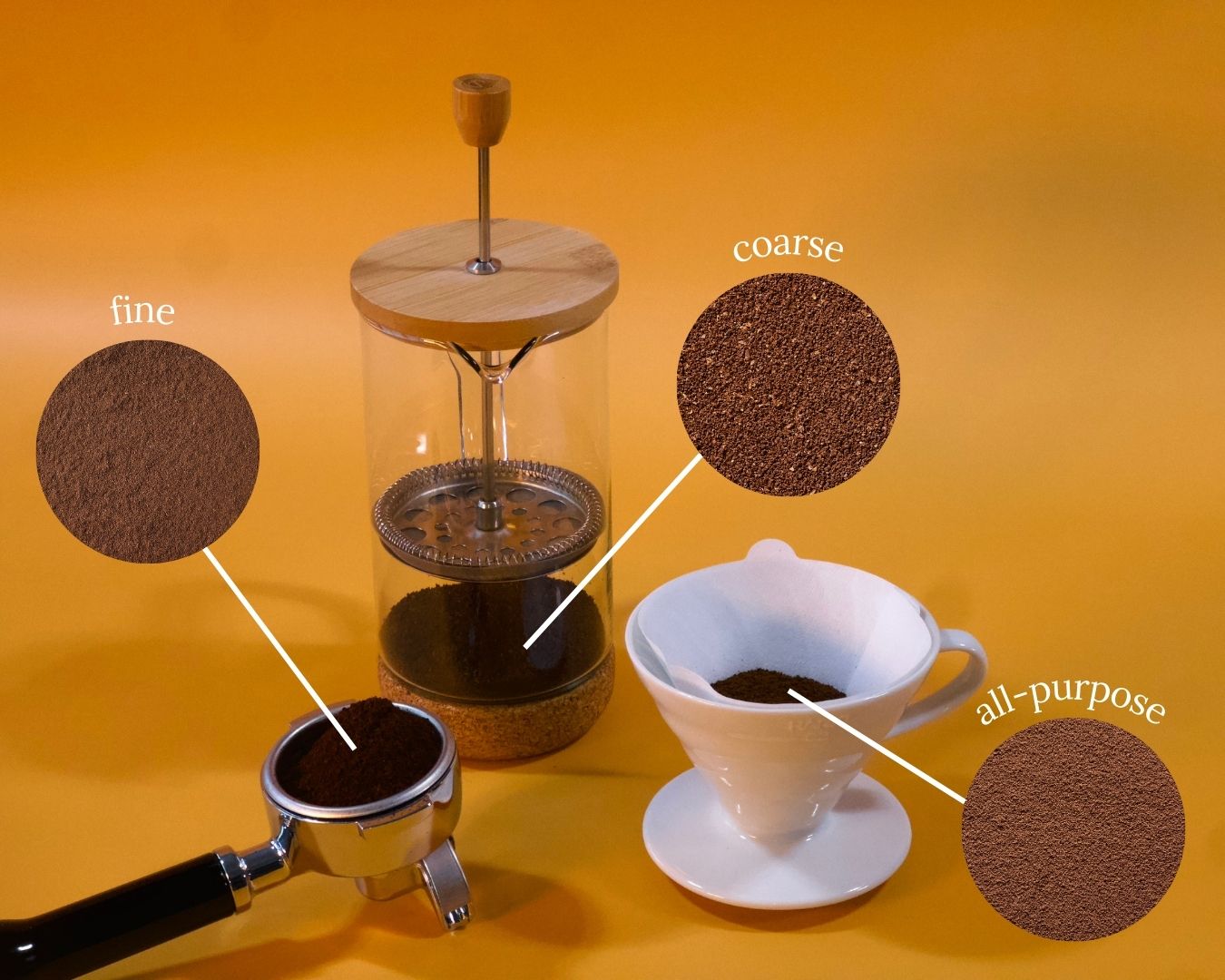
Grind size controls how quickly water extracts flavor from coffee. Think of it like sand and pebbles. Water moves through pebbles quickly but takes longer to pass through sand.
Use these general guidelines:
- Coarse grind: French press and cold brew
- Medium grind: Drip coffee and saucepan brewing
- Medium fine grind: Pour over methods
- Fine grind: Espresso machines
If your coffee tastes sour, thin, or sharp, the grounds may be too coarse or the brew time may be too short. If the coffee tastes bitter, dry, or harsh, the grounds may be too fine or the brew time may be too long.
Change only one factor at a time. For example, keep the water amount the same and use a slightly finer grind. This makes it easier to understand what improved the cup.
Water Temperature and Coffee Quality
Water temperature affects how much flavor moves from the coffee grounds into your cup. Water that is too cool may create weak, sour coffee. Water that is too hot may pull out harsh flavors, especially with a long brew.
A practical range is 195 to 205 degrees Fahrenheit. If you do not have a thermometer, boil the water and let it rest for about 30 to 60 seconds before pouring it over the coffee.
Water quality also matters. Coffee is mostly water, so tap water with a strong chlorine or mineral taste can affect the final drink. Filtered water often gives a cleaner flavor.
Avoid distilled water for regular coffee brewing. It lacks many minerals that help extract flavor. Very hard water can also create scale inside coffee makers and may produce a dull taste.
Common Mistakes When Making Coffee With Coffee Grounds
Even good coffee beans can taste poor when the method is inconsistent. These common mistakes are easy to fix.
- Using old grounds: Coffee loses aroma over time, especially after grinding.
- Guessing the amount: An uneven scoop can make each cup taste different.
- Using the wrong grind: Fine grounds can over extract in a French press, while coarse grounds may under extract in a drip machine.
- Boiling the coffee for too long: Extended heat can create a bitter flavor.
- Using dirty equipment: Old oils and residue can make coffee taste stale.
- Leaving coffee on a hot plate: Continued heat damages flavor.
- Brewing used grounds again: Most desirable flavor has already been extracted.
- Pouring water too quickly: Fast water flow can leave dry areas in the coffee bed.
- Using very hot water with a long steep: This can create harsh, dry notes.
One lesson from repeated home brewing tests is that consistency beats complexity. A basic brewer with fresh grounds and clean water can outperform expensive equipment used without a steady ratio or brew time.
How to Improve the Flavor of Homemade Coffee
Once you know how to make coffee with coffee grounds, small changes can make a major difference. Start with fresh beans or fresh ground coffee. Choose a roast that matches your taste, such as light roast for bright flavors or medium roast for a balanced cup.
Try these practical improvements:
- Grind coffee just before brewing.
- Measure coffee and water when possible.
- Use filtered water.
- Keep water near 200 degrees Fahrenheit.
- Match grind size to the brewing method.
- Stir or pour evenly so all grounds become wet.
- Drink hot coffee soon after brewing.
- Clean your brewer at least once a week.
- Store coffee in an airtight container.
- Adjust strength with the coffee amount, not extra brew time.
Do not judge a coffee blend after one attempt. Different beans respond to different grind sizes and brew times. Make one small change, taste the result, and record what worked.
Is It Safe to Drink Coffee Grounds?
A small amount of coffee sediment is usually not dangerous for most healthy adults. However, eating a large amount of coffee grounds may cause stomach discomfort and adds concentrated caffeine and fiber.
Used coffee grounds should not be treated as a second full brew. They contain less desirable flavor after the first extraction, and wet grounds can grow mold if stored at room temperature. If you want another drink, use fresh coffee grounds and clean water.
People who are sensitive to caffeine should also pay attention to serving size. The U.S. Food and Drug Administration states that up to 400 milligrams of caffeine per day is generally not linked with negative effects for most healthy adults, but sensitivity varies. Pregnancy, certain medicines, heart conditions, and anxiety may require a lower amount. Ask a health professional if you are unsure.
How to Store Coffee Grounds
Good storage protects the flavor you worked to preserve. Keep coffee grounds in an airtight, opaque container at room temperature. A cool cabinet is better than a counter near the stove.
Avoid storing coffee in the refrigerator. Coffee can absorb food odors, and repeated temperature changes may create moisture inside the container. Freezing can work for long term storage when coffee is sealed well, but daily opening and closing can expose it to condensation.
Buy an amount you can use within a few weeks. Smaller amounts are often fresher than a large bag that sits open for months.
Frequently Asked Questions About How to Make Coffee With Coffee Grounds
Can I make coffee with coffee grounds without a coffee maker?
Yes. You can simmer coffee grounds in a saucepan and strain the drink, or pour hot water through a paper filter. Use a medium or coarse grind and avoid boiling the mixture hard.
How much coffee should I use for one cup?
Start with 1 tablespoon of coffee grounds for about 6 fluid ounces of water. Adjust the amount slightly if you prefer stronger or lighter coffee.
Can I use used coffee grounds to make another cup?
You can, but the second cup will usually taste weak and flat. Fresh coffee grounds are the better choice because most of the useful flavor has already left the used grounds.
What temperature should water be for coffee?
Water between 195 and 205 degrees Fahrenheit works well for most coffee methods. Without a thermometer, boil the water and let it rest for about 30 to 60 seconds.
Why does my coffee taste bitter?
Bitter coffee often results from very fine grounds, a long brew time, water that is too hot, or too much coffee. Try a coarser grind or shorten the brewing time.
Why does my coffee taste weak?
Weak coffee may come from too little coffee, a grind that is too coarse, cool water, or a brew time that is too short. Add a little more fresh coffee or use a slightly finer grind.
Should I drink coffee grounds left in the cup?
A small amount of sediment is usually harmless, but the grounds may feel gritty and can upset some stomachs. Strain the coffee if you want a cleaner cup.
Conclusion
Learning how to make coffee with coffee grounds does not require expensive gear. Use fresh grounds, clean water, a suitable grind, and a steady coffee to water ratio. For a simple start, use 1 tablespoon of medium ground coffee for every 6 fluid ounces of water and adjust the recipe to your taste.
Try one method today, such as a drip maker, French press, saucepan, or pour over. Keep notes on your grind, water, and brew time so each cup teaches you something new. Share your favorite brewing method or explore more practical coffee guides to keep improving.

Liora Pennings is a seasoned chef and kitchen enthusiast with a passion for turning everyday cooking into an effortless experience. With years of hands-on culinary expertise, she specializes in practical techniques, ingredient know-how, and smart kitchen solutions that help home cooks elevate their meals. At KitchFlair.com, Liora shares her best tips, time-saving tricks, and honest product reviews to guide readers toward a more efficient, enjoyable, and inspired cooking routine. Whether you’re a beginner or a seasoned home chef, Liora’s friendly, knowledge-packed insights make every visit to the kitchen a little easier—and a lot more delicious.