Best Coffee Maker For A Crowd: Top Picks For Large Groups
The best coffee maker for a crowd brews fast, holds plenty, stays hot, and serves guests with little fuss.
A full house can empty a coffee pot before the first guest finds a seat. I have seen small brewers struggle at brunch, while large urns keep everyone waiting for the first cup. The right coffee maker solves that problem with steady output, simple controls, and enough capacity for real gatherings. In this guide, I compare drip machines, commercial coffee urns, and smaller backup brewers. I focus on brew size, speed, cleanup, heat retention, and ease of serving so you can choose with confidence.
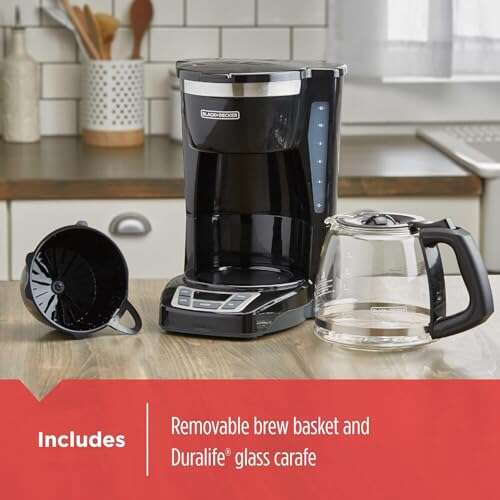
BLACK+DECKER 12-Cup Vortex Coffee Maker

The BLACK+DECKER 12-Cup Vortex coffee maker is a practical pick for family breakfasts, office kitchens, and casual parties. Its 12-cup glass carafe makes a useful amount without taking up the space of a commercial urn. Vortex Brewing uses a showerhead design to spread water over the grounds. That helps the coffee extract more evenly than a single narrow stream.
I like this brewer when speed and simple use matter most. The front controls are easy to understand, and the glass pot lets me see how much coffee remains. The brew basket lifts out for easy filling and cleaning. Its warming plate also helps keep a fresh pot ready while guests refill their mugs.
Pros:
- 12-cup capacity suits most family gatherings
- Vortex Brewing helps wet grounds more evenly
- Removable filter basket makes cleanup easier
- Glass carafe shows the remaining coffee level
- Simple controls work well for shared kitchens
- Warming plate keeps coffee ready for refills
Cons:
- Glass carafe can break if handled roughly
- It may need more than one batch for large events
- The warming plate can affect flavor if coffee sits too long
Zulay 100-Cup Commercial Coffee Urn

The Zulay 100-Cup Commercial Coffee Urn is built for weddings, church events, fundraisers, and large office meetings. Its large capacity reduces the need to brew several small pots. The stainless steel body gives it a sturdy feel and a clean look on a serving table. It also works as a hot water urn for tea, cocoa, and instant drinks.
This model makes sense when serving volume matters more than countertop size. A large urn can act like a quiet kitchen helper because it brews in the background and stays ready near the beverage station. The double-wall design helps support heat retention during a long event. I would place it on a firm table with room around the spigot for safe cup filling.
Pros:
- 100-cup capacity handles very large crowds
- Commercial design suits events and catering
- Stainless steel body resists daily wear
- Double-wall construction helps retain heat
- Useful for coffee, tea, and hot water
- Large serving volume reduces repeat brewing
Cons:
- Large size needs strong table support and storage space
- It can be excessive for small family gatherings
- A full urn takes more time and water to clean
OSTBA 100-Cup Stainless Steel Coffee Urn
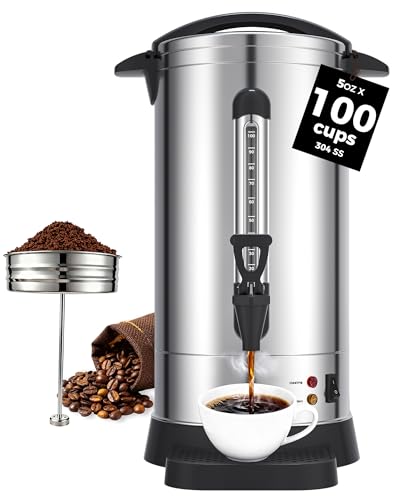
The OSTBA 100-Cup Commercial Coffee Urn targets hosts who need serious capacity with a stainless steel build. Its 15-liter size provides a large reserve for busy buffets and public events. The percolator format is familiar to many caterers and event volunteers. Once the brewing cycle finishes, the unit can keep the drink warm for service.
I see this as a strong option for a crowd that drinks coffee over several hours. The stainless steel surface is easier to wipe down than a fragile glass pot. The large handles and serving design should make transport easier, though I still recommend moving it while empty. For best flavor, use fresh grounds, clean water, and avoid holding coffee longer than needed.
Pros:
- 15-liter capacity supports large gatherings
- 304 stainless steel offers strong durability
- Percolator design fits event service needs
- Suitable for buffets, meetings, and catering
- Large volume reduces interruptions during service
- Metal body is less fragile than a glass carafe
Cons:
- Its footprint may crowd a small kitchen
- It is not the best choice for one or two people
- Percolator coffee may taste stronger than drip coffee
BLACK+DECKER 12-Cup Easy-Pour Coffee Maker

This BLACK+DECKER 12-Cup model keeps the focus on easy brewing and easy pouring. It has a straightforward on/off switch, a removable filter basket, and a non-drip carafe design. The Vortex Technology helps distribute water across the coffee bed. Those features make it a useful choice for a busy home where several people need coffee at once.
I would choose this brewer for a host who dislikes complicated menus and tiny buttons. The carafe design helps reduce spills when guests serve themselves. The removable basket also makes it simple to dump used grounds and rinse the brew area. It will not replace a 50- or 100-cup urn, but it can handle a normal breakfast crowd with less fuss.
Pros:
- 12-cup size works well for everyday gatherings
- Easy on/off switch has a low learning curve
- Non-drip carafe helps limit messy serving
- Removable filter basket speeds up cleanup
- Vortex Technology supports even water flow
- Compact design fits many kitchen counters
Cons:
- No large commercial capacity
- Basic controls offer fewer custom settings
- Glass pot needs careful handling
ExploreHorizon 100-Cup Commercial Coffee Urn

The ExploreHorizon 100-Cup Commercial Coffee Urn is made for events that need a steady beverage station. Its 14-liter capacity offers room for a large guest list without constant refills. The double-wall stainless steel body helps hold heat and gives the urn a polished appearance. It can also dispense hot water for tea, cocoa, or other drinks.
This is the kind of appliance I would bring out for a wedding, buffet, school event, or large holiday meal. The smaller 14-liter format may be easier to position than an oversized unit while still serving many cups. A good serving setup matters here, so place cups, cream, sugar, and stirrers beside the urn. That simple layout keeps the line moving and reduces spills.
Pros:
- 100-cup capacity serves a large crowd
- 14-liter size balances capacity and footprint
- Double-wall insulation helps keep drinks warm
- Stainless steel body suits repeated event use
- Works as a hot water and beverage dispenser
- Useful for weddings, buffets, and catering
Cons:
- Too large for normal daily household use
- Requires careful placement on a stable surface
- Large units take time to cool and clean
Zulay Kitchen 50-Cup Coffee Urn

The Zulay Kitchen 50-Cup Coffee Urn fills the useful middle ground between a home coffee pot and a full commercial urn. Its capacity can support a medium-size party, meeting, or church gathering. The double-wall stainless steel design helps the urn look neat while supporting heat retention. It can also provide hot water for tea and other beverages.
I find 50 cups more practical than 100 cups for many hosts. It gives a crowd room to enjoy refills without leaving a large amount of coffee at the end. The quick-brew design can help shorten the wait before service begins. I would still check the maker’s cup size because coffee urn cups are often smaller than a standard 8- or 12-ounce mug.
Pros:
- 50-cup capacity fits medium-size events
- Smaller than most 100-cup commercial urns
- Double-wall stainless steel supports heat retention
- Useful for coffee, tea, and hot water
- Quick-brew design helps prepare service faster
- Good balance for hosts who hold events often
Cons:
- Still too large for most daily kitchens
- May not cover a very large event by itself
- Coffee cup measurements may be smaller than home cups
Mr. Coffee 5-Cup Mini Brew Switch

The Mr. Coffee 5-Cup Mini Brew Switch is not a main brewer for a huge party, but it has a useful role as a compact backup. It fits small counters, dorm rooms, offices, and guest spaces. The simple brew switch keeps operation quick and clear. Its smaller carafe can make a fresh second batch when a larger pot runs out.
I would not call this the best coffee maker for a crowd on its own. However, it can save a host when a guest wants decaf, a smaller batch, or a separate coffee blend. Its size also makes storage easy after the event. Think of it as a small spare tire: not the star of the trip, but valuable when plans change.
Pros:
- Compact size saves counter and storage space
- Useful as a backup coffee maker
- Simple switch makes operation easy
- Good for decaf or a second coffee blend
- Works well in dorms, offices, and guest rooms
- Smaller batch can reduce waste
Cons:
- Five-cup capacity is too small for a large crowd
- Requires several batches for group service
- Offers fewer features than larger programmable brewers
Ninja Fresh Brew 12-Cup Coffee Maker
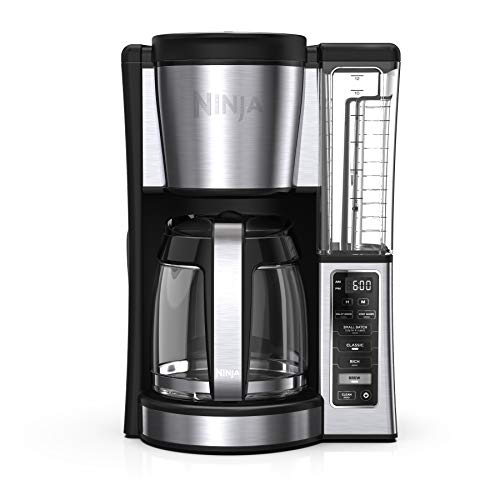
The Ninja Fresh Brew 12-Cup Coffee Maker brings a more polished brewing experience to a standard home-size machine. Its 12-cup glass carafe can serve a family or a small group. The stainless steel finish looks at home beside other kitchen appliances. It also offers a useful option for hosts who care about fresh flavor, not only cup count.
I like a glass carafe during a gathering because I can check the supply at a glance. The machine is still small enough for regular use after the party ends. It may be a better fit than a commercial urn when the household hosts only now and then. For the best taste, I would use fresh beans, a clean filter, and coffee within its best serving window.
Pros:
- 12-cup carafe suits small and medium groups
- Fresh-brew focus supports better everyday flavor
- Glass carafe makes coffee levels easy to see
- Stainless steel finish looks clean and modern
- Useful for both daily use and occasional hosting
- More practical for home storage than a large urn
Cons:
- Not designed for very large events
- Glass carafe needs careful handling
- One batch may not satisfy a long party
Cuisinart 14-Cup Programmable Coffee Maker

The Cuisinart 14-Cup Programmable Coffee Maker offers the largest home-style capacity in this group. Its 14-cup glass carafe gives a host a little more room than a standard 12-cup brewer. The programmable controls can prepare coffee before guests arrive. Brew strength control and a 1-4 cup setting also add flexibility for different needs.
This machine is a strong choice when I want one brewer for both normal mornings and weekend hosting. The pause feature can help someone pour a cup before the full cycle ends, which is handy during a busy breakfast. The larger carafe reduces the number of batches for a small crowd. It still uses a home coffee maker format, so I would choose a commercial urn for events with dozens of guests.
Pros:
- 14-cup capacity leads the home-size group
- Programmable start helps simplify event mornings
- Brew strength control suits different tastes
- 1-4 cup setting supports smaller batches
- Pause feature helps with early serving
- Useful for daily coffee after the event ends
Cons:
- Glass carafe is more fragile than stainless steel
- Controls may take a little time to learn
- It cannot match a commercial urn for huge crowds
Keurig K-Compact Single-Serve Coffee Maker
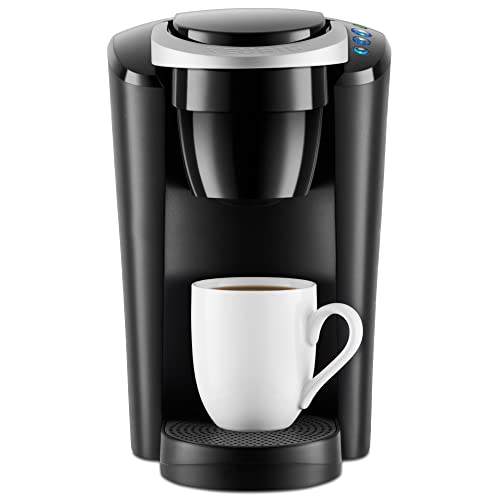
The Keurig K-Compact takes a different approach to group coffee. Instead of brewing a full carafe, it makes individual K-Cup pod servings in three brew sizes. The 36-ounce removable reservoir supports several cups before a refill. Smart Start also lets users select a size and begin brewing without a long warm-up routine.
This is not the best coffee maker for a crowd when the group wants a shared pot. It can be useful when guests want different flavors, regular coffee, or decaf without waiting for a full batch. I would place it beside a large urn at a mixed beverage station. Pod waste and per-cup cost are higher, but the convenience can be worth it for short visits and varied tastes.
Pros:
- Individual servings offer flavor variety
- Three brew sizes suit different mug sizes
- Removable reservoir makes refilling easier
- Smart Start keeps operation simple
- Useful for regular coffee and decaf choices
- Compact footprint fits small beverage stations
Cons:
- Single-serve brewing is slower for a large line
- Pods create more waste than ground coffee
- Per-cup cost can exceed batch brewing
What Makes the Best Coffee Maker for a Crowd?
The best coffee maker for a crowd depends on the size of the group and how long the event lasts. A 12- or 14-cup drip machine works well for family meals and small office meetings. A 50-cup urn fits a medium event. A 100-cup commercial coffee urn makes more sense for weddings, fundraisers, conferences, and large buffets.
Do not judge capacity by the word “cup” alone. Coffee makers often measure one cup as about five ounces, not a full mug. A 100-cup urn may serve fewer large travel mugs than the label suggests. I always estimate one serving per guest, then add extra capacity for refills and late arrivals.
Drip Coffee Maker or Coffee Urn?
A drip coffee maker usually gives better control for everyday flavor. It works well with freshly ground coffee and makes a familiar pot that most guests understand. It also takes less space and costs less to run for small groups. The trade-off is limited capacity and the need for more batches.
A coffee urn wins when service volume takes priority. It can brew a large amount at once and keep the beverage ready at a central station. Urns also use stainless steel bodies that handle busy event work well. The trade-off includes more storage space, heavier cleaning, and less flexibility with different coffee choices.
How I Compare Coffee Makers for Group Use
When I review a coffee maker for a crowd, I start with useful capacity. I ask how many people it can serve before someone must refill it. I also check whether the listed cup size matches normal guest behavior. This keeps a large number on the box from giving a false sense of security.
Next, I look at speed and serving flow. A good unit should not force guests to stand around while the first brew finishes. A clear water level, easy lid, simple basket, and smooth spigot all matter. Small design choices can prevent a long line from turning into a traffic jam.
Heat control matters too. Coffee tastes best when served fresh, so I do not treat “stays hot” as permission to hold it all day. A warming plate can help for a short breakfast window. A commercial urn can help during longer service, but I still recommend brewing close to the serving time.
Finally, I consider cleanup and storage. Used grounds, wet filters, drips, and water spots can create a mess after a busy event. Removable parts help. Stainless steel can simplify wiping, while a glass carafe lets me see the coffee but needs more care.
Capacity Guide for Parties and Events
For two to six people, a 5- to 12-cup brewer may be enough. For seven to 14 people, a 12- or 14-cup machine gives a better cushion. For 15 to 35 guests, a 30- or 50-cup urn can reduce repeat brewing. For larger groups, a 100-cup urn or two commercial units may keep service moving.
These numbers remain estimates. Some guests drink one small cup, while others refill twice. Morning events often need more coffee than afternoon gatherings. I also plan for staff, volunteers, and guests who arrive late.
| Guest count | Good starting size |
|---|---|
| 2–6 people | 5–12 cups |
| 7–14 people | 12–14 cups |
| 15–35 people | 30–50 cups |
| 36–100 people | 50–100 cups |
Important Features to Check Before Buying
Actual capacity
Check the maker’s cup measurement before you buy. A listed cup may be smaller than the mug your guests use. For a large gathering, I prefer extra capacity rather than a machine that runs empty halfway through breakfast.
Brew speed
Speed matters when guests arrive at the same time. Commercial urns can reduce the need for many small batches. A programmable home machine can also help by finishing the first pot before the doorbell rings.
Heat retention
A warming plate helps during short service periods. Double-wall stainless steel helps reduce heat loss in larger urns. Still, I serve coffee in stages whenever possible because fresh coffee tastes brighter and smoother.
Serving design
A non-drip carafe helps on a kitchen counter. A reliable spigot helps at an event station. Handles should feel secure, and the unit should sit firmly on its base. Never place a full urn near the edge of a table.
Ease of cleaning
Look for a removable basket, a wide opening, and parts that rinse without trouble. Coffee oils can build up and spoil the next batch. I clean the carafe or urn after every event and descale the brewer on a regular schedule.
Power and placement
Large coffee urns need a safe outlet and a stable surface. Keep cords away from walkways. Avoid plugging several high-power appliances into one crowded outlet. A small beverage station works best when it has space for cups, milk, sugar, and trash.
Tips for Brewing Coffee for a Crowd
Start with fresh, clean water. Water makes up most of the drink, so poor water can flatten good coffee. If your tap water tastes strongly of chlorine or minerals, filtered water can make a clear difference.
Use fresh grounds and measure them with care. Too little coffee creates a weak pot, while too much can make it bitter and heavy. Follow the coffee maker instructions first, then adjust the amount to suit your guests.
Do not let coffee sit for hours if you can avoid it. Even a good coffee maker cannot protect fresh flavor forever. Brew smaller rounds when practical, and label regular coffee and decaf clearly.
Place the coffee maker where guests can reach it without crossing the food line. Set out cups, lids, cream, sugar, stirrers, and napkins before service begins. This small bit of planning often matters as much as the machine itself.
Safety and Care Tips
Read the manual before using a commercial urn for the first time. Confirm the water level, basket position, and power switch. Never run a coffee maker without enough water unless the instructions specifically allow it.
Let hot parts cool before cleaning. Do not immerse an electric base in water. Wipe the outside with a soft damp cloth and clean the internal parts as directed.
Descale the machine when mineral buildup appears or when the brew slows down. Scale can affect water flow and flavor. Regular care also helps protect the heating system over time.
For large events, assign one person to check the coffee station. That person can watch the level, refill supplies, and keep the area dry. Good supervision protects both guests and the equipment.
My Recommendation
For most homes that host family breakfasts, holiday meals, and small office gatherings, I recommend the Cuisinart 14-Cup Programmable Coffee Maker. Its larger home capacity, programmable start, brew strength control, and pause feature give it more flexibility than a basic 12-cup machine. It also remains useful after the guests leave, which improves its overall value.
For a true event, I would step up to the Zulay 50-Cup Coffee Urn. It offers a better balance than a 100-cup urn for many medium-size groups. For weddings, fundraisers, and very large buffets, the Zulay, OSTBA, or ExploreHorizon 100-cup models make more sense. The best coffee maker for a crowd is the one that matches your guest count without leaving you with too little or far too much coffee.
| Best for | Why |
|---|---|
| Family breakfasts and small groups | Cuisinart 14-Cup offers useful capacity, programming, and flexible brew controls. |
| Medium parties and meetings | Zulay 50-Cup provides commercial volume without the footprint of a 100-cup urn. |
| Large events and catering | A 100-cup urn reduces repeat brewing and supports a busy self-serve station. |
How Many Cups Should You Brew for Guests?
Plan for one small coffee cup per guest, then add more for refills. For a two-hour breakfast, I often plan 1.5 servings per coffee drinker. For a long meeting or morning event, two servings per person may be safer.
Remember that not every guest will drink coffee. Children may choose juice, and some adults may want tea. Even so, running out early creates more trouble than having a small amount left over. A little extra capacity gives the host breathing room.
Are Commercial Coffee Urns Worth It?
Commercial coffee urns are worth it when you host large groups more than once or twice a year. They save time by brewing a large amount in one unit. Their metal construction also handles event use better than a small glass carafe.
If you only host a few people, a commercial urn may sit unused for most of the year. It takes storage space and needs careful cleaning. In that case, a 12- or 14-cup drip maker offers better everyday value.
Can You Use a Coffee Urn for Tea?
Many commercial coffee urns can heat and dispense water for tea or other instant drinks. Check the product instructions before using one for a different beverage. Coffee oils may affect taste, so clean the unit well before switching from coffee to plain hot water.
For events with both tea and coffee drinkers, I prefer separate containers when possible. A labeled hot water urn avoids mixed flavors. It also helps guests find what they need without asking the host.
How Do You Keep Group Coffee Tasting Fresh?
Brew close to serving time and use fresh grounds. Keep the coffee at a safe serving temperature, but do not leave it on a hot plate all day. If the event lasts several hours, make smaller fresh batches rather than one huge batch.
Use insulated airpots when you need to hold coffee for a short period away from the machine. They can reduce exposure to direct heat. Always label each container so guests know whether it holds regular coffee or decaf.
FAQs Of best coffee maker for a crowd
What is the best coffee maker for a crowd of 20 people?
A 30- or 50-cup coffee urn is a good starting point for 20 people. A 12- or 14-cup drip maker may work if guests drink one cup each, but it will likely need more than one batch.
Is a 12-cup coffee maker enough for a party?
It can serve a small party of about six to 10 coffee drinkers. Since coffee maker cups are often small, choose a larger model or prepare a second batch when guests want refills.
Are 100-cup coffee urns hard to clean?
They need more cleaning than a home brewer because they hold far more coffee. Let the unit cool, remove the basket and stem, rinse the inside, and follow the maker’s care instructions.
What is better for a crowd: drip coffee or a percolator?
Drip coffee often gives a smoother, more familiar taste. A percolator or commercial urn provides much more volume and works better when fast group service matters most.
Can I use a single-serve machine for many guests?
You can, but it may create a slow line. Single-serve machines work best when guests want different flavors or decaf. For fast shared service, choose a drip maker or coffee urn.
Final Verdict: Which Should You Buy?
The Cuisinart 14-Cup is my top home pick, while the Zulay 50-Cup is better for medium events. For very large groups, choose a dependable 100-cup urn.
The best coffee maker for a crowd matches your guest count, space, and serving time. Choose fresh brewing, easy cleanup, and safe placement for better coffee and calmer hosting.

Liora Pennings is a seasoned chef and kitchen enthusiast with a passion for turning everyday cooking into an effortless experience. With years of hands-on culinary expertise, she specializes in practical techniques, ingredient know-how, and smart kitchen solutions that help home cooks elevate their meals. At KitchFlair.com, Liora shares her best tips, time-saving tricks, and honest product reviews to guide readers toward a more efficient, enjoyable, and inspired cooking routine. Whether you’re a beginner or a seasoned home chef, Liora’s friendly, knowledge-packed insights make every visit to the kitchen a little easier—and a lot more delicious.