How To Adjust Coffee To Water Ratio Perfectly: Simple Guide
Use a digital scale and start at a 1:16 ratio, then tweak to taste.
I’ve spent years dialing espresso, pour-over, and French press. I’ll show you how to adjust coffee to water ratio perfectly with clear steps, simple math, and real test notes. This guide pairs science and kitchen-tested experience so you can brew coffee that matches your taste every time.
Why the coffee-to-water ratio matters
The coffee-to-water ratio controls strength and perceived extraction. Too little coffee makes weak coffee. Too much coffee makes bitter or muddy coffee. Proper ratio helps extract flavors you want and avoids flavors you don’t.
I use the phrase how to adjust coffee to water ratio perfectly because it’s the central skill for consistent, great cups. Learning this gives you control over sweetness, body, and clarity. You will learn to change the ratio, taste results, and dial in repeatable brewing.
Basic ratios to start with (and why)
Here are common starting points. These give a baseline for how to adjust coffee to water ratio perfectly.
- Espresso
- 1:1.5 to 1:2 (dose:brew yield). Very concentrated. Use for shots and milk drinks.
- Aeropress
- 1:12 to 1:17. Flexible and fast. Adjust by steep time and pressure.
- Pour-over (V60, Chemex)
- 1:15 to 1:17. Clean, bright cups. Good starting point is 1:16.
- French press
- 1:12 to 1:15. Fuller body and heavier mouthfeel.
- Cold brew
- 1:4 concentrate then dilute, or 1:8–1:10 for drinkable cold brew.
Start with one ratio. Taste and then change by small steps. That is how to adjust coffee to water ratio perfectly.
How to measure: grams, not scoops
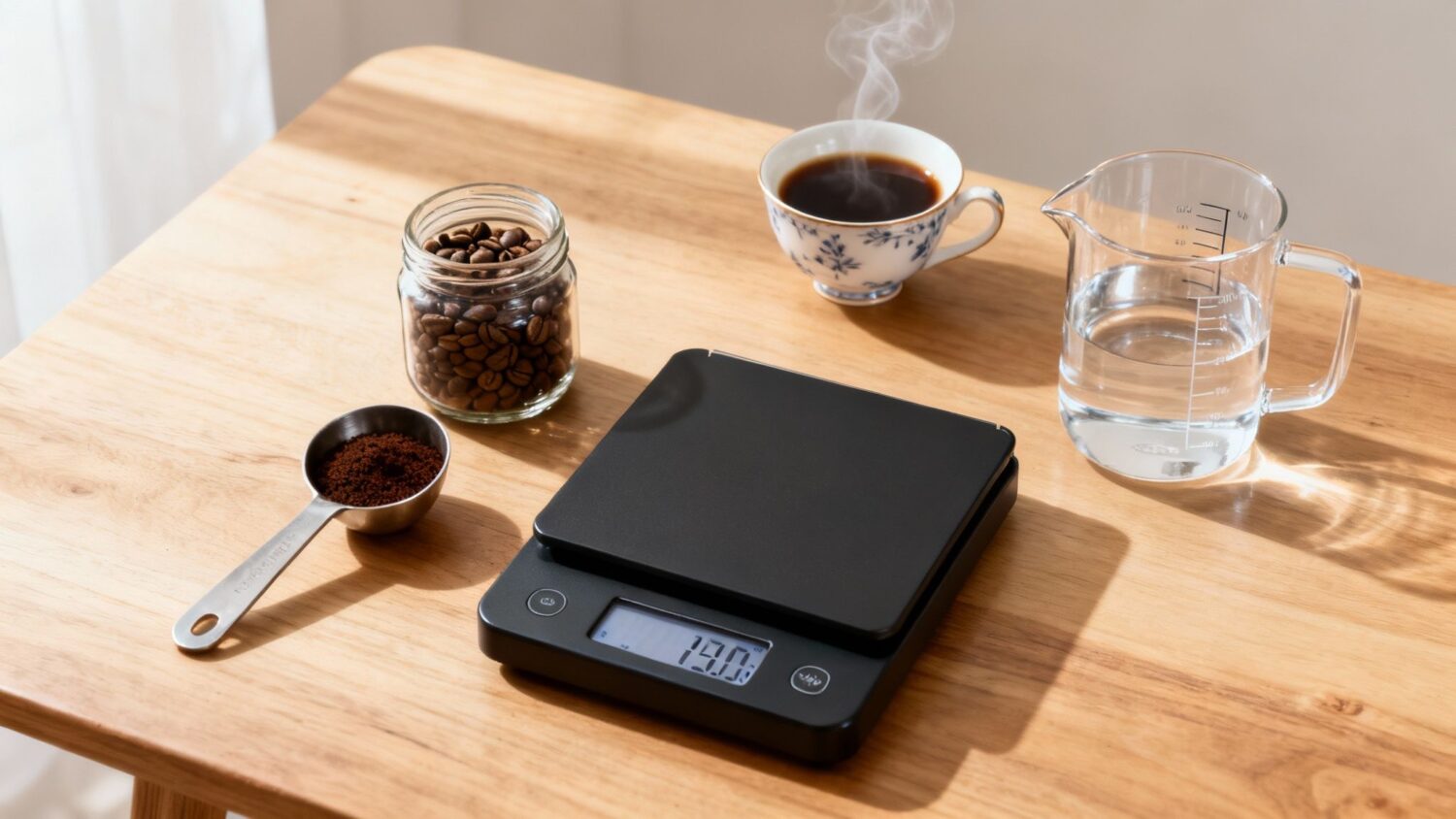
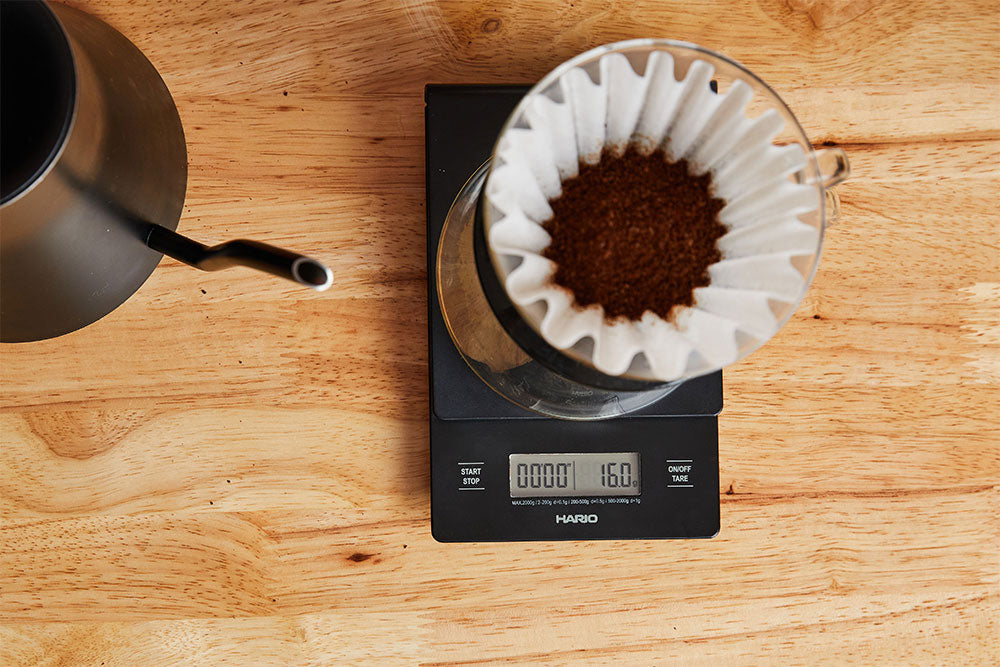
Use grams for accuracy. A digital scale beats scoops every time. Scales remove guesswork and make it easy to repeat brews.
- Dose
- Weigh the coffee dry in grams.
- Water
- Weigh water in grams. 1 gram equals 1 milliliter of water.
- Brew ratio math
- Ratio = water : coffee (for example, 240g water : 15g coffee = 16:1).
- Brew yield vs dose
- For espresso, measure yield in liquid grams. For other methods, measure water added.
Consistent measuring is the core of how to adjust coffee to water ratio perfectly.

Step-by-step: dial in your ideal ratio
Follow these clear steps to adjust ratios like a pro.
- Choose a baseline
- Pick a method and a starting ratio (for pour-over, try 1:16).
- Brew and taste
- Note strength, acidity, sweetness, and bitterness.
- Change only one variable
- If coffee is too weak, increase coffee dose or reduce water by 5–10%. If too strong or bitter, reduce dose or increase water.
- Make small jumps
- Change ratio in 0.5 to 1 points (for example, 1:16 to 1:15.5).
- Log results
- Record grind, temp, time, and ratio. Repeat until satisfied.
This routine is practical and easy to repeat for any brew. It’s the most reliable path to how to adjust coffee to water ratio perfectly.
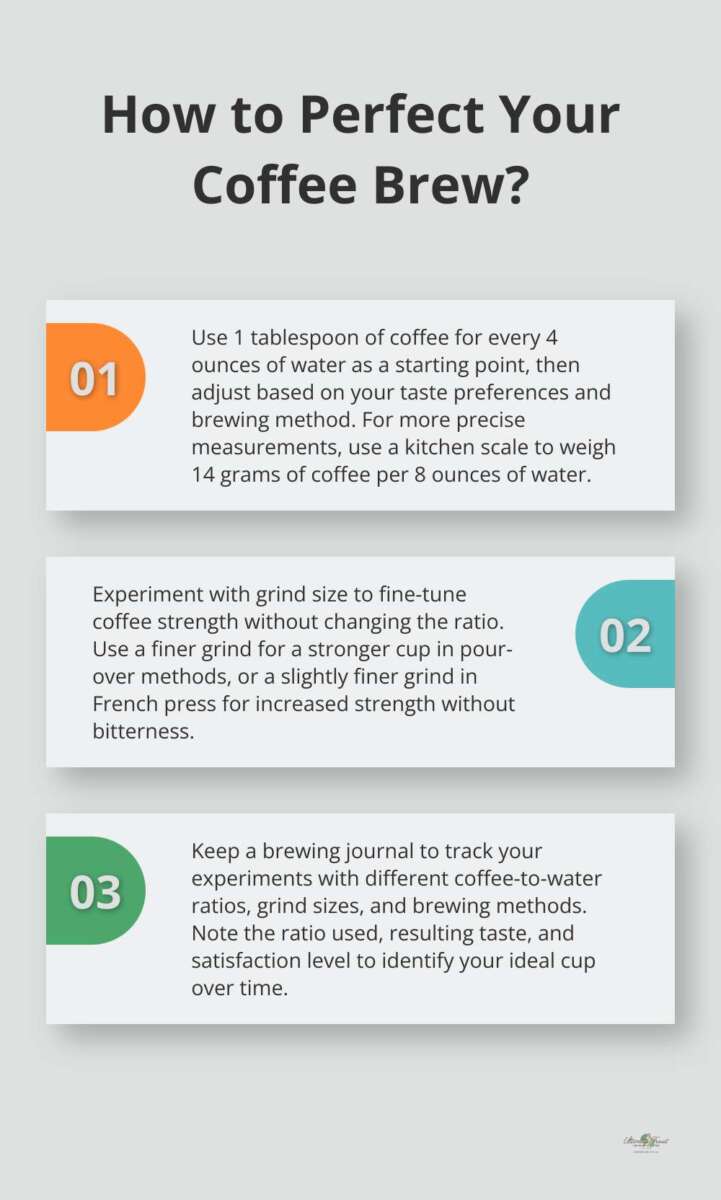
src="https://ultimatetreat.com.au/wp-content/uploads/emplibot/How_Many_Tablespoons_of_Coffee_Per_Cup_When_Brewing__4_2024_11_19_19_08_32_272237_00_00.png"
alt="Grind size, time, and temperature: how they interact with ratio”
style=”max-width: 100%; height: auto; border: 2px solid black; border-radius: 10px; display: block; margin: 0 auto;”
loading=”lazy”
/>
Grind size, time, and temperature: how they interact with ratio
Ratio is not the only factor. Grind, time, and water temperature affect extraction. Treat ratio as the lever for strength and balance.
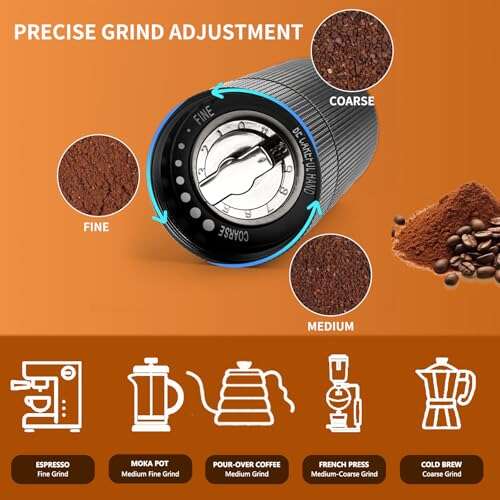
- Grind size
- Finer grind increases extraction speed. Finer grind may need a slightly lower ratio to avoid bitterness.
- Brew time
- Longer contact increases extraction. If time goes up, consider lowering dose or widening ratio.
- Water temperature
- Hotter water extracts more quickly. At high temps you might prefer a slightly weaker ratio.
When you change grind, time, or temperature, revisit your ratio. That is how to adjust coffee to water ratio perfectly across methods.

Troubleshooting common problems
If your coffee tastes off, these fixes help you adjust ratios correctly.
- Sour and weak
- Likely under-extracted. Use a stronger ratio or finer grind.
- Bitter or harsh
- Likely over-extracted. Use a weaker ratio or coarser grind.
- Flat but not bitter
- Try a slightly stronger ratio and a slightly higher temperature.
- Too strong but sour
- Increase brew time slightly or increase ratio to allow fuller extraction.
Small tweaks and careful tasting lead you to the right ratio. Keep notes each try.
Practical examples and recipes
Here are quick recipes you can test. Each example shows how to adjust for taste.
- Pour-over (clean and balanced)
- 20g coffee : 320g water (1:16). Brew 3–4 minutes. If weak, change to 21g : 320g (1:15.2).
- French press (full body)
- 30g coffee : 450g water (1:15). Steep 4 minutes. If muddy, try 1:16.
- Cold brew concentrate
- 200g coffee : 800g water (1:4). Steep 12–18 hours. Dilute to taste after straining.
- Aeropress quick cup
- 15g coffee : 225g water (1:15). Brew 1–2 minutes. For stronger cup, try 1:13.
Try small changes. Track taste differences. This is the practical side of how to adjust coffee to water ratio perfectly.
My personal experience and lessons learned
I started with scoops and guesswork. That led to uneven cups. Switching to a scale changed everything. I learned to:
- Always record the ratio and grind setting.
- Change only one thing at a time.
- Use 1:16 as a neutral benchmark.
One mistake I made was changing grind and ratio at once. That made results confusing. After that I adopted logging and small steps. This approach helps me recreate favorite cups, and it will help you learn how to adjust coffee to water ratio perfectly too.

Tools that make dialing in easier
You don’t need high-end gear to get great results. These basic tools help.
- Digital scale with 0.1g accuracy
- Burr grinder for consistent particle size
- Thermometer or kettle with temperature control
- Timer and tasting notebook
- Refractometer (optional) for measuring extraction
Use simple tools first. Add advanced gear only when you want lab-level repeatability. These items make it easier to learn how to adjust coffee to water ratio perfectly.
Limitations and final tips
Not every coffee behaves the same. Beans, roast level, and freshness change results. Some limits:
- Light roasts may need hotter water and slightly stronger ratios.
- Dark roasts extract faster and can taste bitter at high ratios.
- Old beans need a stronger ratio to taste lively.
Be patient. Taste is subjective. Use the ratio as a guide, not a rule. That mindset will help you master how to adjust coffee to water ratio perfectly.
Frequently Asked Questions of how to adjust coffee to water ratio perfectly
How do I convert scoop measurements to grams?
One common scoop holds about 10 to 12 grams of medium-ground coffee. Use a scale to verify your scoop and switch to grams for consistent results.
Is the 1:16 ratio always best?
No. 1:16 is a neutral starting point for many methods. Adjust up or down based on brew method, roast, and personal taste.
How much should I change the ratio per test?
Change ratio by about 5–10% or one ratio point (for example, 1:16 to 1:15). Small steps give clearer taste signals.
Will grind size replace ratio adjustments?
No. Grind size and ratio work together. Grind affects extraction speed while ratio affects strength. Adjust both carefully.
Can I use tap water for accurate results?
Yes, but filtered water with balanced minerals gives better extraction and flavor. Avoid very hard or chlorinated water for best results.
Conclusion
Mastering how to adjust coffee to water ratio perfectly is simple. Use a scale, start with a baseline like 1:16, and change one thing at a time. Taste carefully and log each brew. With consistent testing, you will find the ratio that matches your ideal cup.
Try one recipe from this guide this week. Track changes in a notebook and repeat the best result. Share your favorite ratio or question in the comments, or subscribe to learn more brewing tips.

Liora Pennings is a seasoned chef and kitchen enthusiast with a passion for turning everyday cooking into an effortless experience. With years of hands-on culinary expertise, she specializes in practical techniques, ingredient know-how, and smart kitchen solutions that help home cooks elevate their meals. At KitchFlair.com, Liora shares her best tips, time-saving tricks, and honest product reviews to guide readers toward a more efficient, enjoyable, and inspired cooking routine. Whether you’re a beginner or a seasoned home chef, Liora’s friendly, knowledge-packed insights make every visit to the kitchen a little easier—and a lot more delicious.