How To Make Coffee Using Reusable Filter Properly: Pro Tips
Use a clean reusable filter, the right grind, hot water, and a steady pour for best results.
I’ve brewed thousands of cups with reusable filters, and I’ll walk you through how to make coffee using reusable filter properly. This guide blends hands-on tips, simple science, and clear steps so you can get a clean, full-bodied cup every time. Read on for gear choices, grind size, precise steps, cleaning rituals, troubleshooting, and real-life lessons from my experience.

Why choose a reusable filter and what to expect
Reusable filters cut waste and save money over time. They can highlight more oils and flavor than paper filters, giving a fuller mouthfeel. When you learn how to make coffee using reusable filter properly, you control extraction, flavor, and strength without single-use waste. Expect a slightly different cup than paper filters—richer, sometimes with light sediment.

What gear you need
You don’t need fancy tools. Use simple, reliable gear to make consistent coffee.
- Coffee maker or dripper that fits a reusable filter
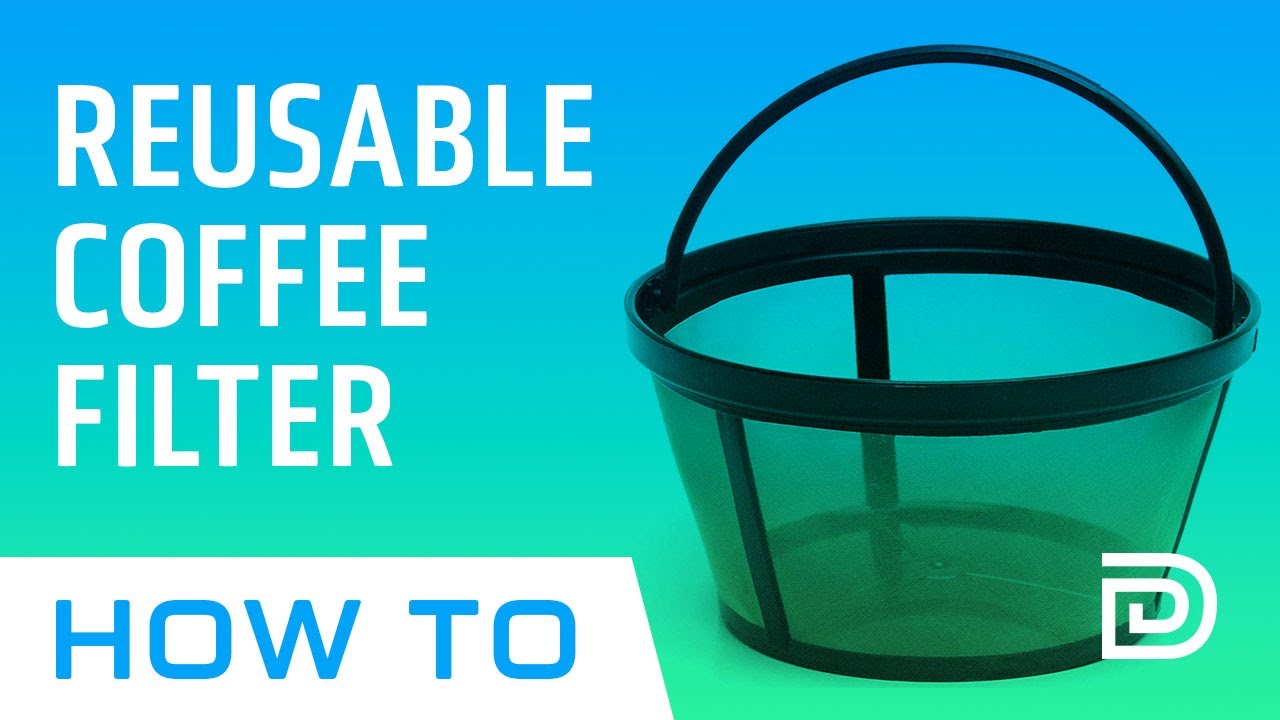
- Stainless steel or nylon reusable filter
- Burr grinder for steady grind size
- Scale for coffee and water
- Kettle, preferably with a gooseneck spout
- Timer or stopwatch
- Fresh whole beans and filtered water
Choosing the right filter matters. Metal filters let oils pass through for body and flavor. Nylon filters block fewer oils than paper but hold more fine particles. Try both to see what you like.

Beans, roast, and the right grind
Good beans matter. Fresh beans roast within two to four weeks give the best flavor. Store beans in a cool, dark place in an airtight container.
- Roast level: Medium roasts often pair best with reusable filters. They balance acidity and body.
- Freshness: Grind within 30 minutes of brewing when you can.
- Grind size: For most reusable cone or basket filters, use a medium grind — similar to table salt. If you get too fine, the brew can over-extract and clog the filter. Too coarse and the coffee will taste weak.
I learned this the hard way. Early on, I used a too-fine grind and had slow dripping and bitter cups. A simple grind adjustment fixed it. When you focus on grind, you nail extraction.

How to make coffee using reusable filter properly — step-by-step
Follow these steps for a consistent cup. I recommend this method for manual pour-over or any device that accepts a reusable filter.
- Measure and heat
- Use 1:15 to 1:17 coffee-to-water ratio. Start with 1 gram coffee to 15 grams water. For a 12 oz (340 g) cup, use about 22 g coffee and 330 g water.
- Heat water to 195–205°F (90–96°C). Let boiled water sit 30 seconds if no thermometer.
- Rinse and preheat
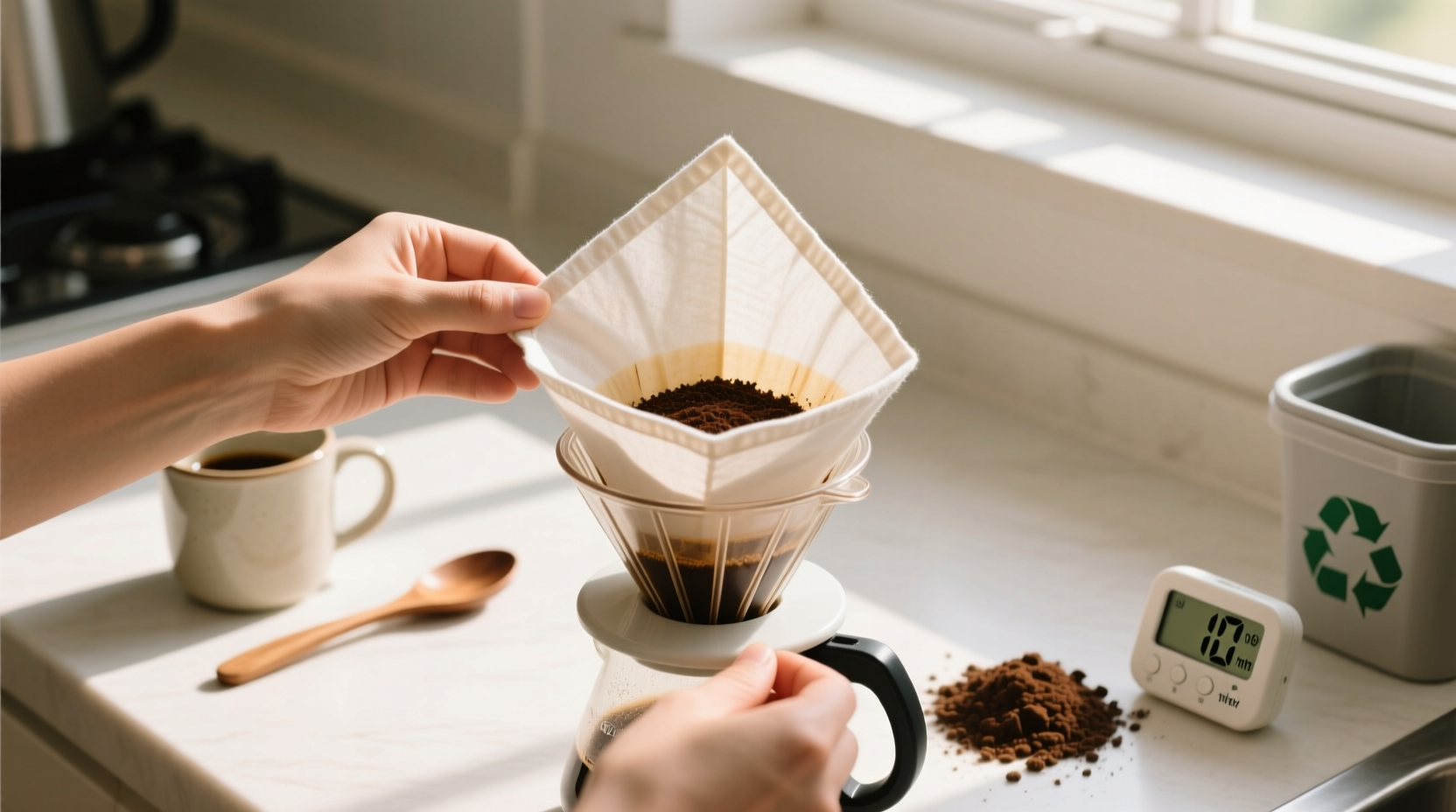
- Place reusable filter in the dripper.
- Pour hot water through the filter to warm the brewer and remove dust. Dump the rinse water.
- Add coffee and bloom
- Add ground coffee to the filter and level the bed.
- Start a timer and pour about twice the coffee weight in water (e.g., 44 g water for 22 g coffee) to bloom. Let bloom for 30–45 seconds. This releases carbon dioxide and improves extraction.
- Main pour
- Pour slowly in concentric circles, keeping the water level steady. Aim to finish pouring by 2:15 to 2:30 minutes total brew time for pour-over.
- Avoid pouring directly on the filter edge to prevent channeling.
- Drain and serve
- Let the coffee drain completely. Total brew time should be 2:30–3:30 minutes depending on device.
- Remove filter, give the brewer a gentle swirl, and serve.
This method shows exactly how to make coffee using reusable filter properly. Small tweaks make big differences.

Cleaning and maintenance — keep the filter fresh
Cleaning is crucial for flavor and hygiene. Residue and oils build up fast on metal and nylon filters.
- After each brew: Dump grounds and rinse under hot water. Use a soft brush to remove trapped grounds.
- Weekly: Soak in hot water and mild detergent or use a 1:4 vinegar-water soak for 15–30 minutes to remove oils.
- Monthly deep clean: Boil the filter for a few minutes, or use a baking soda scrub to remove stubborn stains and oils.
Proper cleaning ensures you keep tasting coffee, not old oils. I once ignored this and had a flat-tasting pot. A deep clean restored brightness immediately. Regular maintenance is part of learning how to make coffee using reusable filter properly.
Troubleshooting common problems
Here are quick fixes for common issues when you use reusable filters.
-
Slow drip or clogging
- Cause: Too fine grind or compacted grounds.
- Fix: Adjust to coarser grind and tap the filter gently to level.
-
Bitter coffee
- Cause: Over-extraction or too-hot water.
- Fix: Lower water temperature slightly or shorten brew time.
-
Sour or weak coffee
- Cause: Under-extraction or too-coarse grind.
- Fix: Use a finer grind, slightly more coffee, or longer contact time.
-
Sediment in cup
- Cause: Very fine particles pass through metal mesh.
- Fix: Use a slightly coarser grind or let the grounds settle in the carafe for a minute before pouring.
These tips reflect both science and hands-on testing. They help you dial in how to make coffee using reusable filter properly.
Tips, tricks, and personal lessons
Small habits make a big difference. Here are practical tips I use daily.
- Weigh everything. Eyeballing leads to inconsistency.
- Use a gooseneck kettle for control. A steady pour changes extraction.
- Experiment with bloom time and pour rate. Taste as you go.
- Keep water quality in mind. Use filtered water if your tap tastes off.
- Rotate filters. Have a spare to avoid rushing clean cycles.
- Note settings. Keep a small brewing log of grind, ratio, and time.
From my experience, the best cup came after I tracked variables for a week. It helped pinpoint the sweet spot. If you practice these tips, you’ll learn how to make coffee using reusable filter properly and with ease.

Frequently Asked Questions of how to make coffee using reusable filter properly
What grind size should I use with a reusable filter?
Use a medium grind, similar to table salt. Adjust slightly coarser if flow is slow, or finer if the coffee is too weak.
How often should I clean my reusable filter?
Rinse after every brew, deep clean weekly, and do a monthly soak or boil for oils and stains. Regular cleaning preserves flavor and longevity.
Will a reusable filter make my coffee taste different than paper?
Yes. Reusable filters let more oils through, giving a fuller body and richer taste compared to paper which yields a cleaner cup.
Can I use pre-ground coffee with a reusable filter?
You can, but fresh-ground beans taste best. Pre-ground coffee loses aroma and can make inconsistent extraction.
How do I avoid sediment when using a metal filter?
Use a slightly coarser grind and pour gently. Let the brewed coffee sit for 30 seconds before pouring to let fines settle.
Conclusion
Reusable filters are a smart, eco-friendly way to brew great coffee. Focus on grind size, clean gear, steady pouring, and a good coffee-to-water ratio to learn how to make coffee using reusable filter properly. Start small: weigh your coffee, time your pours, and clean your filter often. Try one brew routine for a week and tweak one variable at a time. If you liked this guide, try these steps tomorrow morning and share your results or questions below — I’d love to hear which method worked best for you.

Liora Pennings is a seasoned chef and kitchen enthusiast with a passion for turning everyday cooking into an effortless experience. With years of hands-on culinary expertise, she specializes in practical techniques, ingredient know-how, and smart kitchen solutions that help home cooks elevate their meals. At KitchFlair.com, Liora shares her best tips, time-saving tricks, and honest product reviews to guide readers toward a more efficient, enjoyable, and inspired cooking routine. Whether you’re a beginner or a seasoned home chef, Liora’s friendly, knowledge-packed insights make every visit to the kitchen a little easier—and a lot more delicious.