How To Clean Coffee Maker With Vinegar: Simple 5-Minute Fix
Clean your coffee maker by running a 1:1 white vinegar and water cycle, then rinse thoroughly.
I’ve cleaned hundreds of machines and tested many methods, so I’ll show you exactly how to clean coffee maker with vinegar safely and effectively. This guide covers step-by-step instructions for drip machines, single-serve brewers, and parts, plus safety tips, frequency recommendations, and real-world tricks that worked for me. Read on to keep your coffee tasting fresh and your machine running longer.

Why vinegar works to clean coffee maker with vinegar
Vinegar is mostly acetic acid. That acid dissolves mineral scale, coffee oils, and light residue. It breaks down calcium and lime buildup that clogs heating parts.
Vinegar also cuts grease. That means coffee oils in the basket and carafe come off easier. For these reasons, vinegar is a low-cost, effective cleaning agent for most coffee makers.

Safety first: what to know before you use vinegar
Check your manual. Some manufacturers advise against vinegar for certain parts or espresso machines.
Never mix vinegar with bleach or ammonia. That can make toxic gas.
Use plain white distilled vinegar. Avoid flavored or colored vinegars. They can stain or leave scents.
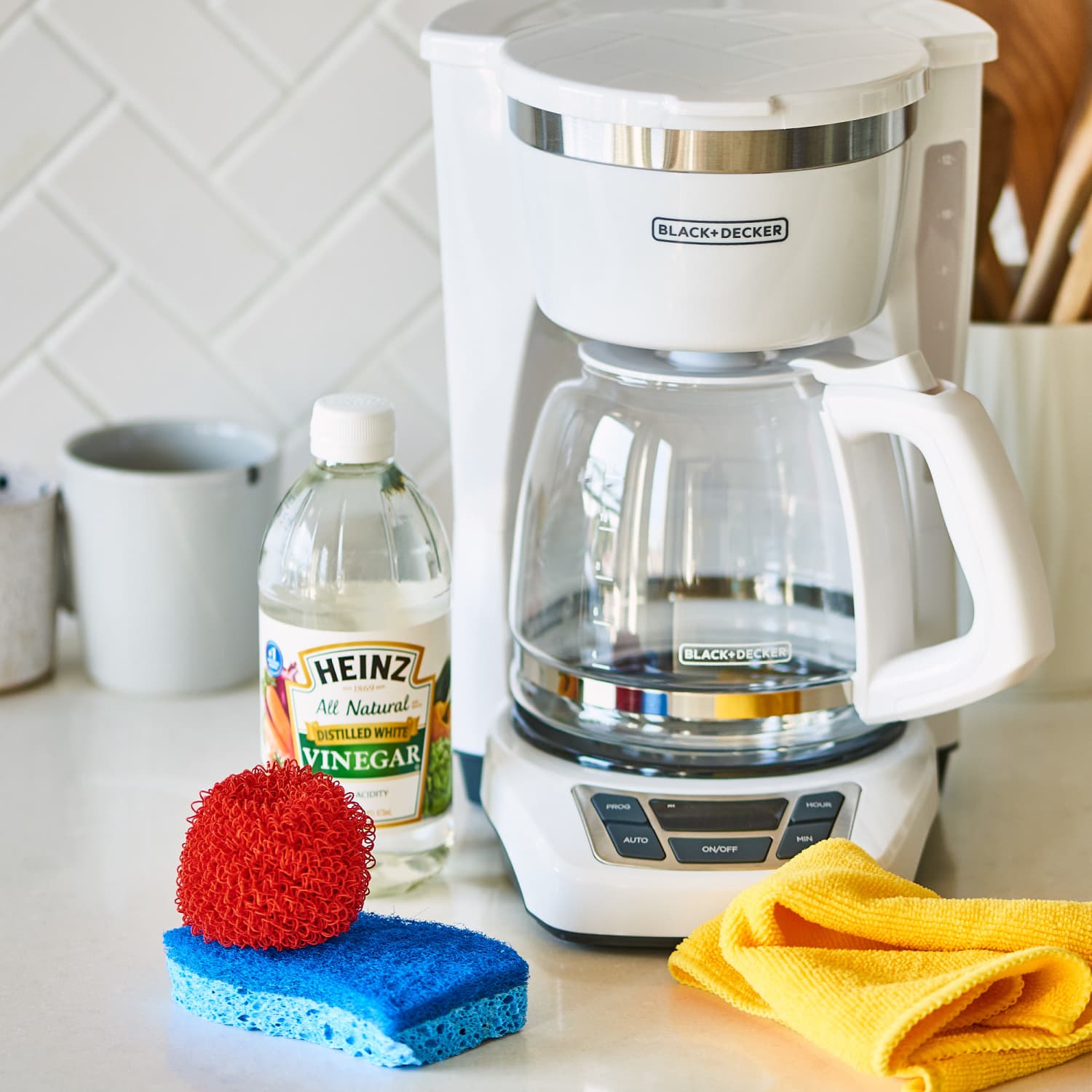
How to clean coffee maker with vinegar — drip coffee maker step-by-step
- Empty the machine and remove parts. Take out the carafe, filter basket, and any reusable filter.
- Wash removable parts. Clean them with warm soapy water and a soft brush, then rinse.
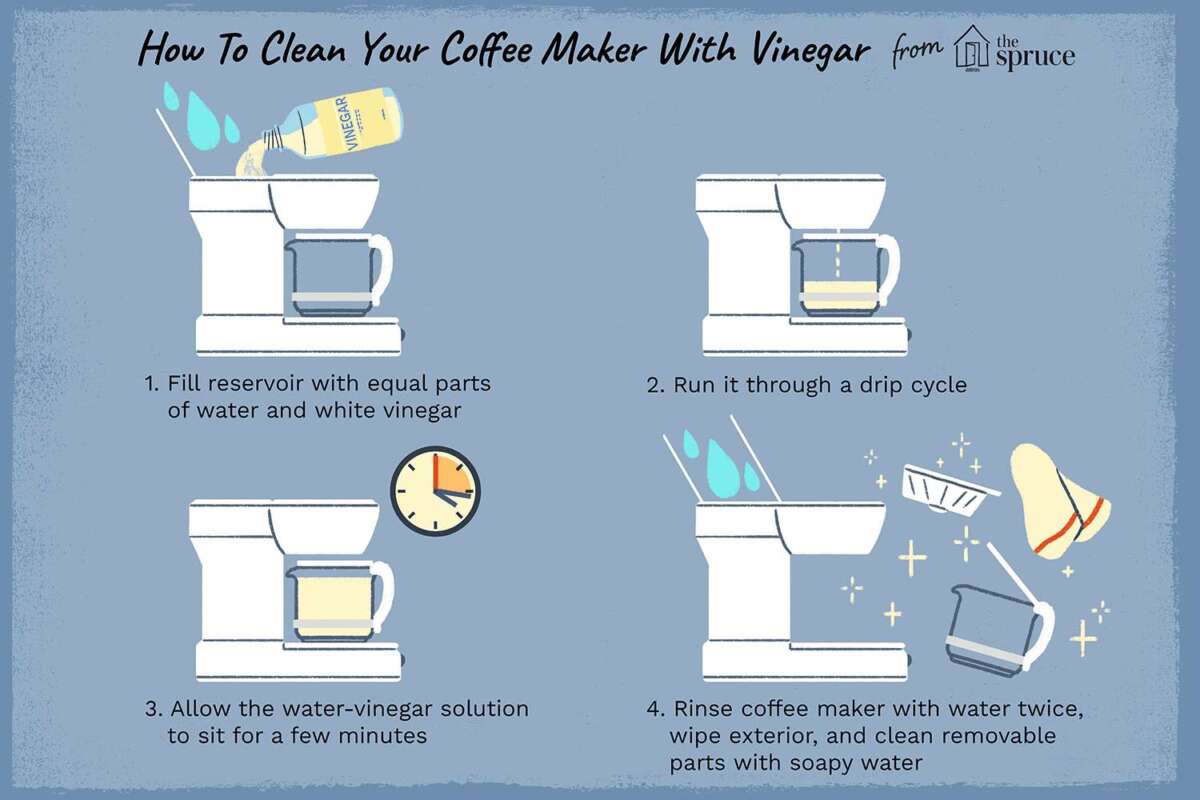
- Make a cleaning solution. Mix equal parts white vinegar and water in the reservoir. For heavy scale, use two parts vinegar to one part water.
- Run a brew cycle. Start the machine and let the solution brew halfway, then pause for 30 minutes to let the vinegar work.
- Finish the cycle. Let the brew complete. Turn off and let the machine sit for 15–30 minutes.
- Dump the vinegar water. Pour it out and wash the carafe and filter basket.
- Rinse with fresh water. Run two to three full cycles with clean water to remove vinegar taste and smell.
Repeat the vinegar cycle monthly if you have hard water. This method shows you how to clean coffee maker with vinegar in a simple, repeatable way.

How to clean coffee maker with vinegar — single-serve brewers and pod machines
Many single-serve machines can be descaled with vinegar. Check the manual first. If okay, follow these steps:
- Empty any pods and the drip tray.
- Fill the reservoir with one part white vinegar and one part water.
- Run brew cycles without a pod until the reservoir is empty. Use the largest cup setting.
- Let the machine sit for 15–30 minutes after cycling.
- Run two to three rinse cycles with fresh water to clear vinegar.
For some pod machines, the manufacturer recommends a commercial descaler instead. Use vinegar only if the manual allows. This helps prevent voiding your warranty while still showing how to clean coffee maker with vinegar safely.
:max_bytes(150000):strip_icc()/clean-coffee-maker-with-vinegar-1907384-Final-e47a97b1dd8e4e8a9d3655cf9e87e9c6.jpg)
How to clean coffee maker with vinegar — espresso machines and stovetop gear
Espresso machines often have tight tolerances. Check the manual before using vinegar. Many pros suggest citric acid or a commercial descaler instead of vinegar for internal components.
If you use vinegar on a semi-automatic machine:
- Backflushing portafilters often requires a recommended cleaner rather than vinegar.
- Use vinegar only in the water reservoir and run short cycles, then flush with lots of water.
For moka pots and French presses:
- Soak metal parts in equal parts vinegar and water for 15–30 minutes.
- Scrub with a soft brush, rinse well, and dry.
These steps let you know when vinegar is a good choice and when to choose another cleaner.
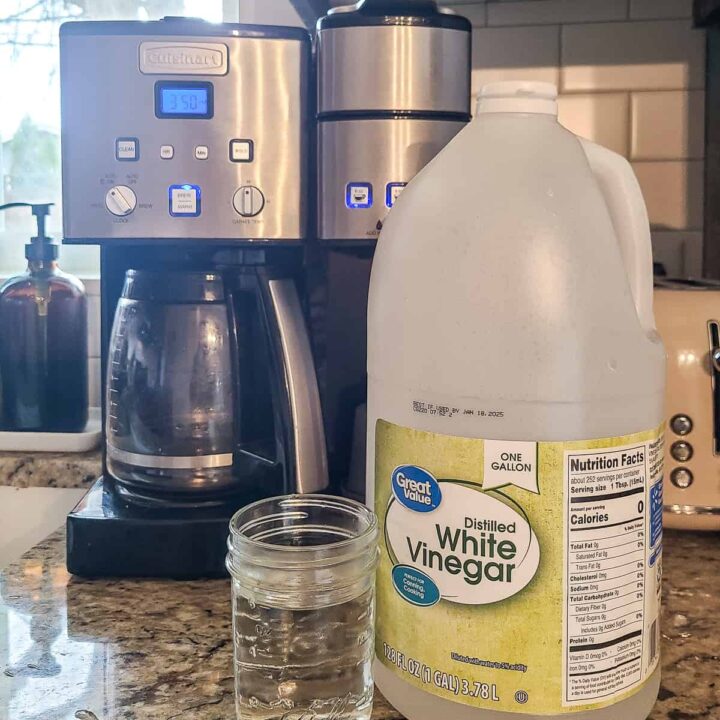
Cleaning parts: carafe, filter basket, water reservoir and small areas
Soak removable parts in a vinegar solution:
- Mix one cup white vinegar with one cup warm water for small parts.
- Let the carafe or basket soak for 15–30 minutes, then scrub with a soft brush.
For tough stains, add a teaspoon of baking soda while scrubbing. That adds gentle abrasion and removes odors.
To clean the water reservoir, use a soft cloth dipped in vinegar solution if you can’t run a cycle. Rinse thoroughly afterward. Regular attention keeps all parts working well and shows you how to clean coffee maker with vinegar for long-term care.
:strip_icc()/How_to_clean_coffeemaker_0201-Step-01-Clean-With-Vinegar-828dacfe7f974698ad332dac86b70ed8.jpg)
How often to descale and maintain your machine
Frequency depends on water hardness and use:
- If you use hard water, descale every 1–2 months.
- If you use soft water, do it every 3 months.
- Clean the carafe and filter basket weekly.
A clean machine brews better coffee. Regular vinegar cycles prevent clogs and extend the machine’s life.

Troubleshooting common issues after cleaning with vinegar
If your machine smells like vinegar:
- Run two to three more rinse cycles with fresh water.
- Brew a pot of plain water and discard it.
If deposits remain after cleaning:
- Try a stronger vinegar mix or a commercial descaler.
- For stubborn scale, let the vinegar sit longer during the cycle.
If coffee tastes off after cleaning:
- Run additional rinse cycles. If flavor persists, clean the carafe and basket with baking soda and water.
These quick fixes help you finish the process cleanly and effectively.
Top tips and common mistakes to avoid
Do not mix vinegar with bleach. That can create harmful fumes.
Avoid using apple cider or colored vinegars. They can stain.
Don’t neglect rinsing. Vinegar residue ruins taste.
Check the manufacturer manual. Some machines need specific cleaners.
Follow these tips to safely learn how to clean coffee maker with vinegar and avoid common problems.
Personal experience: things I learned and shared tips
Early on, I cleaned a machine with full-strength vinegar and skipped rinsing. The machine smelled for days. Lesson learned: always dilute and rinse.
I also used vinegar too often on an espresso machine and noticed rubber gaskets wear faster. Lesson: check the manual, and use gentler descalers for delicate parts.
A trick that works: run a cycle of plain water with a tablespoon of baking soda after rinses to neutralize any leftover smell.
These are practical tips I’ve used and tested over years of cleaning gear.
Frequently Asked Questions of how to clean coffee maker with vinegar
Is vinegar safe for all coffee makers?
Vinegar is safe for most drip and single-serve machines if the manual allows it. Check your manufacturer’s instructions for espresso and high-end models before using vinegar.
What vinegar-to-water ratio should I use?
Use equal parts white distilled vinegar and water for routine descaling. For heavy buildup, use two parts vinegar to one part water, but rinse more carefully afterward.
How many rinse cycles remove vinegar taste?
Run two to three full rinse cycles with clean water. If you still taste vinegar, run one or two more cycles until the smell is gone.
Can vinegar damage seals or rubber parts?
Frequent use of strong vinegar can cause wear on rubber seals over time. For delicate machines, use a manufacturer-approved descaler or citric acid alternative.
How often should I descale with vinegar?
Descale every 1–3 months depending on water hardness and use. If you see scale or slow heating, descale sooner.
Can I use vinegar to clean a Keurig?
Yes, if the Keurig manual permits vinegar. Use a 1:1 vinegar and water mix, run brew cycles without pods, then flush with several water-only cycles.
Will vinegar remove mold?
Vinegar can kill many surface molds and remove residue in the reservoir and removable parts. For deep or recurring mold, disassemble parts and clean thoroughly, or use a stronger cleaner.
Conclusion
Cleaning with vinegar is an easy, low-cost way to remove scale and oils. Follow the right ratio, rinse well, and check your manual. Use vinegar monthly or as needed to keep coffee tasting fresh and machines running smoothly. Try the steps today and see the difference in taste and performance, then share your results or ask a question below.

Liora Pennings is a seasoned chef and kitchen enthusiast with a passion for turning everyday cooking into an effortless experience. With years of hands-on culinary expertise, she specializes in practical techniques, ingredient know-how, and smart kitchen solutions that help home cooks elevate their meals. At KitchFlair.com, Liora shares her best tips, time-saving tricks, and honest product reviews to guide readers toward a more efficient, enjoyable, and inspired cooking routine. Whether you’re a beginner or a seasoned home chef, Liora’s friendly, knowledge-packed insights make every visit to the kitchen a little easier—and a lot more delicious.